
On this page
- Test before adding more chlorine or replacing water
- Use four readings to separate the possible causes
- Match routine chlorine to CYA before choosing a fix
- Chlorine that disappears needs a demand or equipment check
- Choose DIY, waiting, or service by the test results
- Before the next dose, confirm these details
Test before adding more chlorine or replacing water
Chlorine lock in a pool means chlorine seems ineffective, often because stabilizer is too high or contamination is using chlorine up. Test free chlorine, total chlorine, pH, and stabilizer before deciding whether to add chemicals, wait, or replace water.
Chlorine does not suddenly switch off at one stabilizer reading. Stabilizer, also called cyanuric acid or CYA, protects chlorine from sunlight but reduces how quickly it disinfects. As CYA rises, the chlorine level needed to control algae also rises.
Handle a straightforward adjustment yourself only when you have reliable readings and know your pool volume. Wait only for an instructed mixing or retesting interval. Call for help when readings conflict, chlorine repeatedly disappears, or water replacement appears necessary. A chlorine-lock diagnosis alone is not a reason to drain a pool.
Use four readings to separate the possible causes
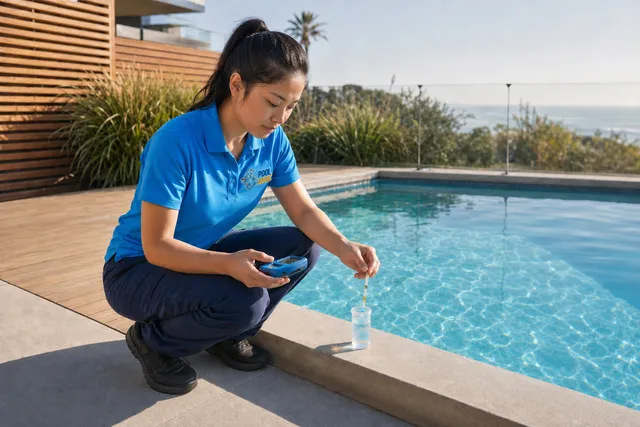
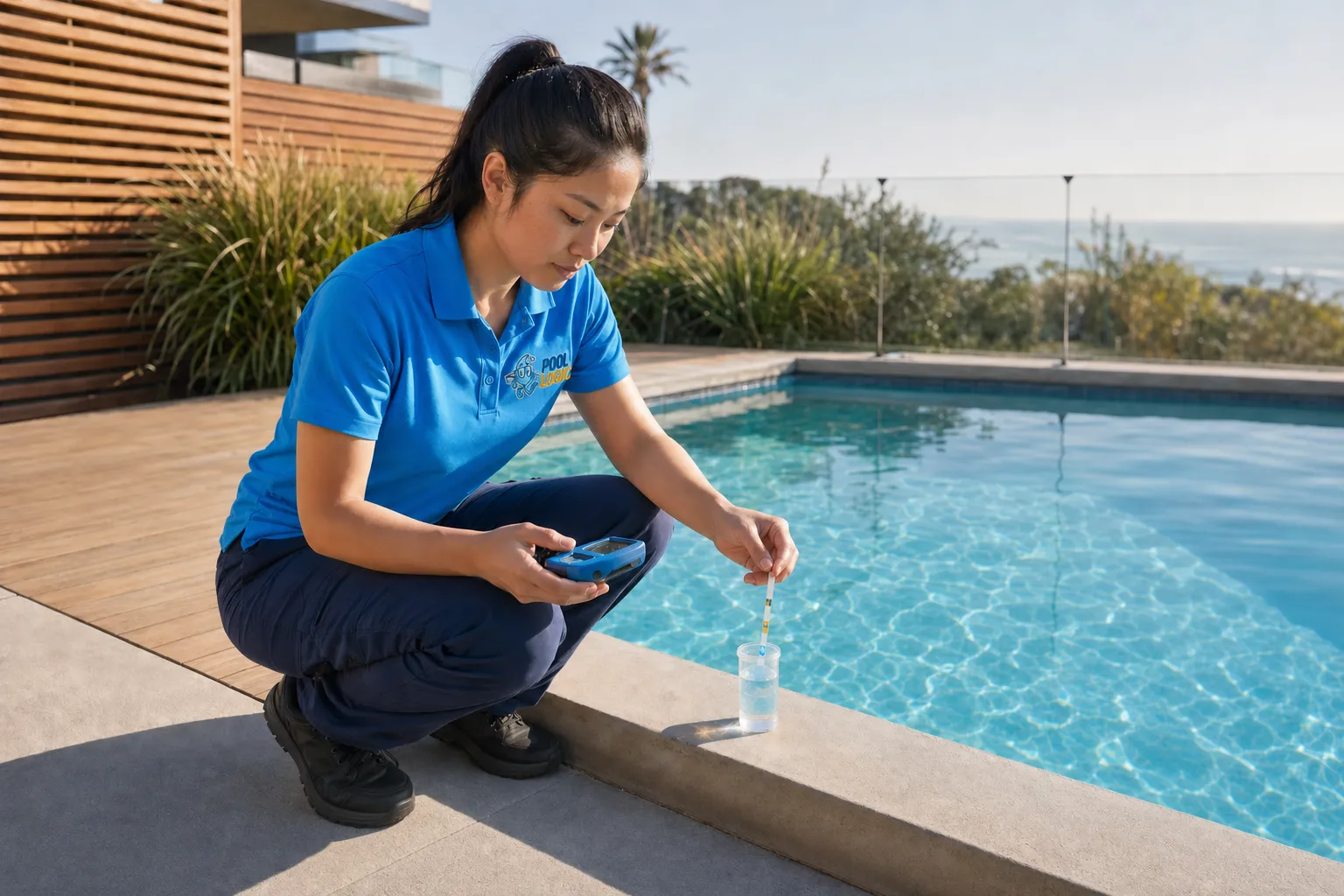
Cloudy water, a strong smell, or a low test result cannot identify chlorine lock. Record these four readings together, in parts per million, or ppm, except for pH.
| Reading | What it tells you | Decision it supports |
|---|---|---|
| Free chlorine | Chlorine available for sanitation, including chlorine temporarily bound to stabilizer. | Compare it with CYA before deciding whether the reading is adequate. |
| Total chlorine | Free chlorine plus combined chlorine, which forms when chlorine reacts with contaminants. | Subtract free chlorine from total chlorine to find combined chlorine. |
| pH | How acidic or basic the water is. | A typical pool target is 7.2 to 7.8. Correct an out-of-range reading according to product directions. |
| CYA or stabilizer | How much sunlight protection has accumulated. | Compare it with the target for your chlorine system before adding stabilized chlorine. |
For example, total chlorine of 3 ppm and free chlorine of 1 ppm means combined chlorine is 2 ppm. That difference does not measure stabilizer and does not prove chlorine lock.
A common CYA target for an outdoor pool using manually added chlorine is 30 to 50 ppm. Salt chlorine generators may specify a higher range. Use the equipment guidance rather than applying one target to every pool.
If CYA reaches your test's upper limit, confirm the actual reading before calculating water replacement. Some color-based chlorine tests can bleach out at very high chlorine levels and appear falsely low. After a large chlorine addition, an unexpected zero needs confirmation with a suitable test, not another blind dose. High chlorine can also interfere with pH tests; check the kit's interference limit before correcting an unexpected pH result.
Match routine chlorine to CYA before choosing a fix
If chlorine registers but algae keeps returning, compare free chlorine with CYA. For a manually chlorinated outdoor pool, our routine operating guide is free chlorine at roughly 10% to 12.5% of the CYA reading. At 40 ppm CYA, that means about 4 to 5 ppm free chlorine.
| CYA reading | Routine free chlorine guide | What to consider |
|---|---|---|
| 40 ppm | 4 to 5 ppm | Within the common CYA range for manually chlorinated outdoor pools. |
| 60 ppm | 6 to 7.5 ppm | Check whether tablets or granules are continuing to add stabilizer. |
| 80 ppm | 8 to 10 ppm | Assess whether you can reliably maintain the required chlorine. |
| 100 ppm | 10 to 12.5 ppm | Water replacement becomes a practical consideration because routine chlorine requirements are high. |
These are routine operating levels, not algae treatment doses or swimming clearance limits. Active algae treatment needs considerably more chlorine than routine maintenance, with the treatment level based on measured CYA. Use our guide to raising free chlorine in a pool to calculate a dose from pool volume, product strength, and the required increase. Follow product directions and swimming restrictions.
A reading that once controlled algae may become inadequate after stabilizer accumulates. For example, 4 ppm free chlorine fits the routine guide at 40 ppm CYA but falls short at 80 ppm. Repeating the old dose leaves that mismatch unresolved.
Check the active ingredient on your chlorine container. Trichlor and dichlor add stabilizer along with chlorine. Liquid pool chlorine does not add CYA. Changing products can stop further accumulation, but it does not remove stabilizer already in the water.
At roughly 80 to 100 ppm CYA, the required routine chlorine reaches about 8 to 12.5 ppm and can become impractical to hold. If you cannot reliably maintain those levels within product directions, plan a CYA reduction instead of continuing to add stabilized chlorine. This is a practical decision point, not a concentration where chlorine suddenly stops working.
Partial water replacement can lower CYA. Replacing half the water at 100 ppm CYA with water containing no CYA would theoretically produce about 50 ppm after mixing. That assumes half is removed before replacement. Two separate 25% exchanges would leave about 56 ppm, because the second exchange removes some replacement water too.
Do not turn that calculation into instructions to empty the pool. Confirm the reading, replacement method, and safe water level first. We can assess whether pool draining and restart service is appropriate.
San Diego County's hard, mineral-heavy tap water makes the refill decision more involved. Check calcium hardness in both the pool and replacement water. Fresh tap water can lower CYA while still bringing substantial minerals into the pool. Evaporation leaves CYA behind, so topping up does not remove accumulated stabilizer.
Chlorine that disappears needs a demand or equipment check
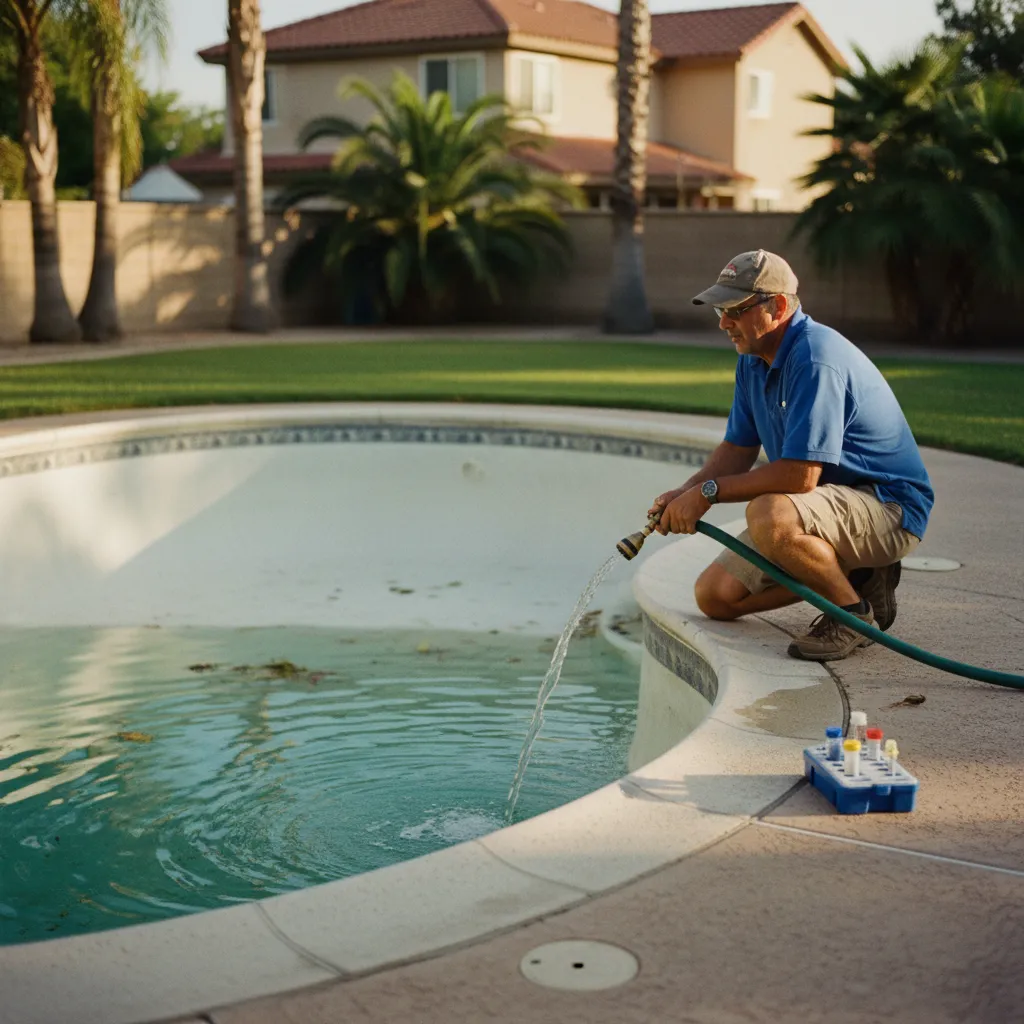
If free chlorine rises after dosing and then falls again, something is consuming it or the ongoing supply is insufficient. Algae, organic debris, sunlight, and heavy swimming use can all increase chlorine loss. That pattern alone does not establish high stabilizer.
Remove leaves and debris, brush affected surfaces, and check that water circulates normally. A filter removes particles; it does not replace chlorine's disinfecting work. Green water or slippery surfaces need an algae treatment plan based on measured CYA and chlorine levels.
An overnight comparison helps separate sunlight loss from continuing contamination. After sunset, allow any chlorine addition to mix according to its directions, then record free chlorine. Test again before direct sunlight reaches the pool. Use the same test method and sampling location, away from returns. There must be no swimming or additional chlorine between readings, including output from a feeder or salt generator.
A loss greater than about 1 ppm overnight suggests continuing chlorine demand worth investigating. It does not identify the contaminant by itself. Consider visible growth, combined chlorine, and test precision alongside the result. A smaller loss does not override visible algae or establish that the pool is ready for swimming.
Inland heat increases chlorine demand, while Santa Ana winds can deposit leaves, dirt, and pollen in a day. After either change, compare new readings with your normal pattern before assuming the chlorine has stopped working.
For an automatic feeder or salt system, check whether it is actually supplying chlorine. Low flow, an empty feeder, or a generator fault can leave the pool short. Our technicians confirm the equipment fix after seeing the equipment. Repeatedly increasing a setting without checking output can delay the right correction.
Choose DIY, waiting, or service by the test results
| Choice | When it makes sense | Time, cost, and risk |
|---|---|---|
| Make a measured adjustment yourself | Readings are reliable, pool volume is known, and the product directions fit the problem. | Allow time for mixing and repeat testing. Buying chemicals before checking CYA risks repeated ineffective treatment. |
| Wait and retest | You have just treated the pool and are following the specified circulation interval. | Waiting avoids dosing again too soon. It will not reliably resolve excessive CYA or an ongoing chlorine shortage. |
| Arrange a diagnosis | Tests disagree, chlorine repeatedly disappears, or a feeder is not supplying chlorine. | Our Service Call to Diagnose Issue is $185. Treatment time depends on the confirmed cause. |
See our pool service pricing when comparing service options. Choose the next step from the readings rather than buying a product solely because it promises to break chlorine lock.
If the same imbalance keeps returning, our weekly pool cleaning service in San Diego can help track chemistry and equipment operation over time. The useful comparison is whether CYA is climbing, chlorine demand is changing, or chlorine delivery is falling short.
Before the next dose, confirm these details
- Write down the readings and timing. Include free chlorine, total chlorine, pH, CYA, and when you last added chemicals.
- Check the product and pool volume. Record the active ingredient and amount already added. Follow label directions for the next treatment and retest interval.
- Keep chemicals separate. Never mix chlorine products together or mix chlorine with acid. Do not put a different chlorine type into a feeder containing residue from another product.
- Keep swimming on hold when conditions are unsuitable. Do not swim with visible algae, inadequate sanitation, or water too cloudy to see the bottom clearly. After treatment, confirm chemistry meets the product's swimming instructions.
If you cannot reconcile the readings, bring that record to our technicians before adding another treatment. It gives us a concrete starting point for deciding whether the pool needs a chemistry adjustment, equipment service, or water replacement.
Frequently asked questions
Does baking soda break chlorine lock?
No. Baking soda raises total alkalinity, the water's resistance to pH changes. It does not remove cyanuric acid or replace chlorine consumed by contamination. Use it only when an alkalinity test shows an adjustment is needed.

Kyle Bowman
Founder of PoolLogic · CPO-Certified
Kyle is the Founder of PoolLogic Pool Service and a Certified Pool Operator (CPO) with deep expertise in pool service, water chemistry, and pool equipment repair. He oversees every aspect of PoolLogic's operations to ensure San Diego pool owners receive expert-level care.
Read moreNeed professional pool service?
PoolLogic Pool Service provides expert pool cleaning, maintenance, and repair services throughout San Diego County.