
On this page
- Aim to control algae tonight, then assess clearing
- Check whether tonight's chlorine target is manageable
- Use one-to-two-hour checks through the evening
- Keep filtration running only while flow stays healthy
- Use morning readings to choose the next action
- Require clear visibility and suitable chemistry before swimming
Aim to control algae tonight, then assess clearing
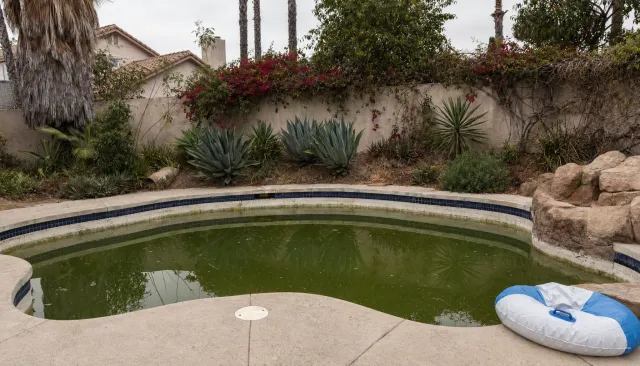
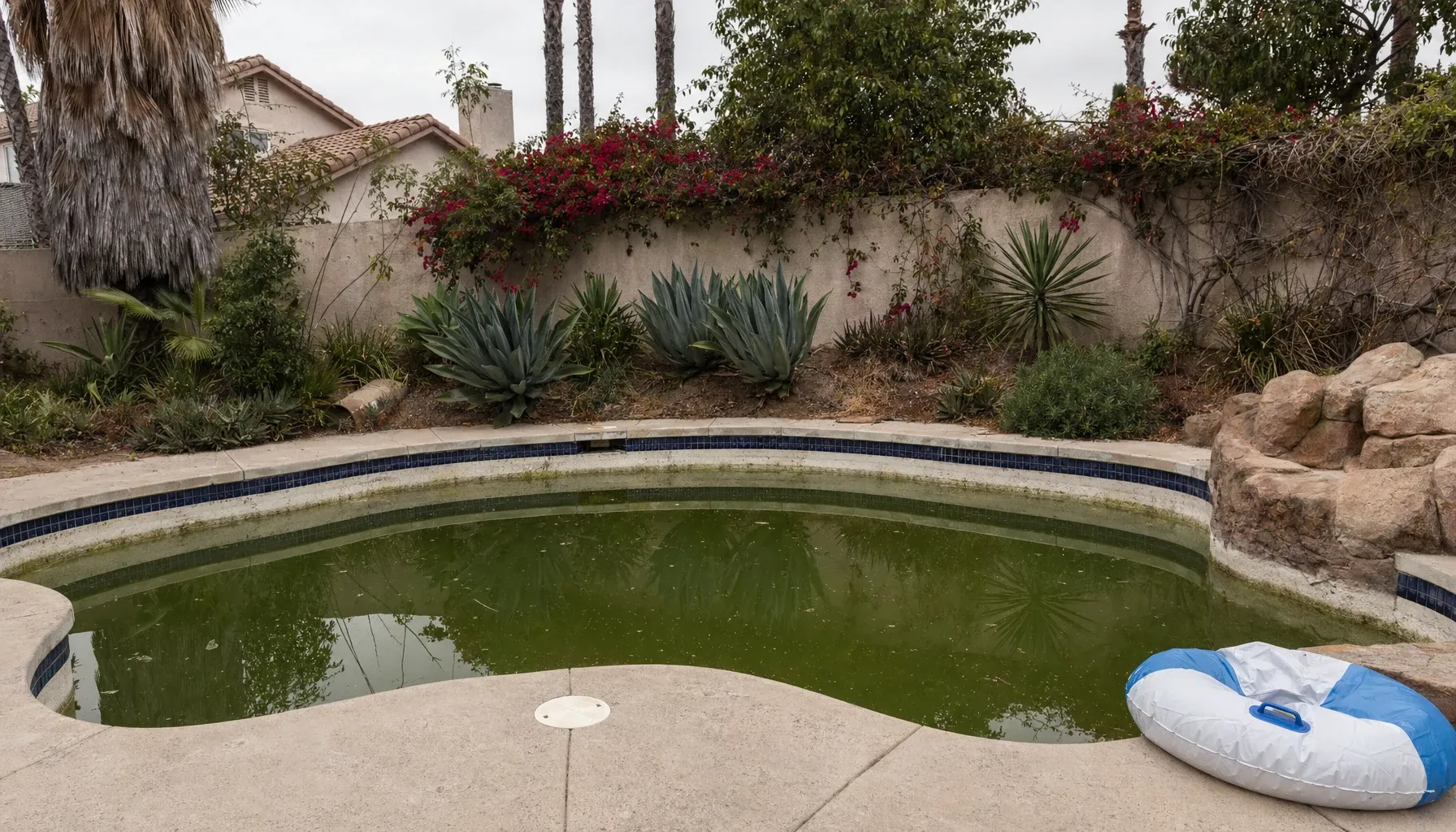
A fully clear, swimmable pool by morning is rarely realistic unless the water has only a light green tint. The achievable overnight goal is to hold the algae-treatment chlorine target, checking every one to two hours, while filtration removes suspended material.
Tonight, test the water, remove debris, brush, calculate your chlorine dose, and run a working filter. One large addition before bed does not establish that chlorine stayed effective overnight.
Our decision rule is simple: attempt treatment yourself only when you know the pool volume, have a usable stabilizer reading, can measure treatment-level chlorine, and have reliable circulation. If stabilizer reads zero or exceeds the kit's range, arrange service before dosing. Do the same if the floor is hidden, readings are uncertain, or the pump cannot maintain flow. Postpone swimming.
Killing algae and removing it are separate jobs. Chlorine treats the growth; filtration removes suspended material afterward. Water can lose its green color while remaining too cloudy for swimming.
Our pool algae removal service serves San Diego County's North and South regions. Our Pool Algae Removal price range is $200 to $500 per service. See our San Diego pool service pricing when comparing your options.
Check whether tonight's chlorine target is manageable
Before treatment, measure free chlorine, pH, and cyanuric acid, also called CYA or stabilizer. Confirm pool volume and the chlorine product's strength. Use a test capable of measuring the full treatment concentration, such as a drop-count chlorine titration test rated for that range.
For ordinary green algae in stabilized water, the free chlorine treatment target is approximately 40 percent of CYA. This is a temporary treatment target. Use our step-by-step pool algae removal guide for the full target table and dosing procedure.
Gallons of 10 percent liquid chlorine needed = (target ppm minus measured ppm) ÷ 10 × (pool gallons ÷ 10,000).
This formula assumes 10 percent product strength. Calculate later additions from each new reading, rather than repeating the initial dose.
High CYA raises the treatment target and the amount of chlorine needed to reach it. That can make an overnight attempt impractical if your test cannot read the target or you lack enough product for repeated measured additions. Check both before starting. High CYA does not itself prove rapid chlorine loss; the difficulty is reaching and maintaining the higher required concentration.
A zero or off-scale CYA result fails the opening decision rule. Do not use zero as the target or substitute the kit's maximum reading for an unknown value. Our technicians can confirm the reading and establish a treatment plan before chlorine is added.
Adjust pH to approximately 7.2 to 7.6 before raising chlorine, following product directions. High chlorine can interfere with common pH tests. Do not chase a later pH reading without checking the kit's limits.
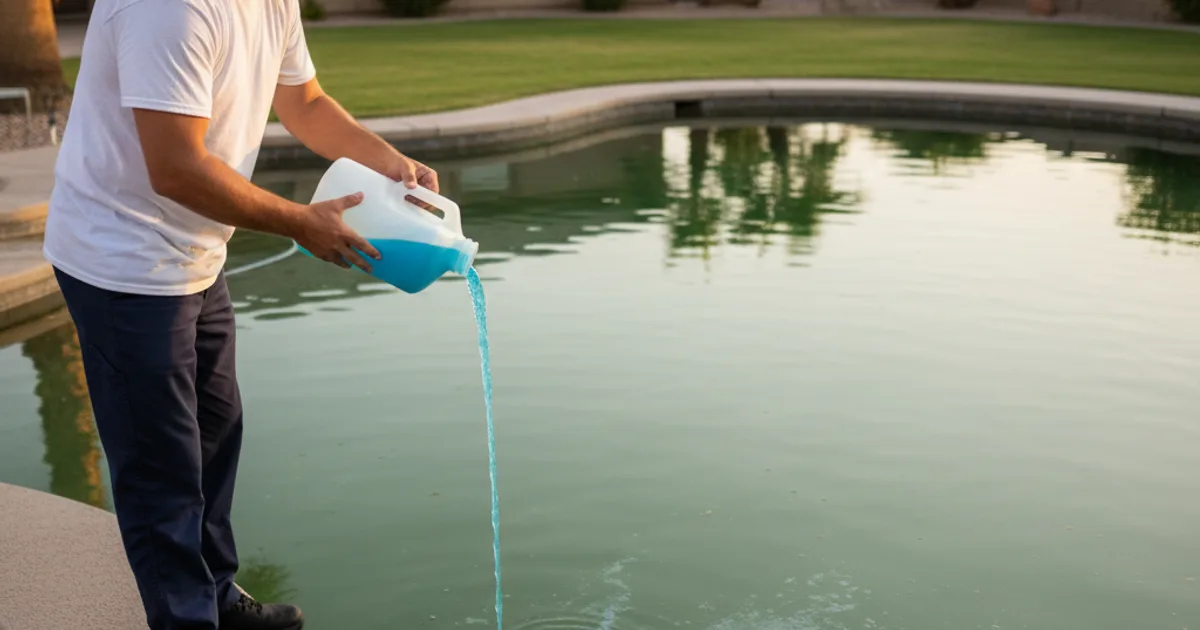
San Diego's imported source water arrives hard and mineral-heavy, and evaporation concentrates minerals further. Liquid chlorine adds neither calcium nor stabilizer, making it useful when you need repeated overnight additions without increasing either. Follow chemical labels for handling, application, and circulation between additions.
Use one-to-two-hour checks through the evening
Start early enough to complete several checks before bedtime. Evening treatment reduces immediate sunlight exposure, but algae can still consume chlorine rapidly after dark.
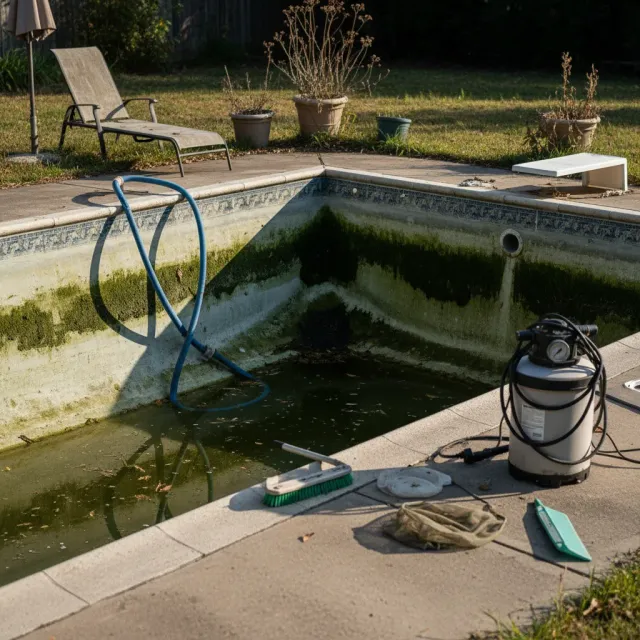
- Before the first dose: Remove leaves and settled debris, empty baskets, and check the water level. Brush accessible walls, steps, and the floor with a surface-appropriate brush. Record starting chemistry and filter pressure with the pump operating normally.
- At treatment: Complete necessary pH adjustments, allowing the required circulation between chemicals. Add the calculated chlorine dose according to the label. Never mix chemicals together.
- After the required mixing interval: Measure free chlorine to confirm that treatment reached the target. A calculated dose is only a starting estimate.
- Every one to two hours while demand stays high: Retest and restore the target using the measured shortfall. Check return flow and filter pressure at the same time.
- Before bed: Record the final reading and time. If chlorine is still dropping rapidly, treatment still requires frequent attention. Do not assume an unattended interval will hold the target.
- At dawn: Test before adding more chlorine, then compare water visibility, pressure, and flow with your evening notes.
During Santa Ana winds, leaves, dust, and pollen can keep entering after your first cleanup. Recheck skimmer baskets during each evening test and remove newly settled debris. A basket cleared at sunset may restrict flow later, undermining the overnight filtration plan.
If you cannot continue checks while demand remains high, keep the pool closed and resume testing promptly in the morning. Do not add an oversized dose to compensate for missed checks. Record when monitoring stopped so you can distinguish a measured treatment period from an unattended interval.
Keep filtration running only while flow stays healthy
Continuous overnight filtration helps remove suspended algae when the pump stays primed and the filter passes water normally. Check equipment during each evening water test and again at dawn.
Use the filter manufacturer's cleaning threshold. Rising pressure paired with weaker return flow indicates restriction. If the pump loses prime or runs dry, stop it and resolve the problem before continuing. Raising pump speed does not fix a loaded filter.
Compare pressure readings at the same pump speed. A scheduled speed change can change pressure without indicating additional filter loading. Note the speed alongside pressure and return flow so the morning comparison is useful.
SDG&E electricity rates make pump settings worth checking during an extended run. Use a speed that maintains effective circulation and filtration within equipment requirements. Check that the timer will actually sustain that setting overnight. Maximum speed is not automatically the fastest route to clear water.
Avoid flocculant as an overnight shortcut unless your equipment supports its complete removal procedure. Some products require settling followed by vacuuming to waste. Adding one without that capability can leave another removal problem for morning.
Use morning readings to choose the next action
Compare morning chemistry and visibility with your starting notes. Color alone is insufficient: pale blue or gray water may still contain suspended material and have unsuitable chemistry.
| Morning result | Next action |
|---|---|
| Less green, clearer floor, normal flow | Continue filtration and treatment. Improvement means the process is progressing, not that swimming is ready. |
| Cloudy gray or blue water, chlorine holding near target | Check filter loading and allow particle removal more time. Do not raise chlorine above the target solely because water remains cloudy. |
| Still green, chlorine well below target | Restore the calculated target and resume one-to-two-hour checks. Verify pool volume, CYA, product strength, and remaining debris. |
| Little improvement and weak return flow | Resolve the circulation or filter problem before repeating chemical treatment. |
A large chlorine drop during an interval without additions means chlorine demand remains. If you added chlorine during that interval, subtracting the dawn reading from the bedtime reading does not measure overnight loss. Record readings and additions together. A small overnight drop also does not establish swim readiness while algae or poor visibility remains.
Inland San Diego heat increases chlorine demand as the day warms. An improved pool at dawn can lose ground if treatment stops prematurely. Continue recovery checks before the hottest afternoon hours. Along the coast, a cool marine-layer morning is no reason to skip testing: gray skies do not establish that chlorine held overnight.
Require clear visibility and suitable chemistry before swimming
Keep the pool closed until the deepest floor and drain cover are clearly visible, algae is gone, and water tests satisfy the treatment product's swimming requirements. Confirm pH is within the normal swimming range of 7.2 to 7.8 using a valid test. Treatment-level chlorine is not permission to swim.
If guests are arriving tomorrow, make another plan whenever any check remains unresolved. Additional chlorine cannot force a loaded filter to finish faster.
Arrange help if chlorine repeatedly falls despite measured additions or circulation remains weak. Have the pool volume, test results, product strength, treatment times, and equipment photos ready. Include your last evening reading, first morning reading, and any additions between them. Tell our team whether visibility and return flow improved. Those details help us decide whether chemistry, filtration, or equipment service needs attention first.

Kyle Bowman
Founder of PoolLogic · CPO-Certified
Kyle is the Founder of PoolLogic Pool Service and a Certified Pool Operator (CPO) with deep expertise in pool service, water chemistry, and pool equipment repair. He oversees every aspect of PoolLogic's operations to ensure San Diego pool owners receive expert-level care.
Read morePool service done right
Need professional pool service?
PoolLogic Pool Service provides expert pool cleaning, maintenance, and repair services throughout San Diego County.