
On this page
- Algae grows when cells survive chlorine and multiply
- How algae gets into the water
- What feeds algae and speeds growth in San Diego pools
- Why algae starts on walls and survives there
- Why algae can grow when chlorine reads above zero
- What we check when algae keeps returning
- Catch the first change before the pool turns green
Algae grows when cells survive chlorine and multiply
Algae grows in a pool when microscopic cells enter the water and multiply faster than effective chlorine can kill them. Light supplies energy, dissolved nutrients support growth, and weak circulation can leave patches on walls before the whole pool turns green.
Most pool algae make food through photosynthesis, which means using light to turn carbon dioxide and water into sugars. Cells reproduce, often by dividing. A few surviving cells are invisible, so water can look normal while growth begins.
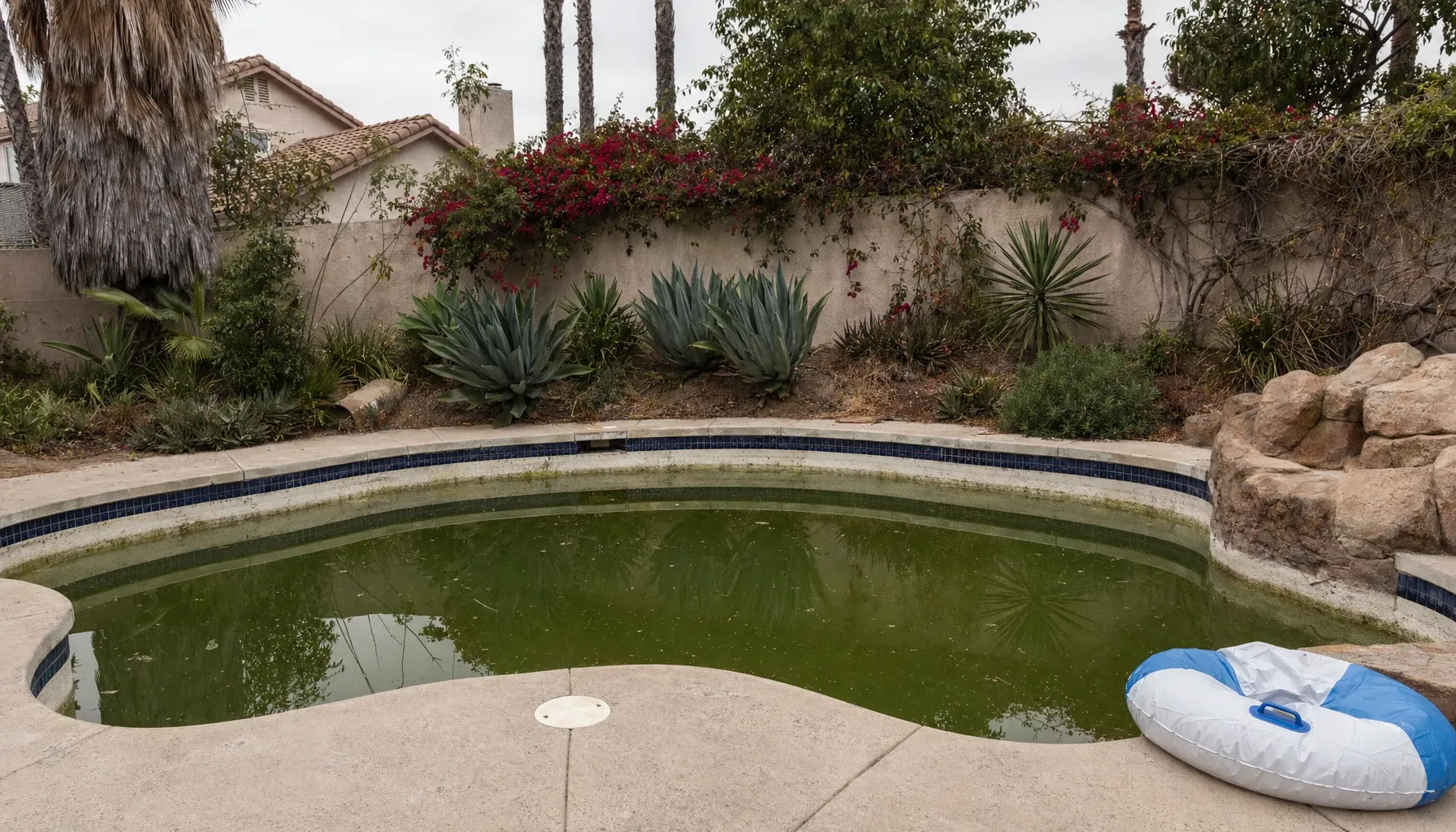
As the population increases, you may notice a slippery step, a faint green wall patch, or cloudy water. Suspended algae can eventually make the whole pool green. A wall patch and green water can develop together; one does not always come before the other.
Established algae also increases chlorine demand, meaning the amount of chlorine the pool uses. If chlorine supply falls behind, more cells survive and reproduce. That cycle explains why a small patch deserves attention before the next cleaning.
How algae gets into the water
Wind carries algae with dust and dirt. Rain can wash organisms and debris into the pool, particularly where runoff reaches the water. Swimwear, toys, brushes, and cleaning equipment can transfer cells from another pool or natural body of water.
These repeated introductions make consistent chlorine protection essential. Rinse and clean equipment used elsewhere, wash swimwear after lake or ocean use, and keep dirty runoff out of the pool.
Santa Ana winds can deposit leaves, dirt, and pollen in San Diego County pools within a day. Remove floating and settled debris promptly. Check accessible baskets too, because accumulated debris both consumes chlorine and restricts water movement.

What feeds algae and speeds growth in San Diego pools
Algae needs light and nutrients, including phosphorus and nitrogen. Phosphates are a form of phosphorus algae can use. Dirt, fertilizer runoff, leaves, and other debris can introduce nutrients, while decaying organic material adds to chlorine demand.
San Diego's first winter storm after a dry spell can wash accumulated dust, phosphates, and debris into pools. After that first dirty-water event, remove debris and test chlorine before choosing a phosphate treatment. Keeping enough effective chlorine in the water remains the first priority, even when nutrients are present.
Warm water helps many algae reproduce faster. Inland and East County summer heat can combine with stronger sunlight and heavier swimming to increase chlorine demand. A feed setting that worked during cool weather may fall short during a hot spell. Compare water readings at similar times on successive days to catch that change.
Coastal marine-layer mornings reduce light without eliminating it. Some algae can grow in relatively low light, so gray May and June mornings are no reason to skip testing or brushing shaded steps.
Why algae starts on walls and survives there
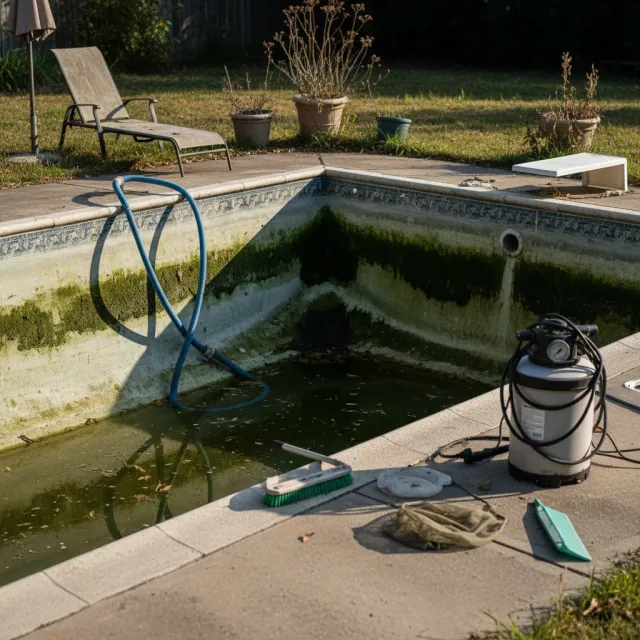
Walls provide a surface where cells can attach and accumulate. Corners, steps, and areas behind ladders often receive less water movement and less brushing. Those sheltered spots can develop visible growth while the main pool still looks clear.
Shade itself does not feed algae. A shaded corner can still receive enough indirect light for growth, while weak circulation limits the delivery of fresh chlorinated water. If the same patch returns, check whether return flow and brushing reach that spot.
Attached growth can form biofilm, a sticky protective layer around microorganisms. Chlorine has a harder time reaching cells inside that layer. Brushing with a brush suitable for the pool surface breaks up the film and exposes more growth to chlorinated water. Surviving attached cells can regrow if brushing is not followed by adequate sanitation.
A slippery green film that releases a green cloud when brushed is a useful sign of algae. Loose tan dust that settles quickly points toward dirt. Photograph the first patch before brushing so its location and spread remain clear.
Why algae can grow when chlorine reads above zero
Free chlorine is the chlorine available to sanitize the water. Stabilizer, also called cyanuric acid or CYA, protects chlorine from sunlight but reduces its immediate activity. The higher the stabilizer level, the more free chlorine the pool generally needs for algae control.
Test both before judging whether chlorine is adequate. Test results use ppm, meaning parts per million, the concentration unit on pool test strips and kits. Collect the sample away from return jets and chemical feeders, and record when chlorine was last added.
| Reading | What it means | What to do |
|---|---|---|
| Free chlorine at 0 ppm | No measurable free chlorine remains. | Restore chlorine according to product directions and investigate missed dosing, equipment faults, or increased demand. |
| Free chlorine above zero but below the minimum for your stabilizer level | Algae can survive despite a positive chlorine reading. | For chlorine-fed pools, a common algae-prevention minimum is roughly 7.5% of the stabilizer reading: 3 ppm free chlorine at 40 ppm stabilizer, or 4.5 ppm at 60 ppm. Set the maintenance target above that minimum to allow for chlorine loss between doses. Salt systems can use a somewhat lower ratio; follow the equipment instructions and sanitizer label. |
| pH outside 7.2 to 7.8 | The water needs a balance adjustment. | Correct pH using reliable readings and product directions. |
| Stabilizer higher than your pool needs, often above about 50 to 80 ppm depending on the system | The same free chlorine number provides less active protection. | Stop using tablets or granules that add stabilizer, such as trichlor or dichlor. Ask about partial draining and refilling to lower it safely. |
These chlorine minimums are for preventing algae; visible growth needs treatment and removal. Some salt systems specify stabilizer near the upper end of that range. Check the equipment instructions before deciding to lower it. Alkalinity, which helps resist pH changes, should also stay balanced, but raising it is not an algae treatment.
Recent heavy chlorination can interfere with some pH tests. Follow the test kit's chlorine limits before adjusting pH from its color result.
What we check when algae keeps returning
Our technicians compare the first growth location with water readings, return flow, baskets, filter pressure, and the operating schedule. Filter pressure is most useful against the clean-filter baseline at the same pump speed. Follow the equipment manual's cleaning threshold.
For saltwater pools, we confirm that the cell actually produces chlorine. San Diego's hard source water and evaporation can encourage mineral deposits on cells, reducing output. We inspect the equipment before choosing the appropriate maintenance or repair.
Persistent chlorine loss may call for testing after sunset and before sunrise, with dosing and salt-cell production stopped during the comparison. A drop greater than 1 ppm signals ongoing chlorine demand that needs investigation. For recurring patches or green water, our San Diego pool algae removal service checks the water and equipment conditions together.
Catch the first change before the pool turns green
Test free chlorine and pH at least two to three times a week during warm months. Test more often during heavy use, hot spells, or active chlorine loss, and after major debris events or equipment interruptions. For chlorine-fed pools, keep free chlorine above roughly 7.5% of the stabilizer reading, about 3 ppm at 40 ppm stabilizer. Choose a target that keeps the reading above that minimum until the next dose. Salt systems may use a somewhat lower ratio according to their equipment instructions; follow those instructions and the sanitizer label.
- Record readings before adding chemicals. Include the time, product, and amount whenever you dose.
- Inspect steps and sheltered walls. A new slippery film or returning green patch calls for testing and treatment.
- Note equipment changes. Weak returns, pump interruptions, or salt-system alerts can explain a later chlorine drop.
- Act on visible growth. Use our step-by-step pool algae removal guide for the treatment process.
Share these records with your technician. Keep swimmers out while visible algae remains or sanitizer readings are outside the required range. If you cannot clearly see the deepest part of the pool floor, keep the pool closed regardless of its color.

Kyle Bowman
Founder of PoolLogic · CPO-Certified
Kyle is the Founder of PoolLogic Pool Service and a Certified Pool Operator (CPO) with deep expertise in pool service, water chemistry, and pool equipment repair. He oversees every aspect of PoolLogic's operations to ensure San Diego pool owners receive expert-level care.
Read moreNeed professional pool service?
PoolLogic Pool Service provides expert pool cleaning, maintenance, and repair services throughout San Diego County.