
On this page
Choose the pH fix from your alkalinity reading
To raise pH in a hot tub, test total alkalinity, then use a spa pH increaser or aeration to reach 7.2 to 7.8. If alkalinity is below your spa's recommended range, correct it first with an alkalinity increaser, then retest pH.
The common advice to add pH increaser works when the water needs it. It can overshoot when low pH comes from excess dissolved carbon dioxide, which aeration can release. We use both readings to choose the correction.
| Your test results | First action | Reason |
|---|---|---|
| pH below 7.2 and alkalinity below the recommended range | Raise alkalinity with a labeled spa alkalinity increaser | Low alkalinity leaves water poorly buffered against pH changes |
| pH below 7.2 and alkalinity within range | Try aeration, then retest before adding chemicals | Carbon dioxide release can raise pH without raising total alkalinity |
| pH below 7.2 and alkalinity above range | Confirm the readings and try aeration before adding alkalinity | Additional bicarbonate would increase an already high reading |
| pH from 7.2 to 7.8 | Leave pH alone unless your equipment instructions specify a narrower target | A number within range does not need to reach exactly 7.6 |
A common spa alkalinity target is 80 to 120 ppm. Follow the range specified for your spa and sanitizer system when it differs. If aeration corrects pH but alkalinity remains above that range, address alkalinity before resuming routine chemical additions.
Confirm low pH before measuring a dose
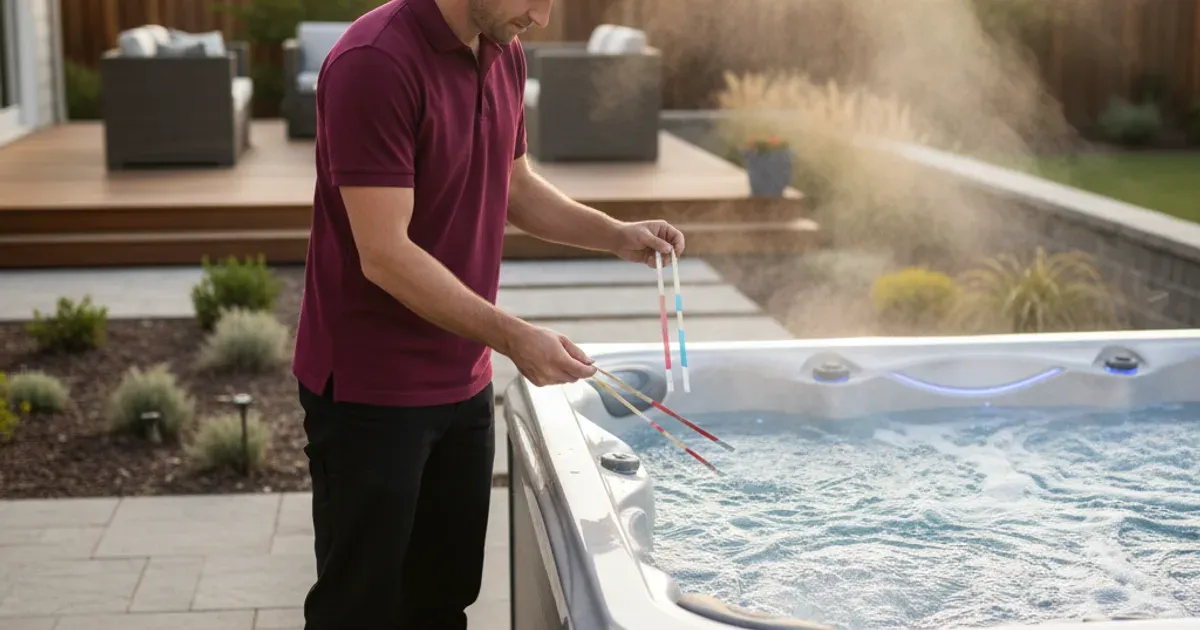
A single unclear test strip should not trigger a chemical addition. Use fresh test supplies and follow their timing instructions. If the color falls between readings, confirm it with a drop test suitable for spa water.
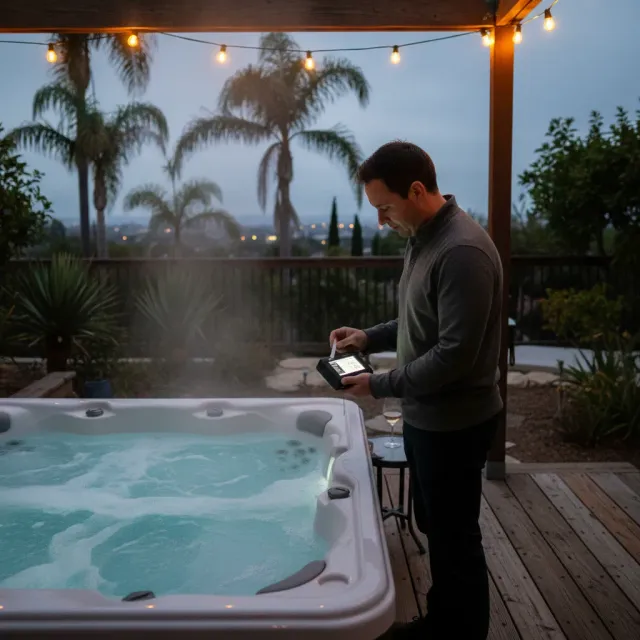
Collect water away from return jets and chemical dispensing points. Test pH, total alkalinity, and sanitizer together. Sanitizer above a test kit's interference threshold can distort the pH result, so check the kit instructions before treating an unexpected reading.
Know the actual water volume before opening the chemical container. Use the spa manual or a measured fill volume. Seating capacity does not tell you how many gallons require treatment.
For example, a 300-gallon tub needs half the amount specified for 600 gallons, provided the label permits proportional dosing for the same adjustment. That calculation scales a labeled dose. It does not establish a universal dose for raising pH by a particular amount, because alkalinity affects the response.
For a spa connected to a pool, confirm whether water is circulating through both bodies or only the spa. A dose calculated for the spa alone will be diluted if it enters the shared system. Our technicians confirm the circulation arrangement after seeing the equipment.
Choose the increaser using alkalinity and source-water tests
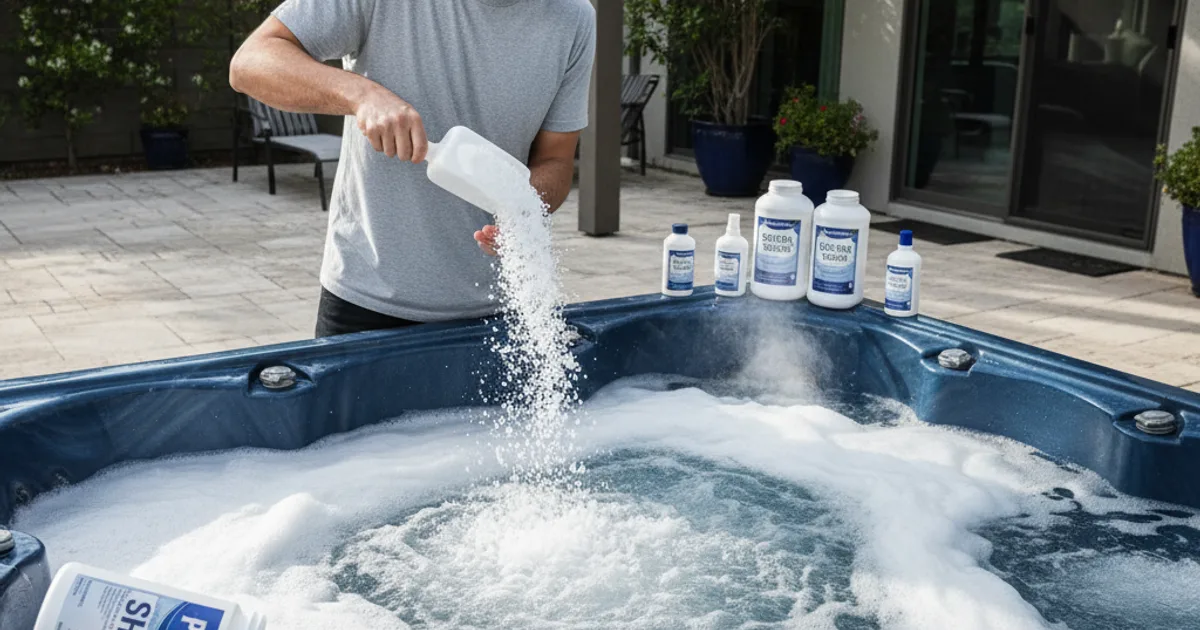
The advice to use baking soda holds when alkalinity is low. Sodium bicarbonate, the ingredient in many alkalinity increasers, primarily raises total alkalinity. It can also raise pH, but it is a poor choice for repeatedly correcting pH when alkalinity is already adequate.
Many spa pH increasers contain sodium carbonate, also called soda ash. It raises pH more strongly and raises alkalinity too. Check the active ingredient rather than assuming every product labeled increaser works the same way.
Most San Diego County tap water comes from imported Colorado River and Northern California supplies and is hard and mineral-heavy. Hardness measures calcium and magnesium; alkalinity measures buffering capacity. Hard water does not automatically mean adequate alkalinity. Test both instead of choosing a product from deposits around the waterline.
After a refill, measure the fill water's alkalinity and calcium hardness, then test the mixed spa water before choosing a correction. Use a calcium-hardness test for the spa's calcium target, rather than substituting a total-hardness reading. Compare the result with your equipment's specified range.
Keep those fill-water results alongside your spa readings. If calcium hardness climbs between fills while you replace evaporated water, repeated top-ups are adding minerals. Evaporation removes water but leaves those minerals behind. Adding hard tap water restores the water level without removing the accumulated calcium.
That distinction changes the treatment choice: when alkalinity is adequate, try aeration before adding a product that raises it further. If calcium hardness already exceeds the equipment's range, arrange a water balance check instead of repeatedly adjusting pH to manage deposits.
Use aeration when alkalinity does not need increasing
The advice to run the jets works when they introduce air and help dissolved carbon dioxide escape. Water circulation alone provides less aeration than jets with their air controls open.
With nobody in the tub, open the cover and run the air jets for an initial 15 to 30 minutes, within the equipment's operating instructions. Retest pH after the water mixes. This is a checking interval, not a promise that every tub will reach its target in that time.
If pH rises into range, stop the correction. If it remains low after repeated checks, confirm alkalinity and use the appropriate labeled treatment. Aeration cannot repair low buffering capacity.
Leaving an outdoor tub uncovered for hours has a local drawback. Inland San Diego heat and dry Santa Ana conditions increase evaporation, concentrating minerals left in the water. Use short, monitored sessions and replace the cover when treatment instructions allow. Do not leave jets running unattended overnight to chase a pH number.
Before running jets after a hot or windy spell, check the water level against the spa's operating mark. Restore a low level and circulate before taking the readings used for treatment. The added hard water can change the balance you were about to correct. Coastal marine-layer conditions may reduce evaporation, but they do not change the pH target or justify a different chemical dose.
Add pH increaser in measured stages
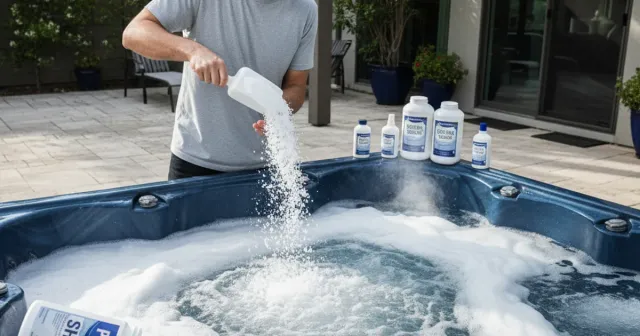
When chemical adjustment is needed, follow the product's directions for your measured pH and water volume. Use its smallest recommended correction step rather than combining several doses.
- Keep bathers out and establish circulation as directed by the product label.
- Measure the specified amount with a clean, dry measure reserved for that product.
- Add it using the label's method. Predissolve only when instructed, adding chemical to water.
- Allow the full mixing interval before collecting another sample.
- Retest pH and alkalinity before deciding whether another dose is necessary.
Never mix spa chemicals together or add different products simultaneously. Follow each label's waiting and handling instructions.
Stop once your tub reaches its recommended pH range. A second dose added before the first has fully mixed can push the eventual reading above your target.
In mineral-heavy water, pushing pH too high increases the likelihood of calcium carbonate cloudiness and scale. Heated spa water is particularly susceptible to calcium carbonate deposits. If water clouds after an addition, stop dosing and check pH, alkalinity, and calcium hardness. Do not assume the cloudiness means the treatment needs another scoop.
Use the next test to decide whether the problem is resolved
After the required mixing interval, check pH and sanitizer before using the tub. A corrected pH reading does not establish an adequate sanitizer level. Keep bathers out until both meet the applicable product and spa instructions.
Check again before the next soak. If pH falls below 7.2 again, record alkalinity, recent chemical additions, top-ups, and use. Repeated drops with low alkalinity point toward inadequate buffering. Drops despite adequate alkalinity call for checking the sanitizer routine and other acidic additions.
Record each product's name, amount, and addition time alongside the readings. A drop following the same treatment repeatedly gives us a specific part of the routine to check. If pH instead climbs after jet use, stop adding increaser and review alkalinity before the next correction.
Do not use shock as a substitute for pH increaser. Shock products have different chemical formulations and can affect pH differently. Choose shock for its labeled sanitation purpose, then measure the water's response.
If properly measured corrections keep failing, or readings conflict, arrange a water balance check. Our technicians can assess the water and chemical routine through our San Diego hot tub cleaning service. Have the spa model, water volume, product containers, fill-water readings, and recent test results ready so we can identify the next correction.

Kyle Bowman
Founder of PoolLogic · CPO-Certified
Kyle is the Founder of PoolLogic Pool Service and a Certified Pool Operator (CPO) with deep expertise in pool service, water chemistry, and pool equipment repair. He oversees every aspect of PoolLogic's operations to ensure San Diego pool owners receive expert-level care.
Read morePool service done right
Need professional pool service?
PoolLogic Pool Service provides expert pool cleaning, maintenance, and repair services throughout San Diego County.