
On this page
Cyanuric acid protects chlorine but slows disinfection
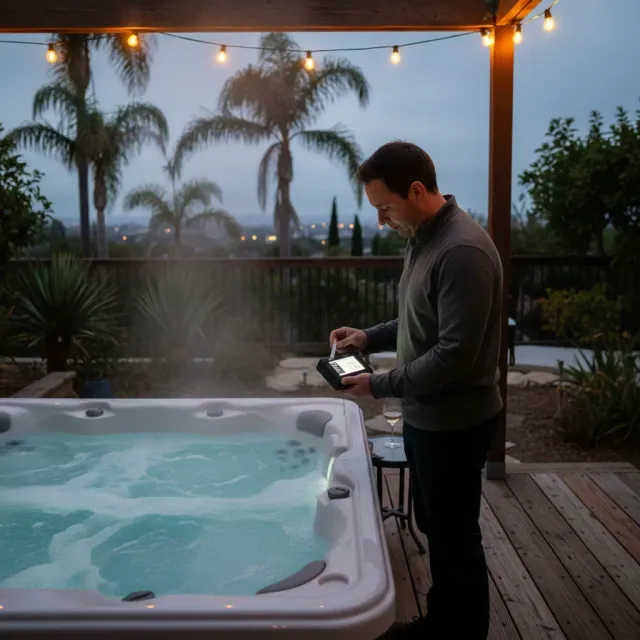
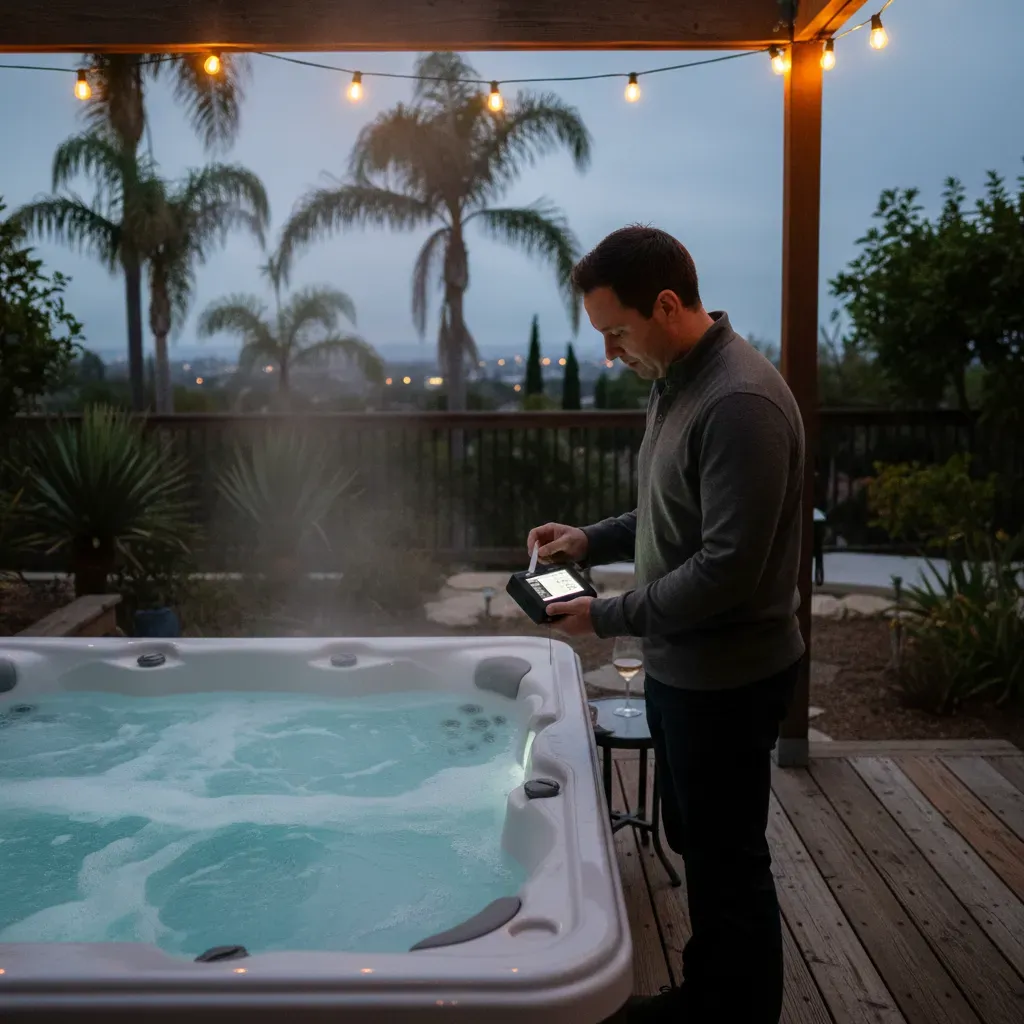
Cyanuric acid, also called CYA or stabilizer, protects chlorine from sunlight but slows how quickly it kills germs. For hot tubs, CDC recommends avoiding cyanuric acid and chlorine products containing it. See the CDC guidance for home pool and hot tub treatment.
If your test strip shows rising stabilizer, check your chlorine container before adding anything else. Dichlor, a common granular chlorine ingredient, adds cyanuric acid with each dose. You can accumulate CYA without ever buying a bottle labeled stabilizer.
CYA does not sanitize water by itself. It also is not the same as pH, alkalinity, or calcium hardness. A normal chlorine reading does not tell you how much stabilizer has accumulated. You need a separate CYA test.
The practical choice is which sanitizer your equipment supports and how to handle existing stabilizer. These three options affect CYA differently.
| Sanitizer option | Effect on CYA | Decision for your hot tub |
|---|---|---|
| Stabilized chlorine, including dichlor | Adds CYA whenever you dose | Check whether it explains a rising reading; review the sanitizer plan |
| Unstabilized chlorine | Adds no CYA | Consider a compatible product to stop further buildup |
| Bromine | Does not need CYA for sunlight protection | Consider only if the spa supports a bromine system |
Stabilized chlorine can explain a rising CYA reading
Read the active ingredient rather than relying on words such as shock or spa granules. Sodium dichloroisocyanurate, often shortened to dichlor, contains stabilizer. Trichlor contains it too. A product labeled shock may contain dichlor, so shocking can raise CYA even when that was not your intention.
Chlorine gets used up as it treats the water. The stabilizer it brought along remains much longer. Repeated doses can therefore raise CYA while your chlorine reading keeps dropping between uses. Adding more of the same product continues that buildup.
If your existing spa instructions specify dichlor, have the sanitizer plan reviewed before substituting another chemical. Product concentration, dosing instructions, and equipment compatibility matter. Never put a different chlorine type into an existing feeder or mix chlorine products together.
For a standalone hot tub, adding separate stabilizer is not the right response to a low CYA result. A pool test strip may mark a stabilizer range as ideal, but that printed range is not automatically a hot tub target.
Do not judge the need for CYA by sunshine alone. Inland San Diego County's hotter summers increase evaporation and chlorine demand, especially when a tub is uncovered. Check sanitizer before use instead of adding stabilizer to compensate for falling chlorine. Along the coast, gray marine-layer mornings are no reason to skip that test. Neither weather pattern changes the CDC recommendation for hot tubs.
Unstabilized chlorine stops adding CYA
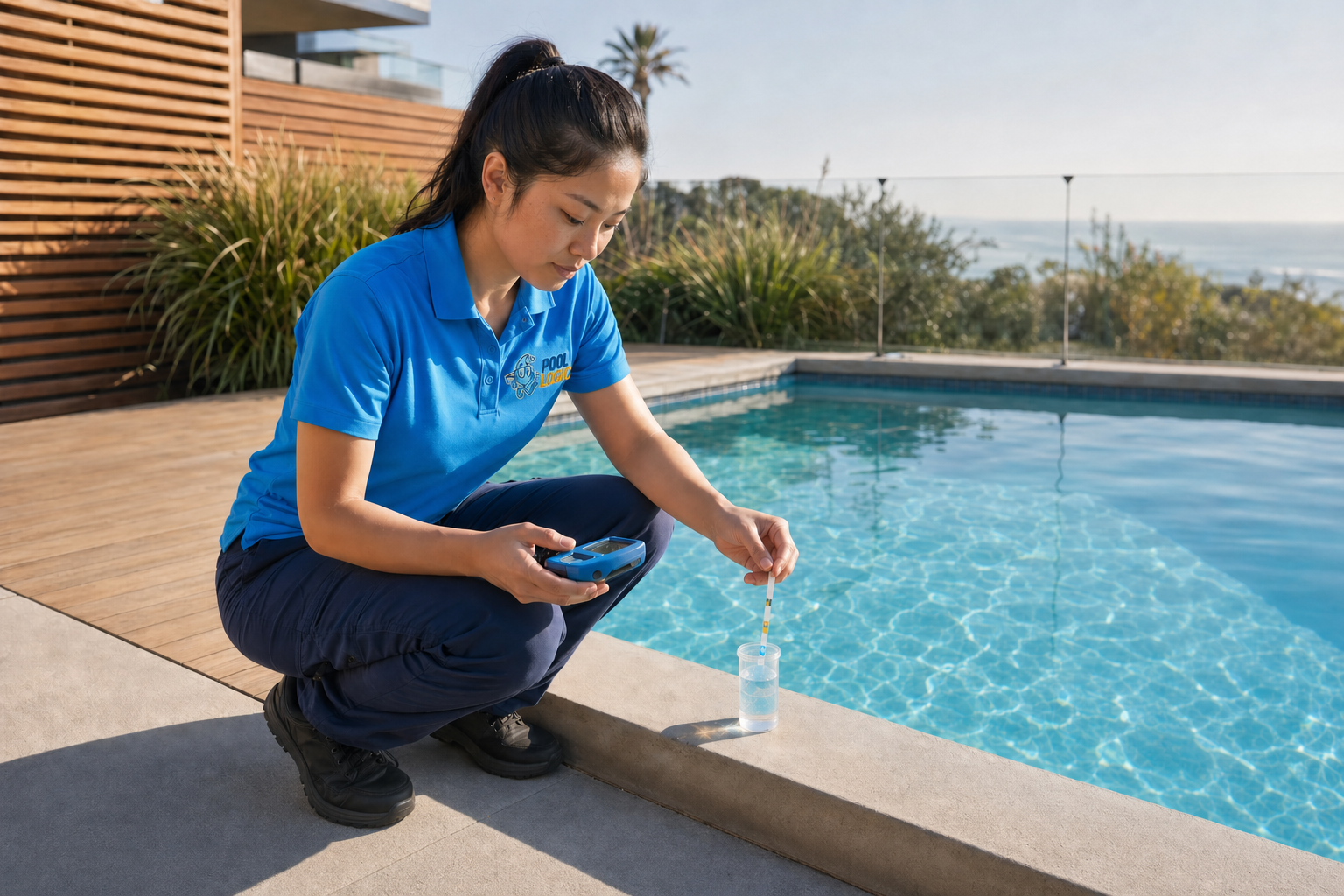
If you want to keep using chlorine without increasing stabilizer, an equipment-compatible unstabilized product is the option to review. Sodium hypochlorite, the active ingredient in liquid chlorine, adds no CYA. A compatible salt chlorine generator also produces chlorine without adding stabilizer.
Changing chlorine products does not remove the CYA already dissolved in your water. To follow CDC's recommendation to avoid CYA in hot tubs, our practical rule for chlorine tubs is to plan a partial or full water change whenever a CYA test confirms a measurable reading. A full drain and refill is usually simpler for a small standalone spa because partial changes leave some stabilizer behind.
Do not assume every unstabilized chlorine product suits every spa. Calcium hypochlorite adds calcium as well as chlorine. Much of San Diego County's tap water comes from Colorado River and State Water Project supplies and arrives hard and mineral-heavy. Check calcium hardness, the amount of dissolved calcium, before choosing a product that adds more. We confirm the suitable sanitizer after seeing the equipment and testing the water.
Small water volumes make dosing errors easier. Use the spa's actual gallon capacity and the product's concentration when following its label. A dose intended for a swimming pool can be far too large for a hot tub.
For hot tubs, CDC recommends at least 3 parts per million (ppm) free chlorine, meaning the chlorine available for disinfection, and pH from 7.0 to 7.8. Follow the product label for the highest safe reading and for how long to wait before getting back in. These readings do not cancel out a CYA problem. See the CDC hot tub water recommendations.
Bromine is an option only for a compatible spa
Bromine is another sanitizer used in hot tubs. Cyanuric acid does not protect bromine from sunlight the way it protects chlorine, so adding stabilizer offers no corresponding benefit.
A bromine system can be appropriate when your spa manufacturer allows it and you can follow its dosing and testing instructions. It is a separate sanitation routine, not a chemical to add simply because the CYA square on a strip looks high.
Before switching, check the spa manual, feeder requirements, and any installed sanitation equipment. Plan the change around the manufacturer's water replacement and startup instructions. Never load bromine into a chlorine feeder unless that equipment's instructions expressly allow the conversion.
Also check any shock used with the bromine routine. A dichlor-based shock still adds CYA, even though bromine is your main sanitizer. Nonchlorine shock, usually potassium monopersulfate, is an oxidizer that breaks down body oils and waste. It does not add CYA, but it does not kill germs on its own. You still need to keep a measurable bromine level within the treatment system's required range. Follow the complete treatment system rather than choosing products by the word shock.
Confirm the reading, then replace water and retest
If your stabilizer test shows a reading, confirm it with a kit that measures CYA. Follow its lighting, temperature, and reading instructions. A result below the kit's lowest measurable value does not prove the water contains zero CYA. If the result exceeds the kit's scale, obtain a measured result before calculating a partial water change.
Replacing water lowers CYA predictably. For example, replacing half the water at 100 ppm with water containing no CYA leaves approximately 50 ppm after mixing. That calculation explains dilution; 50 ppm is not a recommended hot tub target. A partial change that leaves measurable CYA needs further water replacement under the chlorine-tub rule above.
Before draining an attached spa, check whether it shares water with a pool. Shared circulation can bring the pool's stabilizer back into newly replaced spa water. We confirm the circulation arrangement after seeing the equipment before recommending how much water to replace.
Cleaning the filter does not remove dissolved CYA. Neither does topping up water lost to evaporation. This distinction matters during hot inland weather and dry Santa Ana winds: restoring the waterline does not remove accumulated stabilizer or minerals.
Follow the spa manufacturer's draining instructions, including shutting off power before emptying it. Our hot tub draining and refill guide covers that process.
After refilling, circulate the water and retest CYA, sanitizer, pH, alkalinity, and calcium hardness before use. Alkalinity helps water resist pH changes. Fresh San Diego tap water can still bring substantial hardness, so compare the result with your spa manufacturer's range before adding calcium from a startup kit. A refill lowers stabilizer without necessarily solving a hardness problem.
Keep the product container, current test results, and spa model available when arranging help. Our San Diego hot tub cleaning service can assess the water and equipment, then help select a maintenance routine that avoids repeating the buildup. For a standalone chlorine tub with confirmed measurable CYA, proceed with water replacement, retest after circulation, and establish a compatible sanitizer routine before the next soak.

Kyle Bowman
Founder of PoolLogic · CPO-Certified
Kyle is the Founder of PoolLogic Pool Service and a Certified Pool Operator (CPO) with deep expertise in pool service, water chemistry, and pool equipment repair. He oversees every aspect of PoolLogic's operations to ensure San Diego pool owners receive expert-level care.
Read moreNeed professional pool service?
PoolLogic Pool Service provides expert pool cleaning, maintenance, and repair services throughout San Diego County.