
On this page
- Turn off power before you release any water
- Choose the discharge destination before choosing a pump
- Use the drain valve or a suitable submersible pump
- Remove the puddles without chasing completely dry plumbing
- Refill through the recommended opening and test the source water
- Check these conditions before using the refilled tub
Turn off power before you release any water
To drain a hot tub, switch off its dedicated breaker, then empty it through the drain valve or a suitable submersible pump. Keep the power off until the drain is closed and the tub reaches its specified refill level.
The usual drain, clean, and refill sequence works for a standalone hot tub. A spa sharing plumbing and equipment with a pool needs a different approach. If you cannot identify how to isolate that spa, have our technicians confirm the valve arrangement before draining.
Before starting, find the owner's manual, drain connection, refill mark, and approved discharge destination. Gather a garden hose, soft cloths, a suitable water test kit, and a wet/dry vacuum rated for liquid pickup if available.
If you plan to use a plumbing flush product, complete its labeled circulation cycle while the tub remains full. Then turn off the breaker before draining. Do not add a flush product to a partly emptied tub and restart the jets.
Turning down the temperature or stopping the jets at the control panel is insufficient. Automatic filtration or heating can restart equipment while the water level drops.
Choose the discharge destination before choosing a pump
Attaching a hose is straightforward. Deciding where its water can go requires planning first. Confirm an acceptable discharge location and any treatment or flow requirements with your local wastewater utility before opening the drain.
Do not assume a driveway, street gutter, yard, or nearby drain is an acceptable destination. Water containing sanitizer, salt, or a plumbing flush product needs particular attention. Tell the utility what is in the water when checking its instructions.
A faster pump helps only when the receiving location can handle its flow. Secure the hose outlet, keep it visible, and watch for backup or pooling throughout draining. Stop immediately if water approaches equipment or the discharge location cannot keep up.
Plan enough time to drain, wipe down, and refill in one session. Inland San Diego heat makes an exposed, empty shell a poor place to pause the job. Follow the manufacturer's instructions for protecting the shell from direct sunlight while empty.
Use the drain valve or a suitable submersible pump
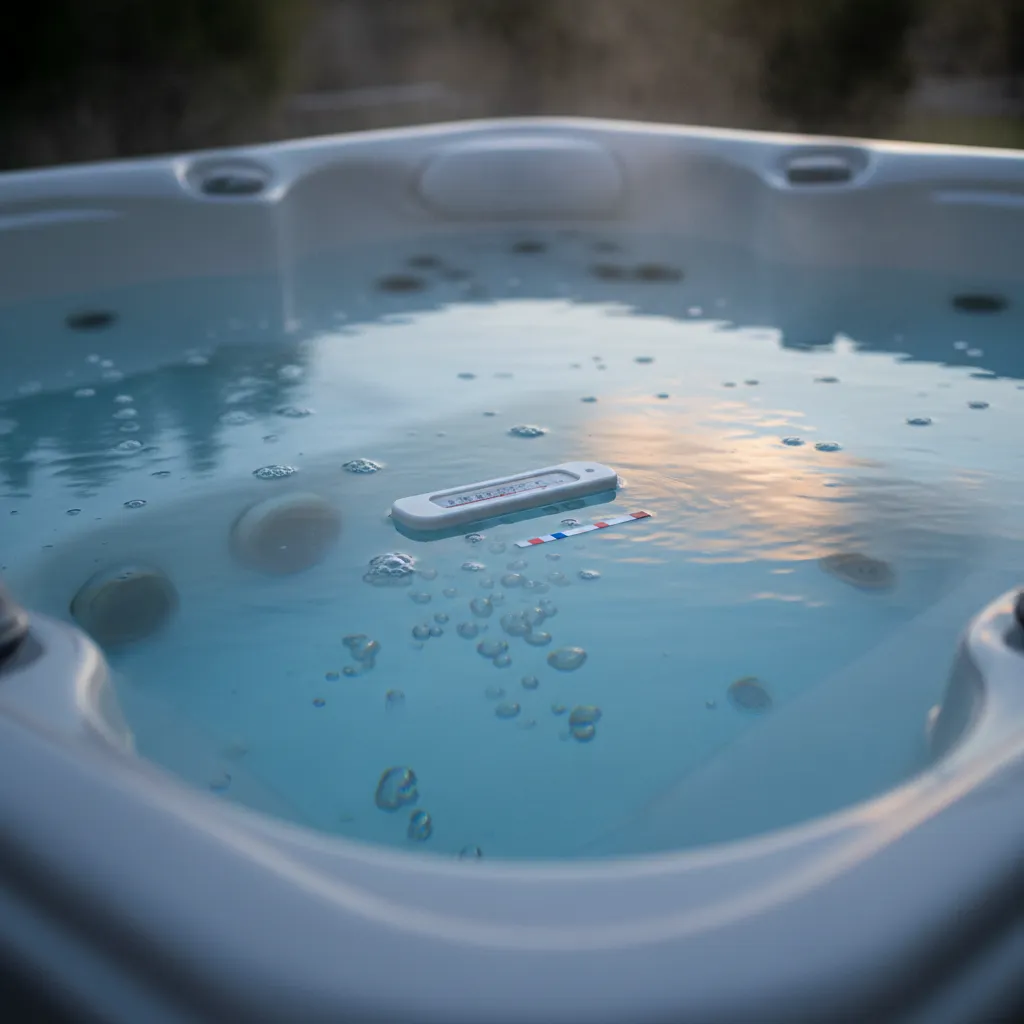
Both methods remove the main volume of water. The better choice depends on access, discharge elevation, and how closely you can supervise the job.
| Method | When it works well | Where the advice falls short |
|---|---|---|
| Drain valve and garden hose | The outlet is accessible and the hose can run downhill. | Gravity drainage slows as the tub empties and cannot carry water uphill. |
| Submersible utility pump | You need faster removal or must move water above the tub's outlet elevation. | Actual flow depends on hose size and lift. The pump usually leaves some water behind. |
Draining through the valve
- Locate the drain, commonly near the cabinet base or behind an access panel. Confirm its location in the manual.
- With power off, attach the hose according to the valve instructions. Some fittings require a particular pull-and-turn sequence.
- Route the hose without kinks and place its outlet at the approved destination.
- Open the valve and monitor the flow. Avoid forcing a stiff fitting with pliers.
Salt air along the coast can be hard on exposed metal equipment. Check accessible metal fittings for corrosion before handling them. A fitting that leaks or will not operate normally needs attention before refill.
Draining with a pump
- Select a pump rated for the water temperature and required lift.
- Connect its discharge hose and place the pump on a stable surface as directed by its manufacturer.
- Use a GFCI-protected power supply and keep electrical connections dry. Leave the hot tub's breaker off.
- Supervise the pump and stop it at its minimum operating depth. Disconnect its power before handling or removing it.
Never use the hot tub's circulation or jet pump to force out the remaining water.
Remove the puddles without chasing completely dry plumbing
An empty-looking shell still holds water in seats, footwells, and plumbing. For a routine water change, remove accessible puddles with a liquid-rated wet/dry vacuum or sponge. Do not dismantle equipment to chase every remaining drop.
Lift out leaves and grit before wiping the shell. This matters after Santa Ana winds, which can deposit dust and debris quickly. Rubbing a cloth over trapped grit can scratch the surface.
Use a soft cloth and a cleaner approved for your shell material. Rinse away residue and remove the rinse water before filling. Household detergents can leave residues that foam when the jets restart.
A drain and refill removes concentrated water, but it does not automatically remove mineral deposits. San Diego's hard source water makes this distinction useful: inspect rough waterline deposits before refilling, and use only a surface-compatible treatment.
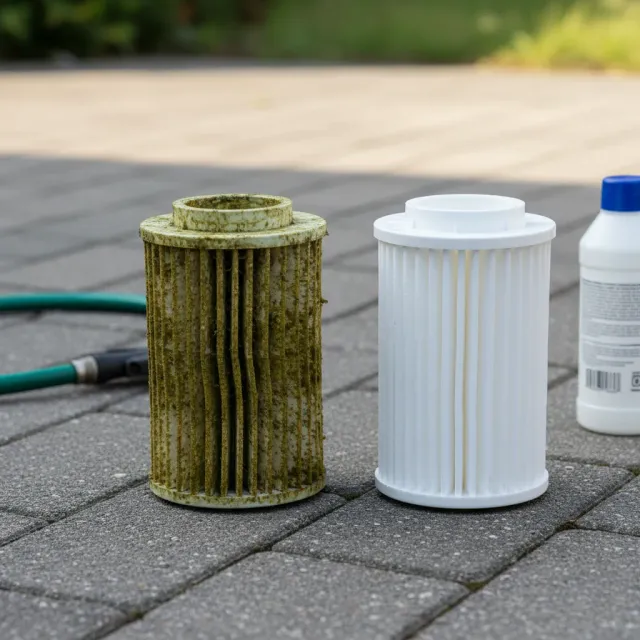
Clean and rinse the filter while access is convenient. Our guide to hot tub filter cleaning explains why fresh water still needs a clean filter.
Refill through the recommended opening and test the source water
Close the drain valve, replace its cap where required, and confirm any fittings you handled are secure. Refill through the opening specified by the manufacturer. Many tubs use the filter compartment to help reduce trapped air, but that method is not universal.
Keep power off while filling. Watch the water level and stop at the manufacturer's fill mark. Restore the filter assembly as directed before restarting.
The common instruction to add fresh water needs one extra step here: test the hose water's calcium hardness before deciding on chemicals. Most San Diego County tap water comes from imported sources and arrives mineral-heavy. Fresh water therefore does not necessarily mean low-hardness water.
Evaporation leaves dissolved minerals behind, and repeated top-offs add more. Hotter inland conditions make this especially relevant for uncovered tubs. A refill replaces concentrated water with source water, but its hardness still needs checking against your equipment's recommended range.
Do not assume an ordinary hose prefilter softens water. Sediment and carbon filters generally do not remove dissolved calcium. Avoid filling entirely with softened water unless the manufacturer approves the resulting chemistry.
Once full, restore power and follow the startup or priming sequence. Confirm steady circulation before allowing normal heating. If the pump hums without moving water or a flow error appears, stop it and follow the manual's airlock procedure. Repeated restarts can damage equipment.
Check these conditions before using the refilled tub
Clear-looking refill water is not ready for bathing until circulation and chemistry are correct. Use these checks before anyone gets in:
- Water level: It remains at the specified mark after circulation starts.
- Flow: Jets and circulation operate normally without persistent bubbles, unusual noise, or flow errors.
- Leaks: The drain connection and accessible equipment stay dry.
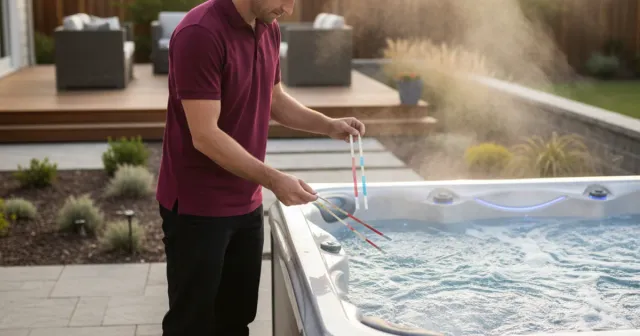
- Balance: Test pH, total alkalinity, and calcium hardness. Adjust according to the manufacturer's targets and product directions.
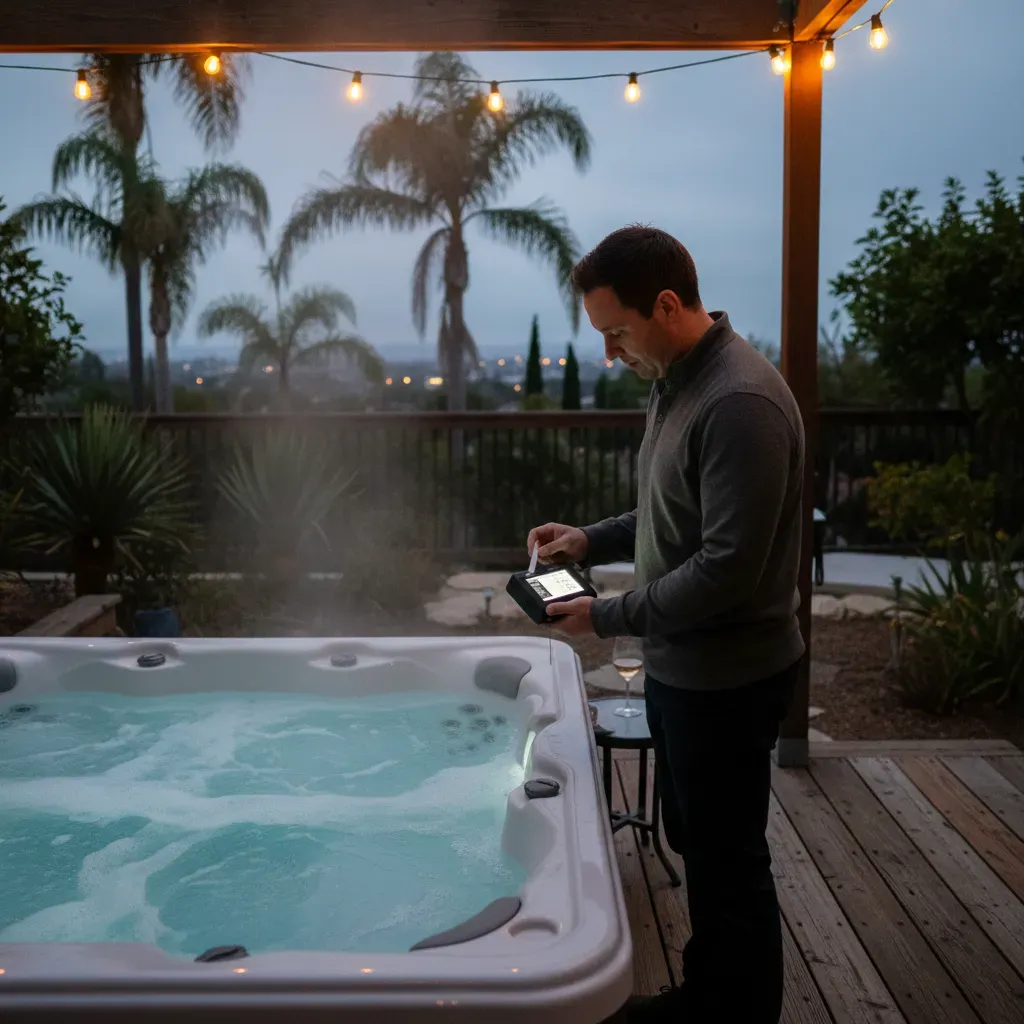
- Sanitizer: Establish the appropriate chlorine or bromine residual and verify it with a compatible test.
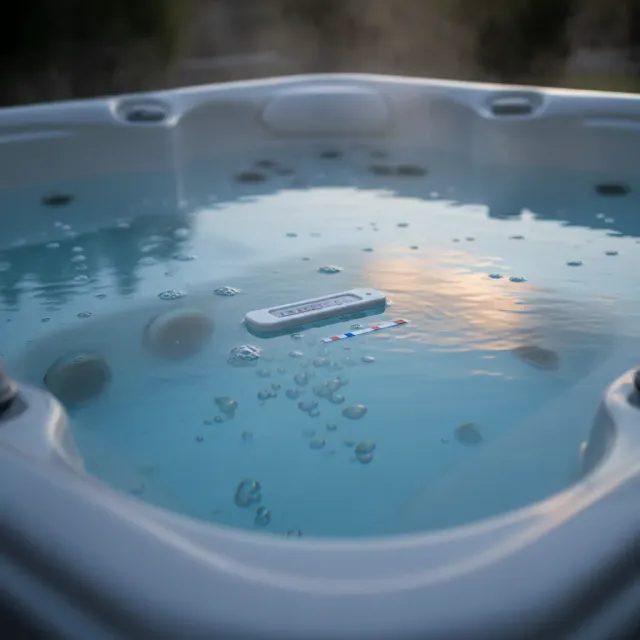
- Temperature: Check the water temperature before entering, especially after changing the controls.
Add chemicals individually according to their labels, allow the required circulation time, and retest. Never mix concentrated chemicals together.
If you cannot confirm the discharge destination, the drain fitting is stuck, or circulation fails after refill, pause the job. PoolLogic Pool Service provides hot tub cleaning service in San Diego County. Our technicians confirm the draining and restart procedure after seeing your equipment.

Kyle Bowman
Founder of PoolLogic · CPO-Certified
Kyle is the Founder of PoolLogic Pool Service and a Certified Pool Operator (CPO) with deep expertise in pool service, water chemistry, and pool equipment repair. He oversees every aspect of PoolLogic's operations to ensure San Diego pool owners receive expert-level care.
Read morePool service done right
Need professional pool service?
PoolLogic Pool Service provides expert pool cleaning, maintenance, and repair services throughout San Diego County.