
On this page
Allow about 4 to 7 hours for a 20°F increase
About 4 to 7 hours is a reasonable planning estimate for a covered, 240-volt electric hot tub to heat from 80°F to 100°F. A lower-powered, 120-volt model may need 10 to 20 hours for that same increase.
Those estimates assume working equipment, normal circulation, and a heater that stays active. Many conventional 240-volt tubs gain roughly 3°F to 6°F per hour. Lower-powered models often gain around 1°F to 2°F per hour. Water volume, heater output, insulation, and outdoor conditions change the actual rate.
We recommend planning from the measured water temperature. A tub holding at 95°F needs much less notice than one refilled with cool tap water.
| Starting and target temperature | At 3°F to 6°F per hour | At 1°F to 2°F per hour |
|---|---|---|
| 95°F to 100°F | About 1 to 2 hours | About 2.5 to 5 hours |
| 80°F to 100°F | About 4 to 7 hours | About 10 to 20 hours |
| 60°F to 100°F | About 7 to 14 hours | About 20 to 40 hours |
Use these as planning windows. A gas-heated spa connected to a pool can heat substantially faster. Its timing depends on heater output, spa volume, and whether the system is circulating only spa water.
Measure one hour of heating to estimate your finish time
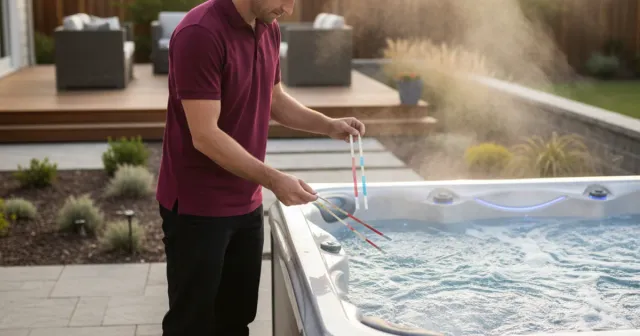
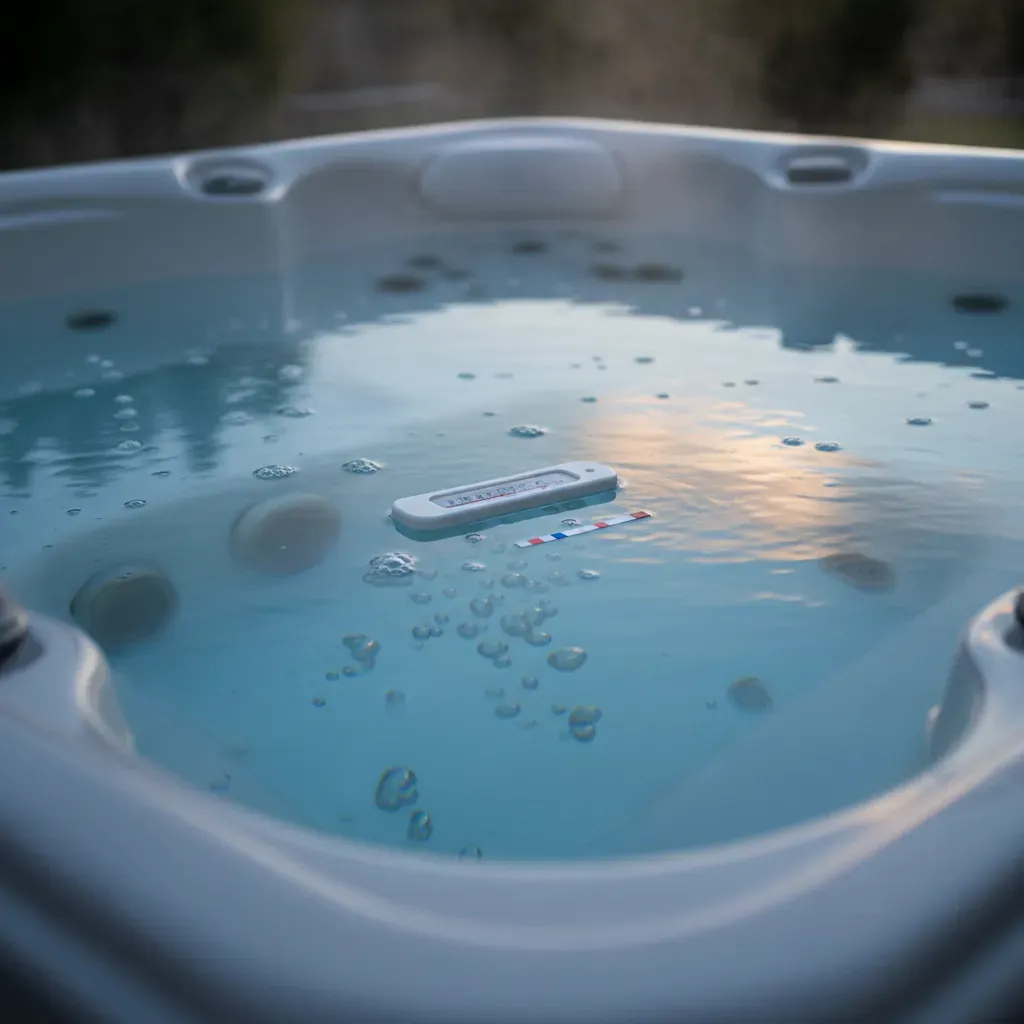
One hour of temperature change gives you a useful estimate for your own tub. Record the starting temperature, confirm heating is active, and close the cover. Read the temperature again after an hour under the same operating conditions.
Estimated hours remaining = temperature still needed ÷ measured degrees gained per hour.
For example, water rising from 80°F to 84°F in one hour gains 4°F per hour. Reaching 100°F from that new reading would take about four more hours if conditions stay similar. The total warmup would be about five hours.
Check again closer to your planned use time. Heat loss increases as water gets warmer relative to the air, so the final few degrees may take longer. A falling evening temperature can also slow progress.
Use the same temperature display or thermometer for both readings. Comparing different instruments can make a small temperature change misleading. After a refill, complete the manufacturer's filling and pump-priming procedure before starting this timing check. Confirm steady circulation rather than assuming that a lit display means water is flowing through the heater.
Check whether 120-volt controls pause heating with jets
120-volt tubs often cannot power the heater and high-speed jets simultaneously. If your model pauses heating when you switch on massage jets, leaving them running can extend the wait substantially.
Keep the circulation required by the heater operating. Use the heating mode specified in your manual, and leave air blowers or air-induction controls off during warmup. Air bubbles increase surface disturbance and can increase heat loss. High-speed jets are not a reliable shortcut.
On some 240-volt models, heating continues with massage jets running. That still does not mean high speed produces a meaningful heating advantage. The heater's output and the water volume remain the main limits.
Check the operating mode, too. Economy, sleep, or scheduled heating settings may restrict heating to certain periods. Set the intended temperature and confirm the controller is actually calling for heat. Raising the setpoint above your intended temperature generally does not make a conventional electric heater warm the water faster.
For a pool-connected spa, verify spa mode on the controller. If warmed water continues returning to the pool, the heater is working on a much larger volume.
Adjust your heating schedule for coastal mornings and inland nights
A 20°F increase requires the same basic heat input for the same water volume, but outdoor heat loss changes the waiting time. In San Diego County, compare heating rates from similar weather and times of day.
Inland winter nights are colder than coastal nights. If you measured your heating rate during a warm afternoon, allow additional time for an evening warmup. Along the coast, cool marine-layer mornings can also extend heating compared with a sunny afternoon. Keep separate morning and evening heating notes if you regularly use the tub at both times.
Keep a well-fitting cover closed while heating, except when equipment or chemical instructions require it open. Check that the cover sits evenly and its edges close properly. A waterlogged or damaged cover deserves inspection because poor insulation lets more heat escape.
Santa Ana winds bring dry air and debris, mostly in fall and winter. Across exposed water, wind increases evaporation and heat loss, even when the air feels warm. Secure the cover according to its instructions. If heating slows during a wind event, check cover fit and repeat your temperature measurement with the cover closed.
A slower rate during one cold or windy evening calls for a new timing estimate. A rate that remains slower across several warmups in comparable conditions calls for the equipment checks below.
Use a two-hour check to decide whether service is needed
Two hours without a measurable temperature increase deserves investigation when the water is below the setpoint and heating should be active. This is especially useful when your tub previously warmed steadily in comparable weather.
- Confirm the controls. Check the setpoint, heating schedule, operating mode, and any displayed fault code.
- Check water level and circulation. Follow the manual's fill-level guidance. Weak flow or a flow warning can prevent heater operation. If trouble began immediately after a refill, check the manufacturer's pump-priming procedure.
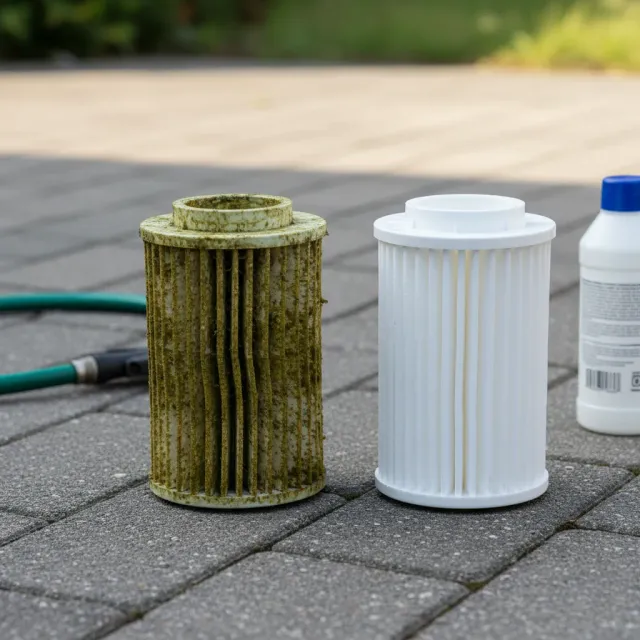
- Inspect the filter condition. A restricted filter can reduce flow enough to interrupt heating. Follow the manufacturer's maintenance procedure, then check whether steady circulation and heating resume.
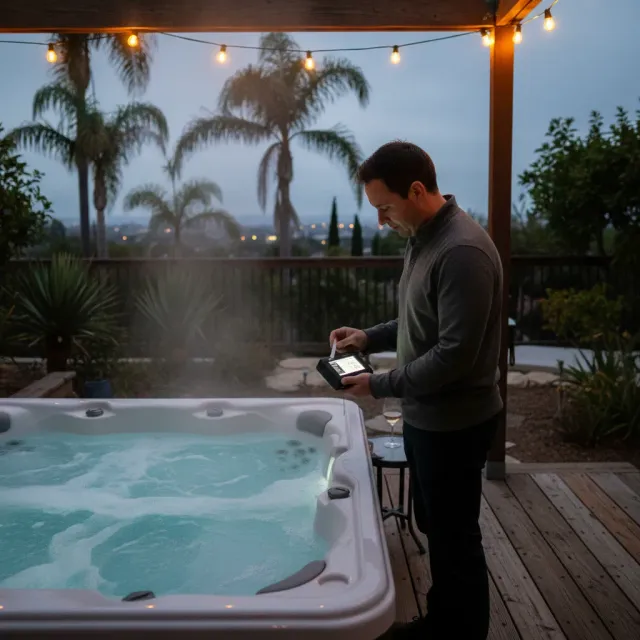
- Record the evidence. Note starting temperature, temperature after two hours, outdoor conditions, and whether the heating indicator stayed on.
If a restricted filter is interrupting heating, our San Diego hot tub cleaning service can address filter maintenance. If weak flow persists, our technicians confirm the appropriate maintenance or repair after seeing the equipment.
San Diego County's hard, mineral-heavy imported tap water makes calcium hardness and pH worth checking when heating has gradually slowed under comparable conditions. Have the heater checked for scale alongside circulation, and follow the manufacturer's chemistry targets rather than adding chemicals based only on heating time.
If the temperature rises steadily, revise your start time using the measured rate. If it stays flat, repeatedly stops rising, or accompanies a recurring fault, arrange an equipment assessment. Avoid repeatedly resetting a tripping breaker or bypassing a flow protection device.
For a spa using a pool heater, our San Diego pool heater repair service can investigate heating and circulation faults. Review our San Diego pool and spa service pricing when planning service costs. Have the equipment model and your temperature notes ready so we can assess the next step.

Kyle Bowman
Founder of PoolLogic · CPO-Certified
Kyle is the Founder of PoolLogic Pool Service and a Certified Pool Operator (CPO) with deep expertise in pool service, water chemistry, and pool equipment repair. He oversees every aspect of PoolLogic's operations to ensure San Diego pool owners receive expert-level care.
Read morePool service done right
Need professional pool service?
PoolLogic Pool Service provides expert pool cleaning, maintenance, and repair services throughout San Diego County.