
On this page
Compare baking soda, alkalinity increaser, and soda ash
To increase alkalinity in pool water, add sodium bicarbonate: about 1.4 pounds raises total alkalinity by 10 parts per million (ppm) in 10,000 gallons. Test alkalinity and pH first, then use a measured dose toward your pool's target, commonly 80 to 120 ppm.
Baking soda and many pool alkalinity increasers contain the same active ingredient. Soda ash raises alkalinity too, but its stronger effect on pH makes it appropriate for a different situation.
| Option | When to choose it | Effect on pH | What to check |
|---|---|---|---|
| Plain baking soda | Alkalinity is low and pH needs little adjustment | Usually a modest increase | Use pure sodium bicarbonate without additives |
| Pool alkalinity increaser | You want pool-specific dosing and application instructions | Usually a modest increase when sodium bicarbonate is the ingredient | Read the ingredient, concentration, and dose label |
| Soda ash, or sodium carbonate | Both pH and alkalinity are low | A substantially stronger increase | Dose for the pH correction, then retest alkalinity |
Total alkalinity measures water's ability to resist pH changes. Low alkalinity can let pH swing after chemical additions. However, hardness and alkalinity are different measurements. San Diego's hard tap water does not tell you whether your pool needs bicarbonate.
Use baking soda when alkalinity needs the main correction
Plain sodium bicarbonate is the straightforward choice when alkalinity is below target but pH is already around 7.2 to 7.8. It increases buffering with less pH movement than soda ash. It does not promise an unchanged pH, so measure both afterward.
Across over 21,000 San Diego readings recorded by our team, total alkalinity had a median of 100 ppm. The middle 80 percent ranged from 70 to 120 ppm. For your pool, choose a target based on its sanitizer and equipment guidance rather than automatically aiming for 120 ppm.
A result of 70 ppm deserves a check against that guidance before treatment. Some pools operate with a lower recommended target, particularly when controlling persistent upward pH drift. If your established target starts at 80 ppm, calculate the correction to that lower boundary first.
For pure sodium bicarbonate, use this approximate calculation:
Pounds needed = 1.4 × (pool gallons ÷ 10,000) × (desired alkalinity increase ÷ 10).
For example, a 15,000-gallon pool moving from 60 to 80 ppm needs approximately 4.2 pounds total. Start with about half that calculated amount, subject to the product's dosing limits. Circulate, retest, and calculate the remainder from the new reading.
Measure by weight, not kitchen scoops. A volume estimate that is too large produces an excessive dose even when the chemistry calculation is correct. Confirm the pool's gallons before treating a substantial shortfall. Baking powder is not a substitute for sodium bicarbonate.
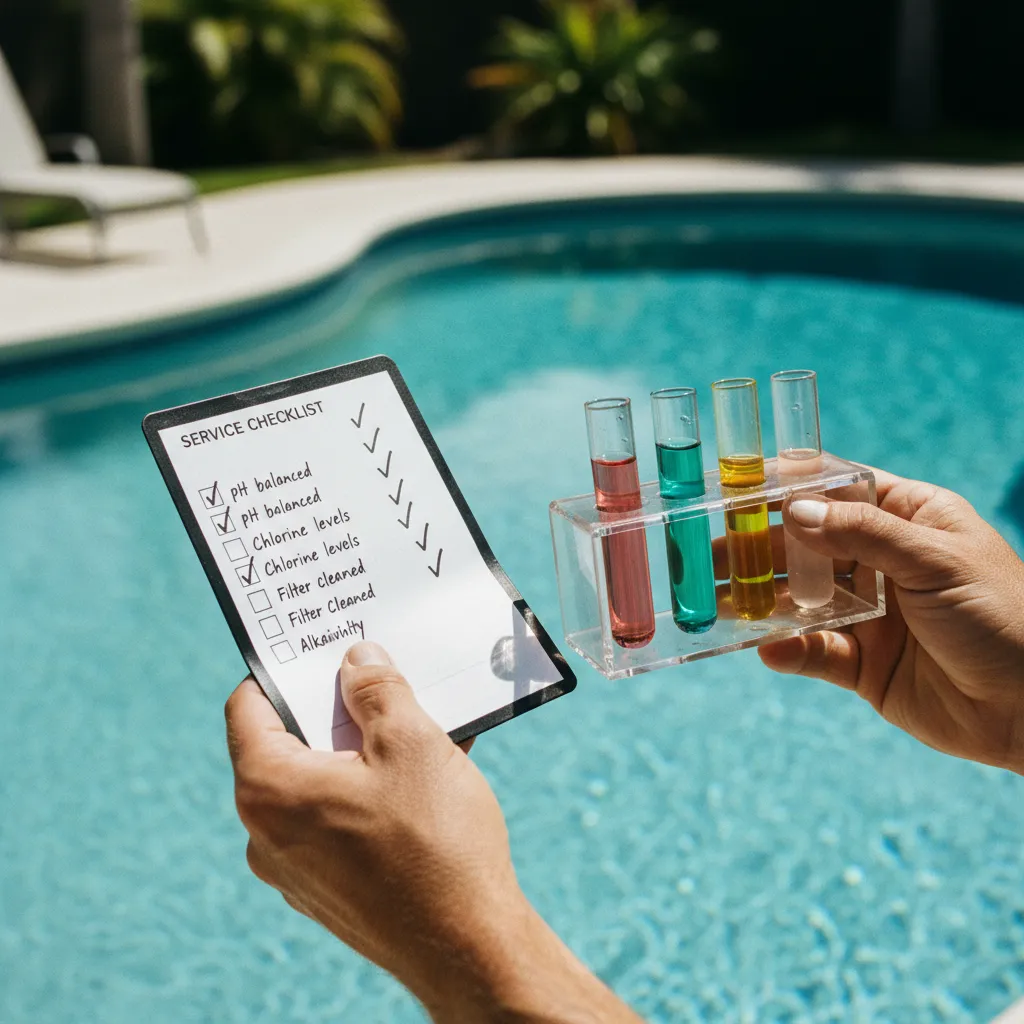
Choose pool alkalinity increaser for product-specific instructions
A pool alkalinity increaser labeled sodium bicarbonate performs the same chemical job as plain baking soda. Choose it when its packaging makes measuring, handling, and applying a pool-sized dose easier.
Check the active ingredient before following the bicarbonate calculation. A container labeled pH increaser may contain sodium carbonate instead. Similar packaging does not make those products interchangeable.
Follow the label's application method, maximum dose, circulation requirements, and retesting interval. Some products direct you to distribute material across the water; others provide different handling instructions. Do not assume every powder should be predissolved or poured into the skimmer.
Keep swimmers out during application, wear the protection specified on the label, and keep chemicals separate. Never mix bicarbonate with acid, chlorine, or another pool chemical in a container. Add each treatment separately and allow the required circulation before the next adjustment.
In San Diego County, imported source water brings substantial minerals into pools. Evaporation leaves those minerals behind, and replacement water adds more. Inland summer heat increases that evaporation compared with the coast. After repeated large top-offs, test pool alkalinity again before repeating an earlier dose. Test the fill water too if the pool's readings keep changing.
That check matters because a previous correction is not a standing weekly dose. Add more increaser only when a fresh test and your chosen target support it.
Reserve soda ash for water that also needs higher pH
Soda ash can be appropriate when pH is below 7.2 and alkalinity is also low. It raises both, but pH can reach its target before alkalinity does. Use the product's pH dosing instructions and reassess both measurements before adding more.
If pH is already near 7.8, soda ash is a poor choice for correcting alkalinity alone. Across over 28,000 San Diego readings recorded by our team, pH had a median of 7.6. The middle 80 percent ranged from 7.4 to 8. Check your own pH before selecting a product that raises it strongly.
Our area's mineral-heavy water adds another reason for caution. Raising pH too far can encourage calcium carbonate cloudiness and deposits, especially when calcium hardness is already high. Check calcium hardness when pH is high or cloudiness appears during balancing.
Do not use the bicarbonate weight calculation for soda ash. They have different chemical effects and require different doses. If soda ash brings pH into range while alkalinity remains low, switch to a measured bicarbonate correction after circulation and retesting.
When alkalinity is low and pH is acceptable, address alkalinity before fine-tuning pH. If pH is substantially outside its operating range, correct that condition in stages while tracking both readings. Adding alternating full doses of acid and increaser can create repeated overshooting.
Retest before adding a second dose
Use this sequence to decide whether another addition is necessary:
- Run circulation for the product's specified mixing period. Confirm that water is moving through the pool.
- Collect a fresh sample away from returns and the chemical addition area. Use a drop-based alkalinity test for a clearer dosing decision than a broad color band.
- Measure alkalinity and pH together. Stop adding bicarbonate once alkalinity reaches your selected target.
- Recheck the next day before making another correction, especially after a substantial adjustment.
- Record the product, weight, readings, and any recent acid additions or water replacement.
If alkalinity repeatedly falls, review acid dosing and acidic sanitizers such as trichlor. Aeration can raise pH without raising total alkalinity, so higher pH alone does not prove the bicarbonate correction succeeded.
Stop dosing if readings conflict, pool volume is uncertain, or a calculated addition produces an unexpected result. We can check the water balance and chemical routine through our weekly pool cleaning service in San Diego. Bring the recent readings and product labels so our technicians can work from the actual treatment history.

Kyle Bowman
Founder of PoolLogic · CPO-Certified
Kyle is the Founder of PoolLogic Pool Service and a Certified Pool Operator (CPO) with deep expertise in pool service, water chemistry, and pool equipment repair. He oversees every aspect of PoolLogic's operations to ensure San Diego pool owners receive expert-level care.
Read morePool service done right
Need professional pool service?
PoolLogic Pool Service provides expert pool cleaning, maintenance, and repair services throughout San Diego County.