
On this page
Phosphates are nutrients that algae can use
Phosphates in a pool are phosphorus-containing compounds that algae use as nutrients. A high phosphate reading alone does not mean you have algae or need phosphate remover; check chlorine, water clarity, and filtration first.
Phosphates can enter through soil, fertilizer runoff, decomposing leaves, and some water-treatment products. Source water can contribute too, but testing is needed to confirm that. Dissolved phosphates are invisible, so green or cloudy water cannot diagnose them.
Our technicians start with the pool's condition, then check sanitizer and equipment before deciding whether phosphate testing will help. Phosphate removal can reduce one nutrient available to algae. It cannot replace chlorine, kill an existing algae bloom, or correct poor circulation.
First, check the water and chlorine readings
We first look for cloudy water, slippery steps, green patches, and debris collecting where water barely moves. These clues determine which readings and equipment checks matter next. If you cannot clearly see the bottom, keep swimmers out while the problem is corrected.
Next, we measure free chlorine, the chlorine available to sanitize the water, along with pH and stabilizer. Stabilizer, also called cyanuric acid or CYA, protects chlorine from sunlight but affects how much free chlorine the pool needs. A chlorine reading cannot be judged properly without that context.
A typical pool pH target is 7.2 to 7.8. A reading outside that range needs attention before blaming phosphates for water problems. We also check whether chlorine holds between treatments, rather than relying on one acceptable reading immediately after chemicals were added.
Inland San Diego County heat increases chlorine demand. If a pool starts turning green during hotter weather, we check sanitizer delivery and operating schedules early. A phosphate reading does not explain whether the pool received enough chlorine throughout the day.
Match the symptom to the next check
Several different problems can look like a phosphate problem. This is the order we use to narrow down the cause before selecting a treatment.
| What you notice | What it can point to | What we check next |
|---|---|---|
| Green patches or slippery steps | Algae growth, often with insufficient sanitizer or weak circulation | Free chlorine relative to stabilizer, brushing needs, and water movement around affected areas |
| Chlorine drops quickly after dosing | Sunlight loss, algae, or other material consuming chlorine | Stabilizer, debris load, and chlorine changes over time |
| Cloudy water with weak return flow | A loaded filter or restricted circulation | Filter pressure, baskets, pump operation, and return flow |
| White haze or rough mineral deposits | Calcium-related water balance problems | pH, calcium hardness, alkalinity, and water temperature |
| Clear water with a high phosphate result | Dissolved nutrients without visible algae | Chlorine consistency and whether algae actually recurs |
| Cloudiness soon after phosphate remover | Fine particles formed by the treatment | Product instructions, filtration, and pressure changes before adding more product |
San Diego's hard, mineral-heavy tap water makes the white-haze distinction useful. Evaporation concentrates minerals further. Calcium hardness measures dissolved calcium; it does not measure phosphate. A hardness result cannot tell you whether phosphate remover is needed.
Check the filter before ordering another treatment
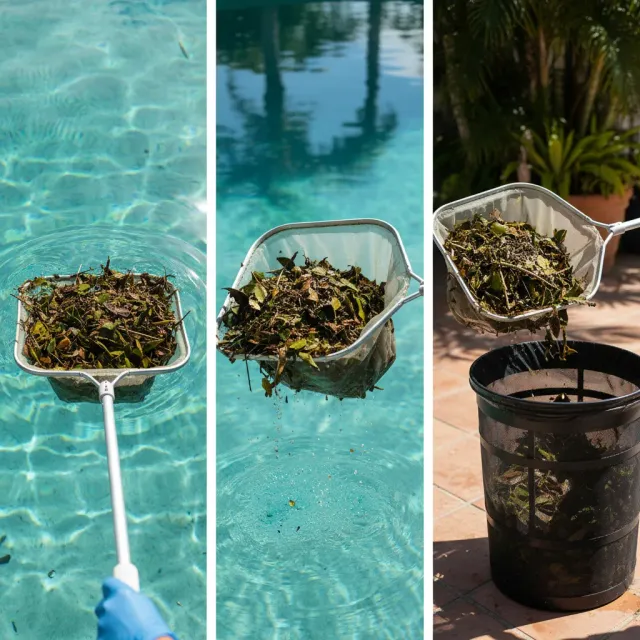
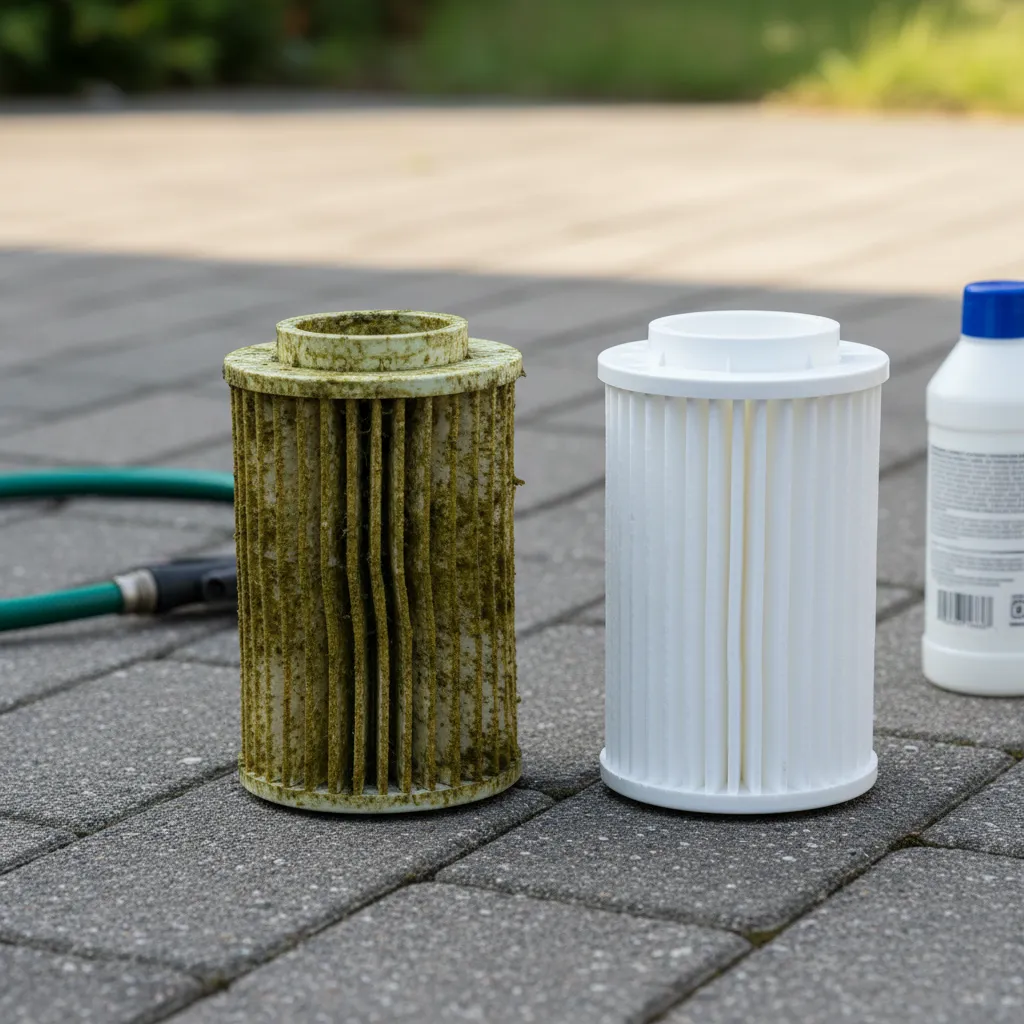
If water stays cloudy or algae returns in the same spots, we inspect circulation before treating nutrients. Packed baskets, a dirty filter, or inadequate water movement can leave debris behind even when a chemical reading looks acceptable.
Filter pressure means more when compared with the clean-filter reading at the same pump speed. We follow the filter manufacturer's cleaning threshold instead of using one pressure number for every pool. Cartridge filters need cleaning; filters designed for backwashing need their specified procedure. Backwash means reversing water flow to flush trapped material out.
This check also matters before phosphate removal. Many removers turn dissolved phosphate into fine solid particles that filtration must collect. Starting with an already loaded filter can make that process harder. When flow or pressure points to trapped material, pool filter cleaning may be the next useful step.
Test phosphates when the result will change the plan
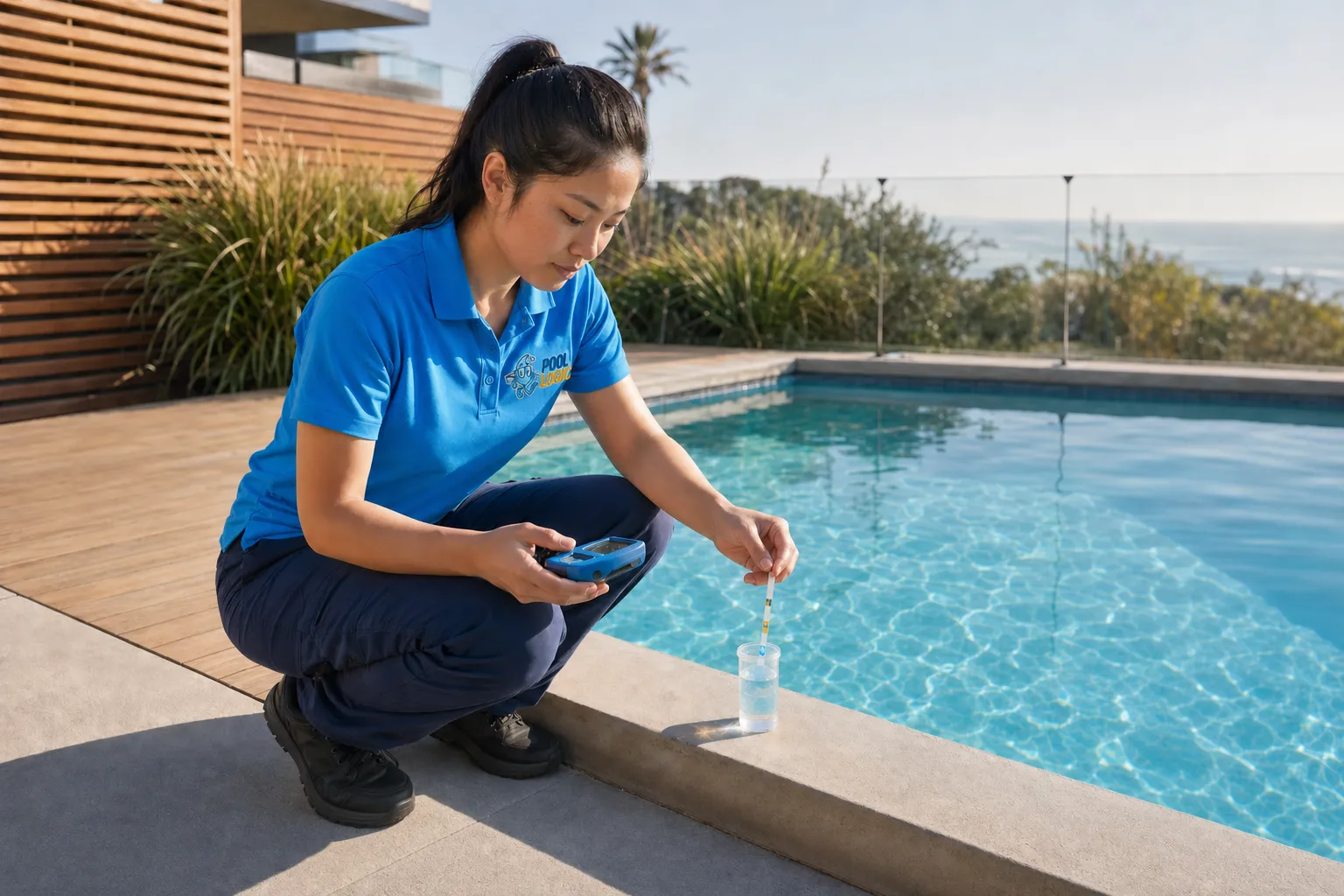
Phosphate testing becomes useful when algae repeatedly returns despite consistent chlorine, appropriate stabilizer, brushing, and working filtration. It can also help investigate a known runoff event or check whether a completed phosphate treatment worked.
Most pool phosphate tests report parts per billion, written as ppb. A result of 1,000 ppb equals 1 part per million, or ppm. Check the units before comparing results or calculating a dose. If a result exceeds the test's range, follow the kit's instructions for obtaining a measurable result.
There is no single phosphate number that proves a pool has algae or automatically requires treatment. A clear pool holding appropriate chlorine does not need remover simply because phosphate is detectable. For recurring algae, we consider the phosphate result alongside the checks above.
We also look for an ongoing source. Santa Ana winds can deposit leaves, dirt, and pollen in a day, and the first winter storm after a dry spell can wash phosphates and debris into pools. Remove windblown material promptly and keep fertilizer runoff away. If readings repeatedly climb after topping up, compare the fill water with the pool water instead of assuming all local tap water has the same phosphate content.
If removal is needed, plan the dose and filter checks
When algae is already present, address the algae and sanitizer problem first. Shocking a pool does not reliably remove phosphates. Chlorine can kill algae and oxidize organic material, but phosphate removal requires a different process.
Many phosphate removers bind phosphate into insoluble particles, meaning solids that no longer dissolve in the water. Those particles must then be captured and removed. Products differ in strength, application method, and compatibility, so we confirm the treatment after checking the pool and equipment.
- Confirm pool volume and the phosphate reading. Use both with the product's dosing instructions. Do not estimate a dose from how green the water looks.
- Follow the specified circulation instructions. Avoid adding extra remover because the water has not cleared immediately.
- Watch filter pressure and return flow. Treatment particles can load the filter and require cleaning according to its instructions.
- Retest at the product's stated interval. Do not stack additional doses before the first treatment has finished working.
Too much remover can create extra cloudiness and filter loading. Follow the product's swimming restrictions, and keep swimmers out if visibility remains poor.
For help deciding whether removal is warranted, our weekly pool cleaning service in San Diego starts with water and equipment checks. Have your latest chlorine, pH, stabilizer, and phosphate results ready, plus the names and timing of recent treatments. That gives our technicians a useful starting point for choosing the next step.

Kyle Bowman
Founder of PoolLogic · CPO-Certified
Kyle is the Founder of PoolLogic Pool Service and a Certified Pool Operator (CPO) with deep expertise in pool service, water chemistry, and pool equipment repair. He oversees every aspect of PoolLogic's operations to ensure San Diego pool owners receive expert-level care.
Read moreNeed professional pool service?
PoolLogic Pool Service provides expert pool cleaning, maintenance, and repair services throughout San Diego County.