
On this page
Dealing with pool algae can be frustrating, but understanding what you're up against makes all the difference. Whether you're battling a green tint or stubborn black spots, this comprehensive guide covers everything you need to know about identifying, treating, and preventing pool algae.
Understanding Pool Algae: Know Your Enemy
Green Algae: The Common Culprit
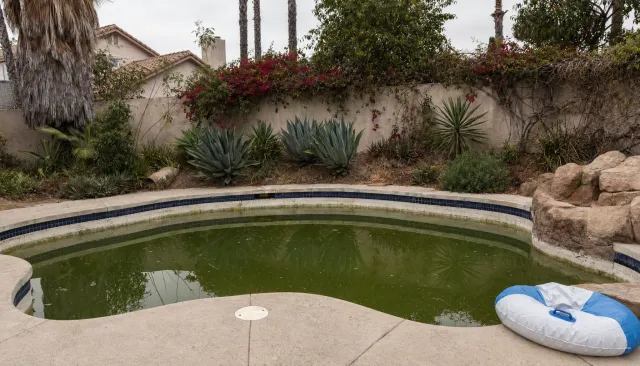
Green algae appears as a greenish tinting that can progress to floating clumps or a full "pea soup" situation. It thrives in sunlight and warm temperatures, particularly during summer. This variety responds well to proper chlorination and basic algaecides when caught early.
Black Algae: The Stubborn Invader
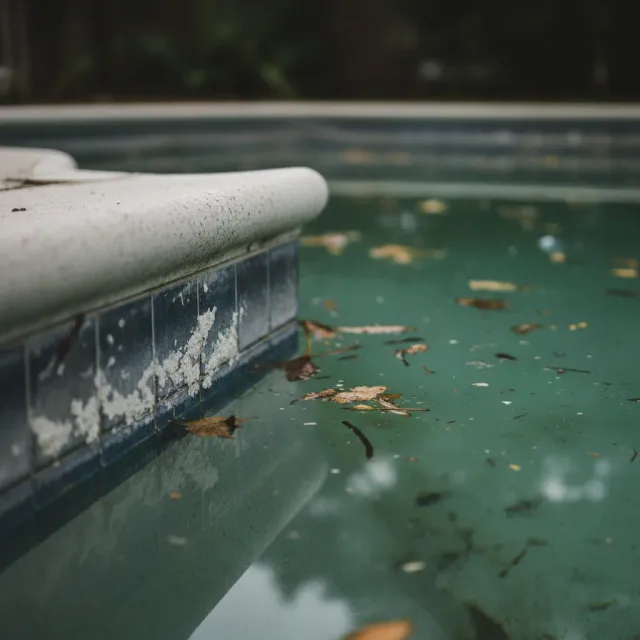
Black algae presents as dark, blue-black spots on plaster surfaces, grout lines, and porous areas. It has a protective outer layer with root-like structures that burrow into surfaces, making it extremely challenging to eliminate completely. Simple water treatment won't work - physical removal combined with specialized treatments is necessary.
Yellow Algae: The Sneaky Impostor
Often mistaken for sand or dirt on shaded pool sides, yellow (mustard) algae is actually a form of green algae that appears yellowish-brown. It clings to walls and floors rather than floating freely and is chlorine-resistant, making it harder to treat than standard green algae.
Pink "Algae": The Bacterial Visitor
Despite its name, pink "algae" is actually bacteria, not true algae. It appears as pinkish slime in damp areas around pools, particularly in corners, around ladders, and behind light fixtures. It thrives in areas with poor circulation and indicates potential sanitizer level issues.
Why Is Algae Growing in My Pool? Understanding the Root Causes
Chemical Imbalance: The Invitation to Algae
When chlorine levels drop too low or pH drifts outside the ideal range of 7.2-7.6, conditions favor algae growth. Free chlorine should be maintained between 1-3 ppm to prevent algae establishment. Regular testing is crucial after heavy use, rainfall, or extreme heat.
Poor Circulation and Filtration: The Hidden Culprit
Even with perfect chemical levels, poor water circulation creates stagnant areas where algae thrives. Filtration systems should run 8-12 hours daily to ensure complete water turnover. Dead spots in corners or behind ladders become prime algae colonization areas. Regular filter maintenance ensures efficient particle removal.
Environmental Factors: Nature's Contribution
Warm temperatures accelerate algae growth, while wind and rain introduce new spores and organic matter. Nearby trees, gardens, and lawn fertilizers contribute nutrients that algae needs to proliferate. While you can't control the weather, increased vigilance during high-risk periods helps prevent problems.
Your Step-by-Step Algae Elimination Plan
1. Assess and Identify: Know What You're Fighting
Before treatment begins, properly identify which algae type you're dealing with, as different types require different approaches. Test water parameters including chlorine, pH, and alkalinity to establish a baseline. Taking a water sample to a local pool supply store can provide professional insight if identification is uncertain.
2. Gather Your Arsenal: Tools and Products
You'll need a quality pool brush with appropriate bristles, chlorine shock treatment (calcium hypochlorite preferred), algae-specific treatment products, a manual or automatic pool vacuum, a water testing kit, and clean filter media or replacement cartridges.
3. Shock Treatment: The Powerful First Strike
Shocking your pool with high chlorine doses rapidly kills algae cells through superchlorination. Green algae may need double or triple the normal shock dosage, while black algae requires even higher levels. Always shock in the evening to prevent sun degradation of chlorine before it has time to work.
4. Brush, Brush, Brush: The Physical Removal
Chemical treatments alone cannot complete the job. Thorough brushing dislodges algae colonies and breaks their protective barriers, allowing chemicals to penetrate more effectively. Black algae requires stiff brushing - use steel brushes for concrete surfaces and nylon for vinyl or fiberglass.
5. Filter and Vacuum: Clearing the Debris
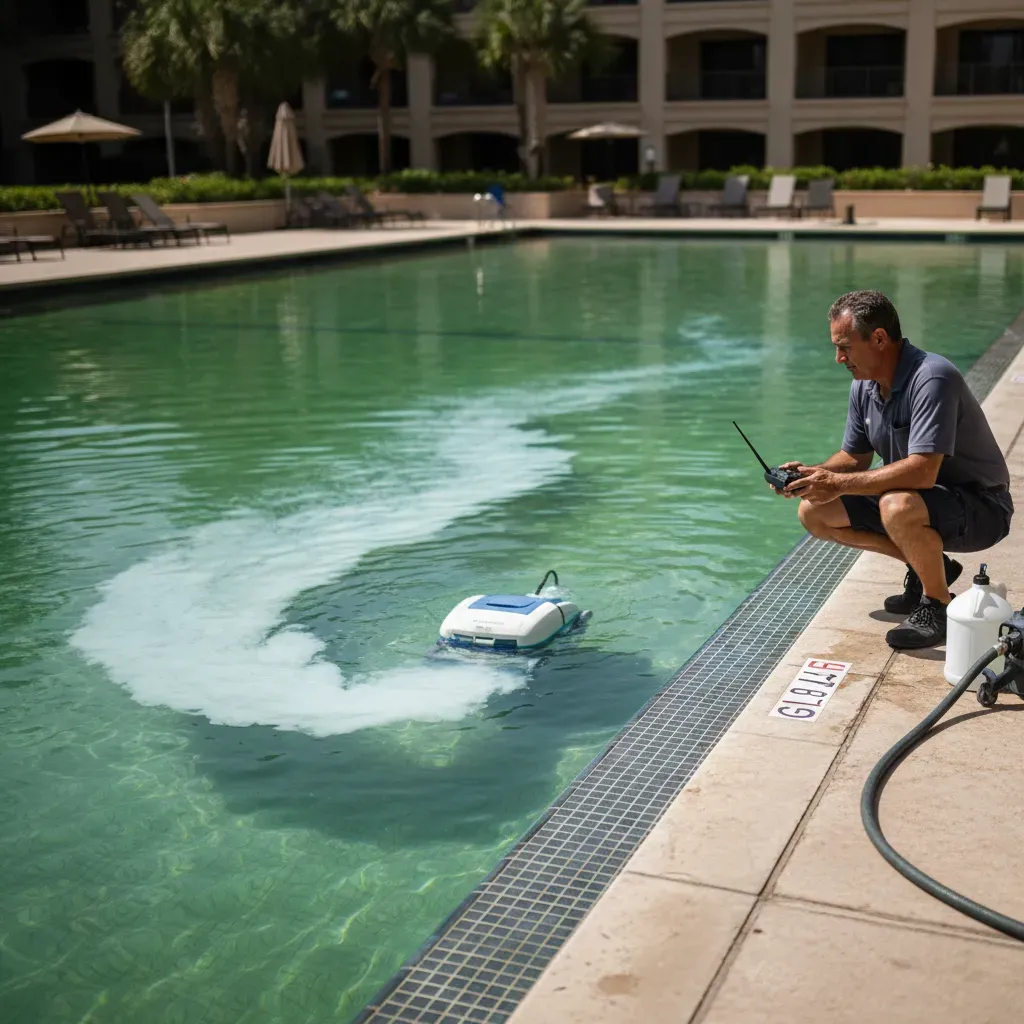
Dead algae cells must be physically removed from the water after shocking and brushing. Run your filtration system continuously and clean the filter frequently to prevent clogging. For severe blooms, manual vacuuming in "waste" mode bypasses the filter system entirely for faster debris removal.
6. Test and Balance: Restoring Healthy Water Chemistry
After visible algae removal, test and rebalance water parameters. Maintain pH at 7.2-7.6, alkalinity at 80-120 ppm, and calcium hardness at 200-400 ppm. Keep chlorine levels at 3-5 ppm for several days post-treatment to prevent regrowth, and consider adding maintenance algaecide doses.
DIY vs. Professional Help: Making the Right Choice
When to Handle It Yourself
Light to moderate green algae blooms are typically manageable for DIY treatment, particularly if your pool has recently developed slight green tinting or isolated algae patches. DIY treatment offers cost savings and is satisfying to accomplish, though proper supplies and knowledge are essential for success.
When to Call the Professionals
Professional intervention is warranted for severe black algae infestations, recurring algae despite proper treatment, severely neglected pools, situations involving underlying equipment issues, and when time or physical ability is limited. Professionals bring specialized equipment, commercial-grade products, and experienced techniques that deliver faster, more thorough results.
Finding Quality Professional Help
Quality providers demonstrate specific pool type experience, industry certifications, positive reviews mentioning treatment success, transparent pricing and treatment plans, and guarantees or follow-up services. Reputable professionals address your current problem while teaching you prevention strategies for the future.
Prevention: The Best Algae Strategy
Regular Maintenance: The Foundation of Prevention
Preventing algae establishment is always easier than treating existing blooms. Establish a schedule that includes weekly water testing and chemical adjustments, regular wall and floor brushing, proper filtration run times of 8-12 hours daily during swim season, regular backwashing, and shock treatments every 1-2 weeks during peak season. Consistency is critical.
Proactive Treatments: Stay One Step Ahead
Preventive algaecides offer ongoing protection between chlorine treatments, especially during warm weather or after rainfall. Some pool owners use phosphate removers to eliminate a key algae nutrient, though this isn't necessary for everyone.
Environmental Management: Controlling External Factors
Minimize external algae contributions by trimming overhanging trees and plants, using pool covers during extended non-use periods, applying lawn fertilizer carefully near pools, requiring pre-swim rinsing, and maintaining surrounding landscaping. These practices reduce nutrient loads and spore introduction.
Frequently Asked Questions
Is it safe to swim in a pool with algae?
Swimming in algae-infested pools isn't recommended due to potential bacteria and microorganism harboring, possible skin irritations or infections, slippery surfaces increasing fall risk, and reduced visibility creating safety hazards for children and weaker swimmers.
How quickly can algae grow in a pool?
Under ideal conditions - warm water, sunlight, and insufficient sanitizer - algae can double its population every 24 hours. A barely noticeable Monday patch can become significant by Wednesday, emphasizing the importance of prompt treatment and regular preventive maintenance.
Will chlorine alone kill all types of algae?
Chlorine effectively treats most green algae, but black and yellow varieties show resistance to normal chlorine levels. Black algae creates protective layers preventing chlorine from reaching underlying cells, typically requiring very high chlorine levels, specialized algaecides, and physical removal through brushing.
Why does my pool get algae even though I maintain proper chlorine levels?
Several factors beyond chlorine contribute to algae growth: high pH reduces chlorine effectiveness, high stabilizer levels (cyanuric acid) can "lock up" chlorine, poor circulation creates unreached dead spots, and environmental factors like heavy rain, wind, and high temperatures can challenge even well-maintained pools.
Can algae return after treatment?
Absolutely. Algae spores constantly enter pools through air, rain, and swimmers' bodies. Without ongoing preventive measures, these spores establish new colonies whenever conditions become favorable, making regular maintenance essential even after successful treatment.
Final Thoughts
Effective algae management combines identification, proper treatment, and consistent prevention. Whether you tackle algae yourself or bring in professional help, understanding the enemy is half the battle. Stay consistent with maintenance, act quickly at the first sign of algae, and don't hesitate to call in experts when the situation warrants it. A clear, algae-free pool is absolutely achievable with the right approach.
FAQ
Frequently asked questions
Is it safe to swim in a pool with algae?
Swimming in algae-infested pools isn't recommended due to potential bacteria and microorganism harboring, possible skin irritations or infections, slippery surfaces increasing fall risk, and reduced visibility creating safety hazards for children and weaker swimmers.
How quickly can algae grow in a pool?
Under ideal conditions - warm water, sunlight, and insufficient sanitizer - algae can double its population every 24 hours. A barely noticeable Monday patch can become significant by Wednesday, emphasizing the importance of prompt treatment and regular preventive maintenance.
Will chlorine alone kill all types of algae?
Chlorine effectively treats most green algae, but black and yellow varieties show resistance to normal chlorine levels. Black algae creates protective layers preventing chlorine from reaching underlying cells, typically requiring very high chlorine levels, specialized algaecides, and physical removal through brushing.
Why does my pool get algae even though I maintain proper chlorine levels?
Several factors beyond chlorine contribute to algae growth: high pH reduces chlorine effectiveness, high stabilizer levels (cyanuric acid) can "lock up" chlorine, poor circulation creates unreached dead spots, and environmental factors like heavy rain, wind, and high temperatures can challenge even well-maintained pools.
Can algae return after treatment?
Absolutely. Algae spores constantly enter pools through air, rain, and swimmers' bodies. Without ongoing preventive measures, these spores establish new colonies whenever conditions become favorable, making regular maintenance essential even after successful treatment.

Kyle Bowman
Founder of PoolLogic · CPO-Certified
Kyle is the Founder of PoolLogic Pool Service and a Certified Pool Operator (CPO) with deep expertise in pool service, water chemistry, and pool equipment repair. He oversees every aspect of PoolLogic's operations to ensure San Diego pool owners receive expert-level care.
Read morePool service done right
Need professional pool service?
PoolLogic Pool Service provides expert pool cleaning, maintenance, and repair services throughout San Diego County.