
On this page
Cloudy or Murky Water
When Your Pool Starts Looking Like Soup
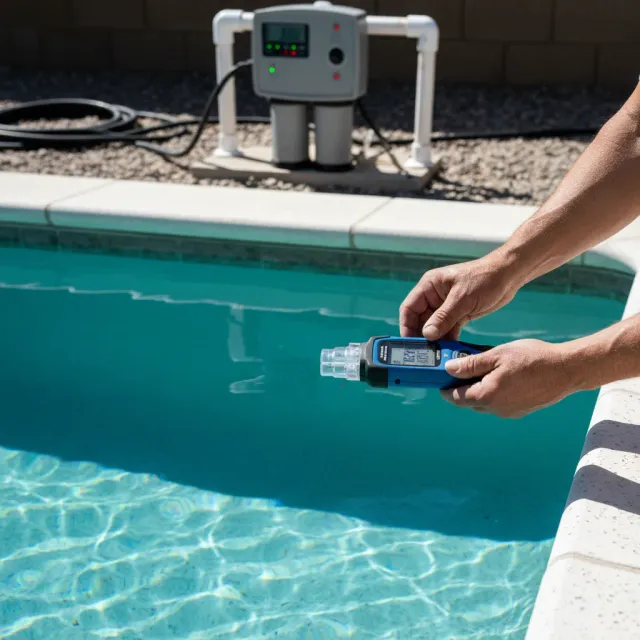
Water clarity deterioration is one of the most obvious signs your filter needs attention. When filters become clogged, they can no longer properly trap particles, allowing them to remain suspended in the water and causing that cloudy, murky appearance.
Reduced Water Flow from Pool Jets
When Your Jets Go from Powerhouse to Pathetic
Weakened water pressure from your return jets suggests circulation problems caused by a clogged filter. Reduced flow can lead to stagnant areas in your pool, creating ideal conditions for algae growth.
High-Pressure Gauge Readings
When Your Pool's Blood Pressure Spikes
Pressure readings exceeding the normal range (8-15 psi baseline) indicate filter strain. When pressure climbs significantly above this baseline, it means your filter is working overtime to push water through accumulated debris. Elevated pressure correlates with increased electrical consumption and equipment failure risk.
Visible Debris Floating in the Pool
When Your Pool Becomes a Leaf Collection Site
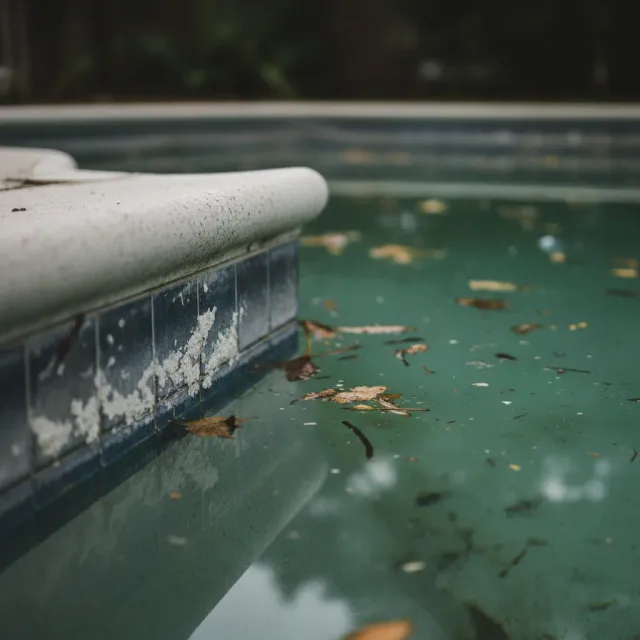
If you find yourself constantly skimming debris despite regular maintenance, your filter may not be capturing contaminants effectively. A properly functioning filter should handle the majority of debris removal, so constant skimming requirements suggest filter inefficiency.
Frequent Algae Growth
The Green Monster That Keeps Coming Back
Recurring algae despite proper chemical treatment points to inadequate filtration. When your filter cannot properly circulate and clean the water, algae spores find opportunities to establish and multiply, leading to persistent green blooms.
Dirty or Clogged Filter Media
The Heart of Your System Is Crying for Help
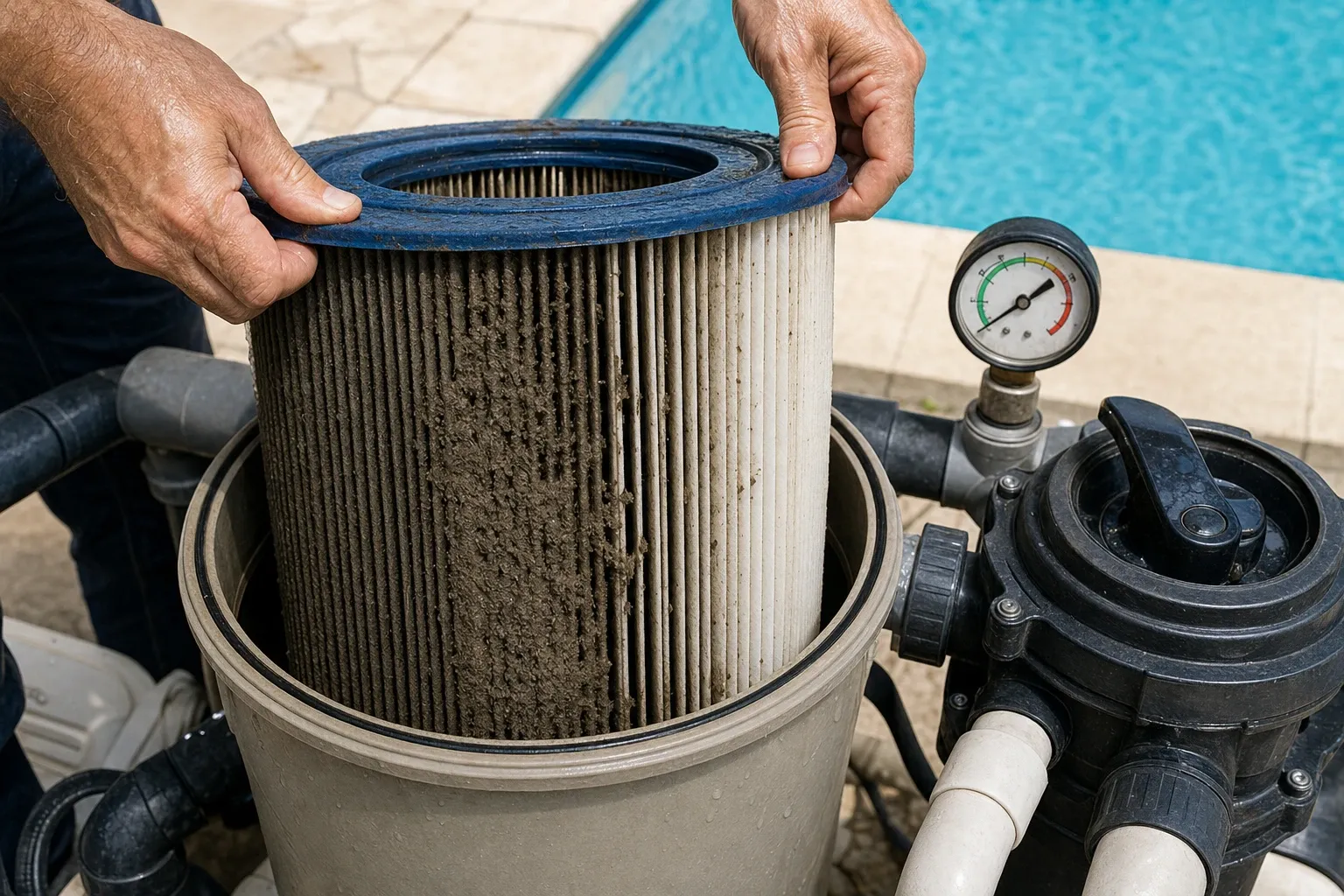
Visual inspection of your filter media—whether cartridge, sand, or DE—can reveal significant discoloration, buildup, and damage that indicates cleaning is overdue. Regular visual checks help catch problems before they affect water quality.
Unpleasant Odors
When Your Pool Smells Like a Swamp, Not a Vacation
Musty or decomposition smells coming from your pool indicate organic buildup that your filter is failing to remove. These odors suggest bacteria and organic matter are accumulating, creating an unhealthy swimming environment.
Pool Pump Strain and Unusual Noises
When Your Equipment Starts Singing the Blues
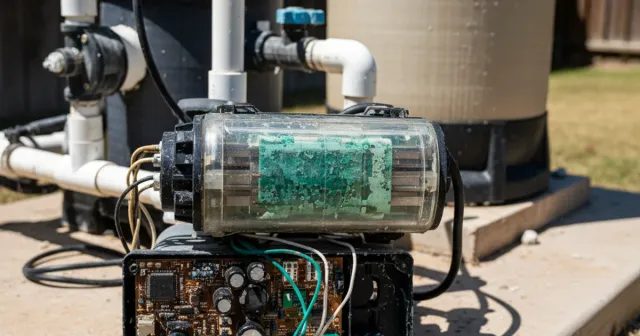
Grinding or whining sounds from your pump indicate excessive workload caused by a clogged filter. The pump must work harder to push water through restricted passages, leading to strain that can result in premature failure. Our pump replacements run $2,450 to $3,500.
Increased Chemical Use
When Your Pool Becomes a Chemical Black Hole
If you find yourself adding more chemicals than usual to maintain proper water balance, your filter may be the culprit. A clogged filter allows contaminants to accumulate, depleting chemicals faster and requiring more frequent additions to maintain safe swimming conditions.
Following a Regular Maintenance Schedule
Prevention outperforms crisis management when it comes to pool filter care. Here are filter-specific maintenance guidelines:
- Cartridge filters: Monthly rinsing during swim season
- Sand filters: Backwashing when pressure rises 8-10 psi above baseline
- DE filters: Backwashing plus fresh powder application as needed
FAQ
Frequently asked questions
How often should I clean my pool filter?
It varies by filter type and environmental conditions. Cartridge filters require rinsing every 4-6 weeks during active use. Sand and DE filters need backwashing when pressure rises 8-10 psi above normal. Pools near trees or heavily used require more frequent attention.
What are the signs my pool filter needs cleaning immediately?
Emergency indicators include pressure gauge readings 10+ psi above normal, overnight water color change from blue to green, debris recirculating into the pool, pump producing unusual sounds, and complete water movement absence.
Can I clean my pool filter myself or should I hire a professional?
Homeowners can perform basic maintenance like cartridge rinsing and backwashing. Professional services offer advantages including commercial-grade cleaning solutions, equipment inspection, early failure detection, and thorough deep cleaning. Many pool owners combine DIY routine maintenance with professional deep cleaning annually.
What happens if I neglect filter cleaning?
Neglect progresses through stages: initial water cloudiness and chemical consumption increase, followed by algae blooms and elevated energy bills, culminating in equipment failure requiring expensive replacement.
How much does professional pool filter cleaning cost in San Diego?
Our filter cleaning service runs $150 to $200 per service depending on filter type and condition severity. Many companies offer maintenance packages bundling multiple services for improved value.

Kyle Bowman
Founder of PoolLogic · CPO-Certified
Kyle is the Founder of PoolLogic Pool Service and a Certified Pool Operator (CPO) with deep expertise in pool service, water chemistry, and pool equipment repair. He oversees every aspect of PoolLogic's operations to ensure San Diego pool owners receive expert-level care.
Read morePool service done right
Need professional pool service?
PoolLogic Pool Service provides expert pool cleaning, maintenance, and repair services throughout San Diego County.