
On this page
When Regular Maintenance Isn't Enough
Even routine upkeep sometimes falls short. Your pool may develop issues requiring more intensive intervention than standard chemical treatments can address.
Stubborn Total Dissolved Solids (TDS) Levels
Minerals, dirt, and chemicals gradually accumulate in pool water, diminishing the effectiveness of sanitizers. The water appears dull or cloudy despite chemical additions. A salty or chalky sensation indicates excessive dissolved solids. Draining removes these accumulated substances, restoring water chemistry balance and clarity.
Persistent Algae Infestations That Keep Coming Back
Dark green, yellow, or black spots reappear despite deep cleaning efforts. Water becomes murky or greenish even after shock treatments. Some types of algae, especially black algae, have deep roots that cling to surfaces and continue spreading. Professional draining eliminates algae completely and resets water chemistry.
Calcium Hardness Has Crossed the Threshold
White, crusty deposits form on tiles, surfaces, and equipment. Pool surfaces feel rough. Water appears cloudy and irritates swimmers' skin. High calcium levels clog filters and damage equipment. Fresh water reduces calcium concentration and improves system performance.
Cyanuric Acid (CYA) Buildup
Chlorine reads as normal but water remains cloudy. Excessive stabilizer renders chlorine ineffective at sanitization. The only solution involves complete draining and refilling with fresh water to lower CYA concentrations.
Staining and Discoloration That Won't Respond to Treatment
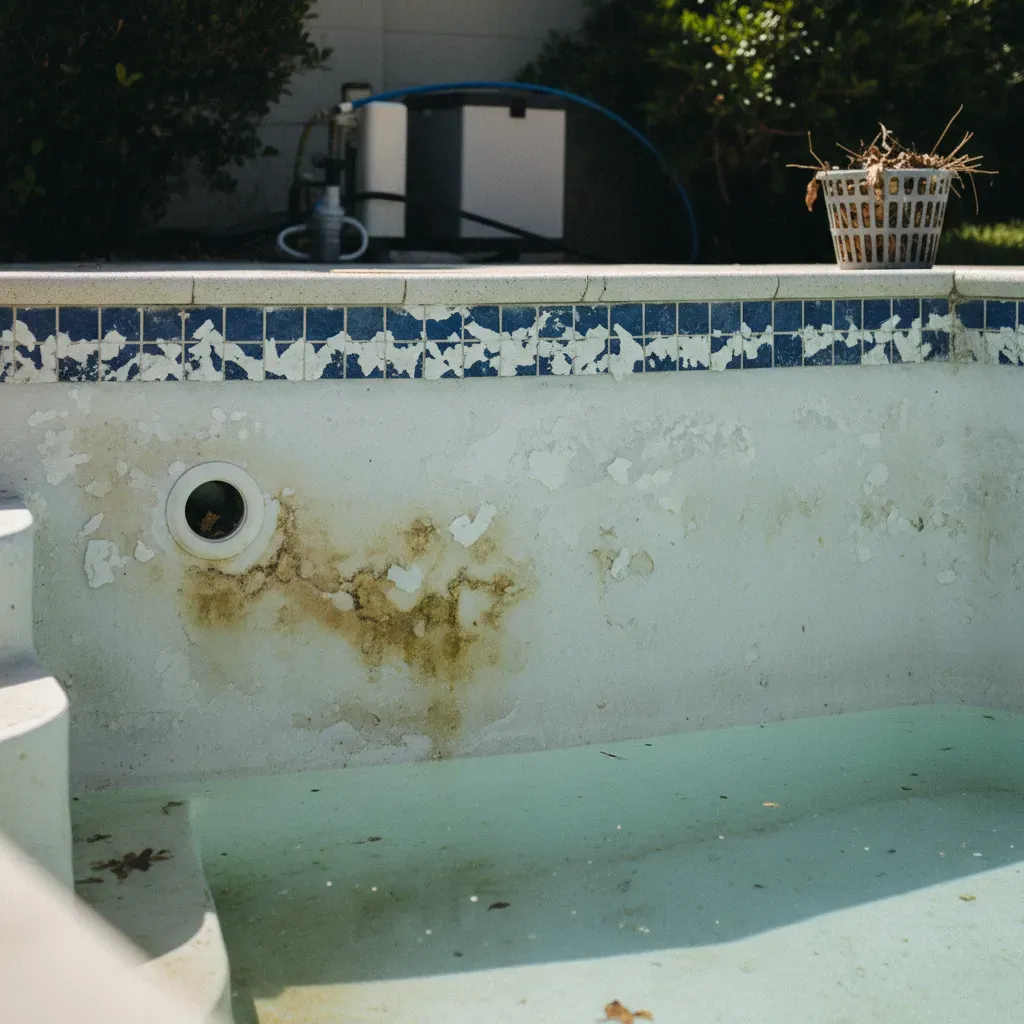
Brown, green, or rusty stains persist despite scrubbing and chemical treatments. Water appears tinted. Stains result from metals like iron or copper, or stubborn algae growth. Complete draining enables professionals to deep clean and remove permanent damage.
Chemical Imbalance That Defies Correction
pH and chlorine levels remain unstable despite proper chemical additions. Water irritates eyes and skin. Chlorine odor is either overwhelming or absent. Underlying issues prevent chemical adjustments from working effectively.
Structural Repairs or Surface Refinishing Needed
Cracks, peeling plaster, and flaking paint appear on surfaces. Tiles detach and grout deteriorates. Pool surfaces feel rough and uneven. Many repairs require an empty pool for effectiveness.
The Drain and Restart Process: What to Expect
Pre-Drain Assessment
Professionals inspect current pool conditions, identifying cracks, leaks, or areas needing repair before beginning work.
Proper Drainage
Special submersible pumps remove water slowly, preventing structural damage. Water disposal follows local environmental regulations.
Surface Cleaning
Walls and floor receive thorough scrubbing to eliminate dirt, algae, and stains, preparing surfaces for repairs.
Repairs
Cracks, leaks, and identified issues receive professional attention before refilling.
Professional Refill
Fresh water fills the pool while experts monitor the process to prevent structural issues and ensure correct water levels.
Follow-Up Balancing
Chemical levels are tested and adjusted to ensure water safety and protect equipment during the process.
Final Thoughts
Taking pool care seriously doesn't require extensive effort—sometimes a restart solves persistent problems. Professional drain, cleaning, repair, and refill services with quick setup can address cloudy water, stubborn algae, or chalky deposits, restoring pools to sparkling condition.
FAQ
Frequently asked questions
How often should I have my pool drains professionally cleaned?
Most residential San Diego pools benefit from professional drain cleaning once or twice yearly. Pools surrounded by trees or with heavy usage may require quarterly cleanings.
What are the most common signs that my pool drain needs cleaning?
Reduced water circulation, debris near drain covers, unusual pump noises, and cloudiness shortly after treatment indicate drainage problems.
Is professional drain cleaning necessary if I regularly skim and vacuum my pool?
Yes. Regular skimming and vacuuming maintain surface cleanliness but don't address deeper clogs or mineral buildup within drainage systems requiring professional equipment.
What's the typical cost for professional pool drain cleaning in San Diego?
Our drain cleaning price depends on pool size, drain accessibility, and clog severity. See our <a href="/pool-service-cost-san-diego/#equipment-pricing">equipment pricing</a> for current rates. Package deals often apply when combining services.
Do I need to drain my pool for professional drain cleaning?
Not necessarily. Professionals use specialized equipment to clean drains while the pool remains filled.
How long does professional drain cleaning typically take?
Standard residential pools require 1 to 2 hours. Complex situations with multiple drains may take longer.
Can clogged drains damage my pool equipment?
Yes. Clogs force pumps to work harder, shortening lifespan and increasing energy costs. Severe blockages can cause pump failure requiring expensive replacement.
What causes pool drains to clog most frequently?
Hair, leaves, toys, sunscreen residue, mineral buildup, and small debris accumulate in drains over time.
Are there any steps I can take between professional cleanings to maintain my drains?
Regular skimming, using pool covers when unused, and maintaining proper chemical balance extend time between professional cleanings.
How can I tell if my pool drain is working properly?
Strong, consistent suction indicates proper function. Test by holding leaves or paper near the drain; materials should pull toward the opening.

Kyle Bowman
Founder of PoolLogic · CPO-Certified
Kyle is the Founder of PoolLogic Pool Service and a Certified Pool Operator (CPO) with deep expertise in pool service, water chemistry, and pool equipment repair. He oversees every aspect of PoolLogic's operations to ensure San Diego pool owners receive expert-level care.
Read morePool service done right
Need professional pool service?
PoolLogic Pool Service provides expert pool cleaning, maintenance, and repair services throughout San Diego County.