
On this page
- Adapt Your Cleaning Schedule to San Diego's Climate
- Use Pressure Readings as Your Maintenance Guide
- Choose the Right Filter Type for Our Local Conditions
- Master the Art of Proper Backwashing
- Harness the Power of Pool Covers in San Diego
- Balance Your Water Chemistry for Filter Longevity
- Leverage Professional Expertise for Deep Cleaning
- Implement a Proactive Replacement Schedule
Adapt Your Cleaning Schedule to San Diego's Climate
Why the standard schedule doesn't always work here
While general recommendations suggest cleaning filters every three to six months, San Diego's environment demands customization. Santa Ana winds increase filter workload by collecting dust, pollen, and fine debris. Properties with palm trees or plants that shed frequently may require more frequent attention.
Monitor your pool's appearance after weather events. If you notice decreased water flow or cloudy water following windy days, it's probably time for a filter cleaning regardless of when you last performed maintenance.
Use Pressure Readings as Your Maintenance Guide
Understanding what your system is telling you
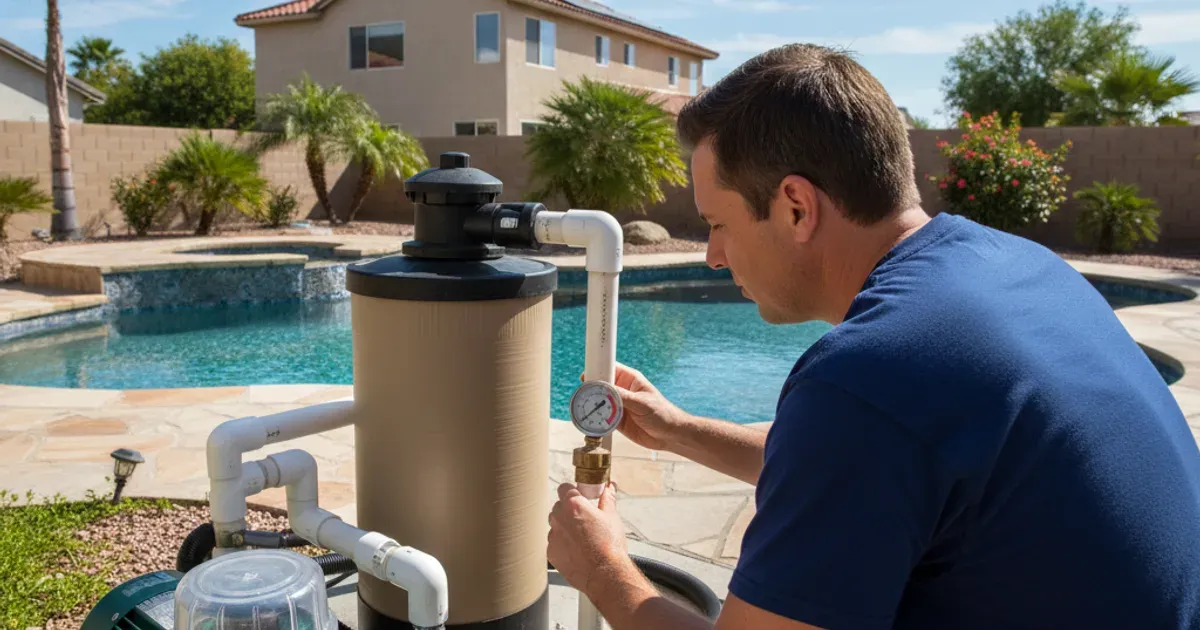
The pressure gauge communicates system status directly. After cleaning, note the baseline reading. When the pressure rises 8-10 PSI above this baseline, your filter is telling you it's struggling to push water through accumulated debris.
Ignoring pressure increases forces pumps to work harder, potentially shortening equipment lifespan and increasing energy costs. Regular pressure checks prevent costly repairs.
Choose the Right Filter Type for Our Local Conditions
Not all filters are created equal for San Diego pools
Filter selection significantly impacts maintenance routines. Three types are available:
- Cartridge filters: Don't require backwashing, conserving water during droughts. Excellent for capturing fine dust particles common to San Diego pools.
- Sand filters: Highly durable and handle larger debris effectively. Relatively low-maintenance but may require frequent backwashing during high wind seasons.
- DE (Diatomaceous Earth) filters: Provide the finest filtration available, capturing particles as small as 3-5 microns. Demand more maintenance but offer superior filtration for challenging conditions.
Consider your specific location, usage patterns, and maintenance preferences when selecting filter types.
Master the Art of Proper Backwashing
Conserving water while maintaining efficiency
For sand and DE filters, backwashing is essential but must be performed correctly to maximize effectiveness while conserving water resources. The process reverses water flow through the filter to flush accumulated debris.
- Turn off pump completely
- Set multiport valve to "Backwash"
- Restart pump and watch the sight glass
- Run backwash until water runs clear (typically 2-3 minutes)
- Run the "Rinse" cycle for 30-60 seconds
Avoid excessive backwashing (5+ minutes), emphasizing water conservation in San Diego's drought-prone region.
Harness the Power of Pool Covers in San Diego
Minimizing maintenance through prevention
In San Diego's windy, dry climate, pool covers are essential, not optional. Covers reduce the debris load filters must process and prevent microscopic dust particles from settling in water.
Additional benefits include reducing water evaporation by up to 95%, significant in San Diego's arid climate where pools can lose inches weekly. This conservation means less frequent refilling and fewer chemicals needed for balance.
Balance Your Water Chemistry for Filter Longevity
The hidden relationship between chemicals and filtration
Perfect water chemistry and efficient filtration work together. Balanced water allows filters to focus on removing physical contaminants rather than battling chemical issues like algae growth.
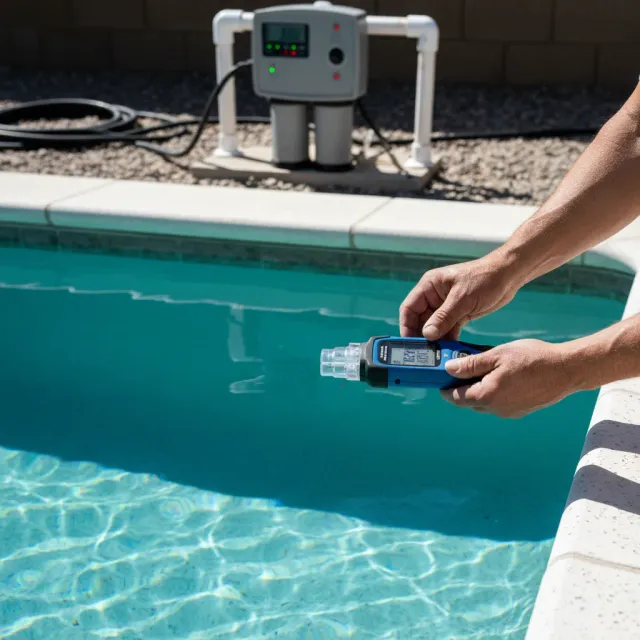
Recommended parameters for testing weekly:
- pH between 7.2-7.8
- Total alkalinity of 80-120 ppm
- Calcium hardness of 200-400 ppm
- Free chlorine of 1-3 ppm
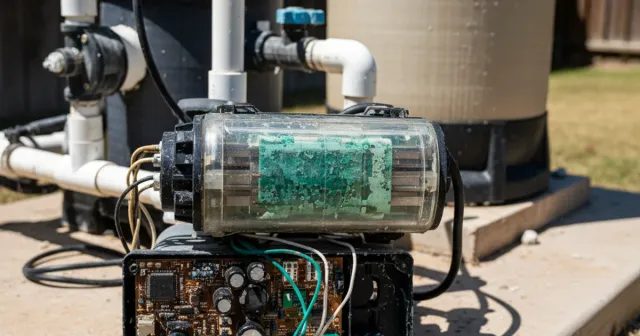
San Diego's water tends to be harder, requiring particular attention to calcium levels. Excessive calcium can cause scaling on pool surfaces and inside filters, reducing efficiency and potentially causing damage.
Leverage Professional Expertise for Deep Cleaning
When DIY isn't enough
While regular maintenance can be handled by most owners, professional deep cleaning provides benefits DIY approaches cannot match. Professionals use specialized tools and solutions to remove embedded oils and minerals from filter media.
For cartridge filters, professionals use commercial-grade solutions and high-pressure systems that restore cartridges to near-new condition without damaging pleats. For sand filters, they inspect media quality and identify channeling issues invisible during routine maintenance.
Professional technicians spot early warning signs during cleaning that could prevent major problems.
Implement a Proactive Replacement Schedule
Knowing when to say goodbye
All filter components have finite lifespans. A proactive replacement schedule prevents gradual performance decline before water quality deteriorates.
Replacement timelines:
- Cartridge filters: every 3-5 years, depending on usage and care
- Sand filters: every 5-7 years, as sand edges wear and become rounded
- DE filters: require grid replacement when fabric develops tears or internal components show corrosion
Annual assessments ensure systems operate at peak efficiency.
Frequently asked questions
How often should I clean my pool filter in San Diego specifically?
Most San Diego pool owners need cleaning every 2-4 months rather than the standard 3-6 months recommended elsewhere. During Santa Ana winds or with surrounding trees, monthly cleaning may be necessary for optimal performance.
What are the telltale signs my filter needs immediate attention?
Beyond pressure gauge readings, watch for decreased water flow from return jets, cloudy water that doesn't clear with proper chemistry, or visible debris returning to the pool shortly after cleaning. These symptoms indicate immediate filter attention regardless of recent service.
Is DIY filter cleaning effective, or should I always call professionals?
Basic filter cleaning can be handled by comfortable homeowners. However, incorporating professional deep cleaning services 1-2 times annually provides the best combination—regular maintenance from owners with periodic expert-level cleaning for issues DIY methods cannot address.
What long-term problems can develop if I postpone regular filter cleaning?
Neglected filters develop "channeling" where water creates paths of least resistance through filter media, bypassing much filtration surface. This reduces efficiency significantly and can cause persistent water quality issues requiring complete media replacement. Additionally, increased pressure in dirty filters stresses pump motors, potentially causing premature failure.
What's a reasonable price range for professional filter cleaning in San Diego?
Our professional residential filter cleaning runs $150 to $200 per service, depending on filter type and condition. DE filters typically cost more due to additional steps. Many San Diego companies offer maintenance packages with reduced rates compared to one-time service calls.
How can I extend the time between necessary cleanings?
Using a pool cover consistently, maintaining proper water chemistry, and installing a pre-filter basket to catch larger debris before reaching the main filter can significantly extend time between cleanings. Some homeowners install secondary filtration systems like robotic cleaners to reduce main filter workload.

Kyle Bowman
Founder of PoolLogic · CPO-Certified
Kyle is the Founder of PoolLogic Pool Service and a Certified Pool Operator (CPO) with deep expertise in pool service, water chemistry, and pool equipment repair. He oversees every aspect of PoolLogic's operations to ensure San Diego pool owners receive expert-level care.
Read moreNeed professional pool service?
PoolLogic Pool Service provides expert pool cleaning, maintenance, and repair services throughout San Diego County.