
On this page
- The sand bed traps dirt while laterals collect filtered water
- Multiport settings change the water’s path through the filter
- Compare pressure and return flow at the same pump speed
- Sand cannot remove dissolved calcium or correct water chemistry
- When cleaning does not restore filtration, inspect the equipment
The sand bed traps dirt while laterals collect filtered water
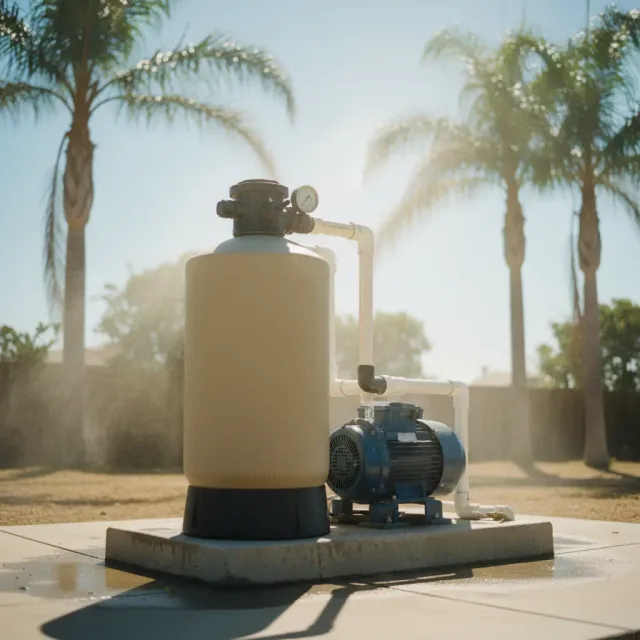
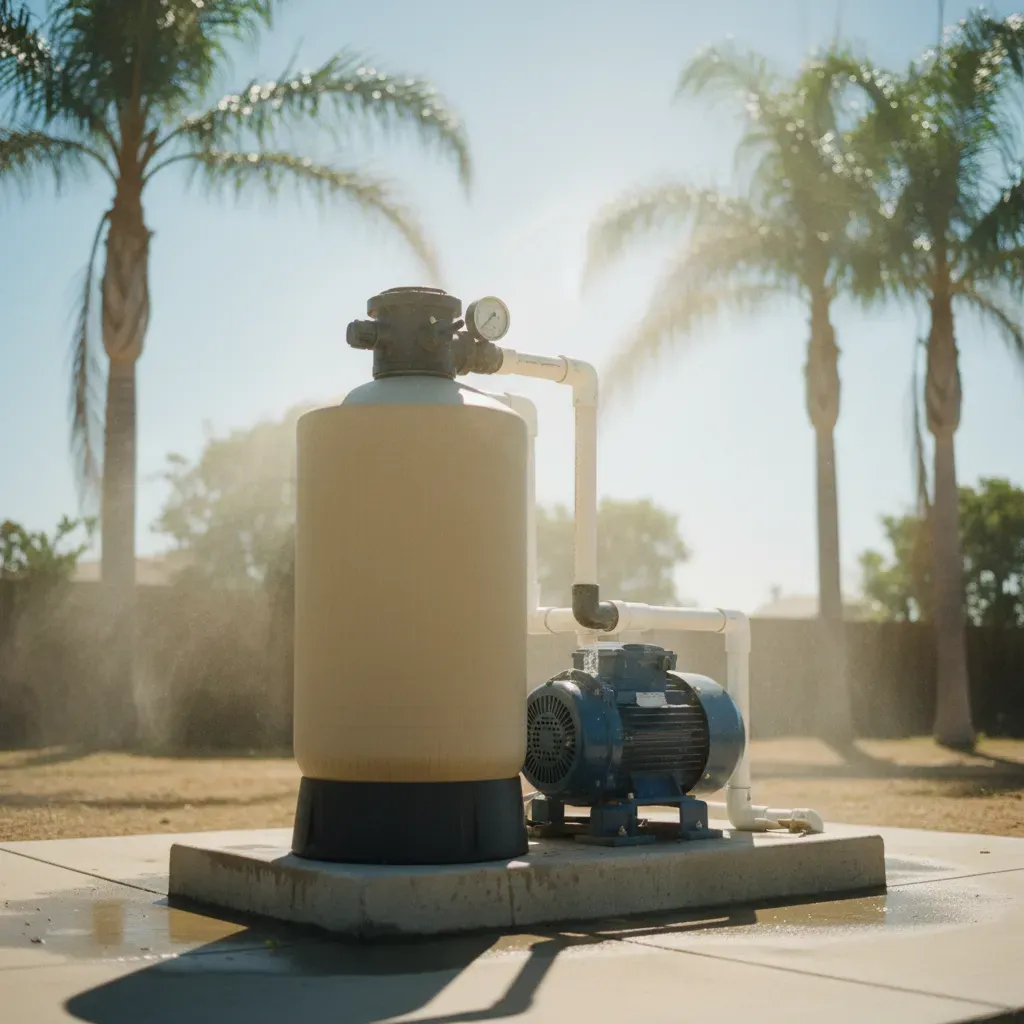
A swimming pool sand filter works by pushing water downward through filter sand, which traps suspended dirt between its grains. Filtered water enters slotted collectors called laterals at the tank’s bottom, then returns to the pool.
The pump supplies the movement; the sand supplies the filtering surface. Incoming water spreads across the top of the bed instead of passing through a single opening. As water travels through the spaces between grains, particles collect throughout the bed. The laterals gather that water while keeping correctly sized filter sand inside the tank.
Three parts determine whether this cycle works properly:
- The sand bed: Its depth and grain size must match the filter manufacturer’s specifications. Ordinary play sand is not a substitute.
- The internal collectors: Their narrow slots pass water while retaining the filtering material. Damaged collectors can let sand reach the pool.
- The control valve: It directs water through the sand, around it, or out through the waste line.
A lightly loaded sand bed can catch finer particles as accumulated debris narrows the spaces between grains. Eventually, that accumulation restricts flow enough to require cleaning. The useful distinction is whether the bed is capturing dirt while maintaining circulation, or becoming too restricted.
Multiport settings change the water’s path through the filter
The multiport valve determines whether the sand filters water or releases trapped debris. Water moving at the pool returns does not prove filtration is happening: recirculate bypasses the sand entirely.
Backwashing reverses normal flow. Water travels upward through the sand, loosens the bed, and carries collected debris out through the waste connection. Rinse then sends water downward through the bed and out to waste. This settles the sand and clears remaining dirty water before filtration resumes.
| Valve setting | Water path | Purpose |
|---|---|---|
| Filter | Down through sand, then back to the pool | Captures suspended particles |
| Backwash | Up through sand, then to waste | Removes collected debris |
| Rinse | Down through sand, then to waste | Settles the bed and clears remaining dirty water |
| Recirculate | Bypasses the sand and returns to the pool | Moves water without filtering it |
Turn the pump off before changing valve positions. Follow your equipment’s instructions for the cleaning sequence and duration, then return the valve to filter for normal operation. Our pool filter backwashing guide covers that separate task.
Backwashing removes collected dirt while retaining the sand for continued use. It does not mean replacing the sand each time the filter needs cleaning.
Compare pressure and return flow at the same pump speed
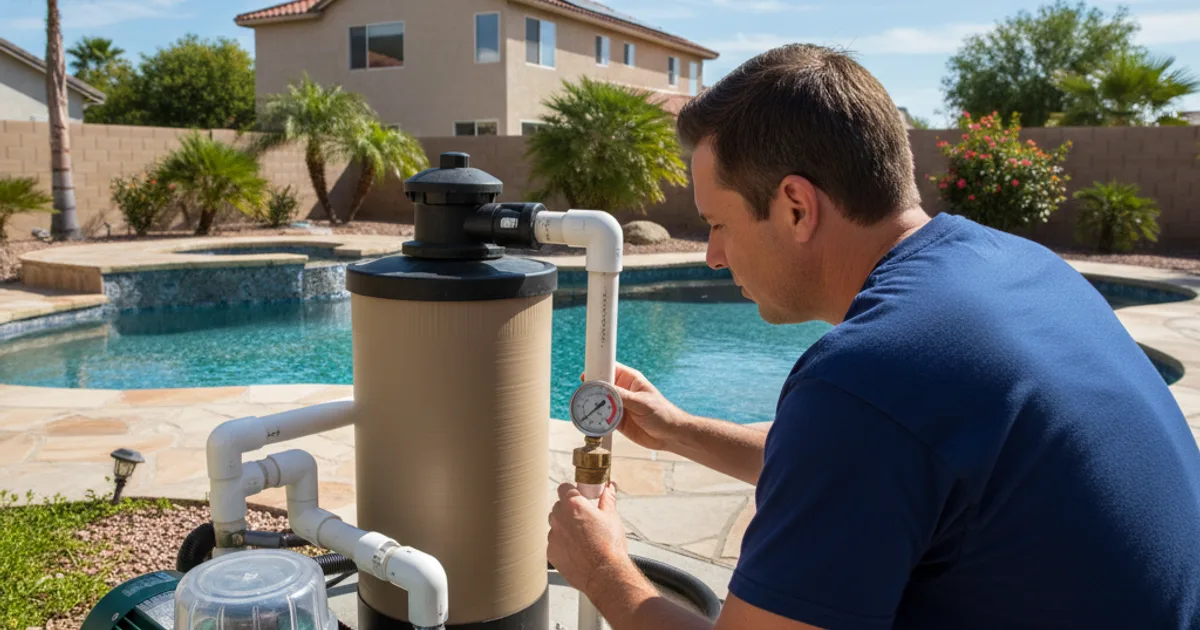
Record pressure with a clean filter and normal circulation. Note the pump speed and valve positions alongside it. For a variable speed pump, record a separate clean baseline for each routinely used filtration speed.
The gauge measures pressure inside the filter, not water clarity or filtration quality. Comparing a low speed reading with a higher speed reading can make a healthy filter appear dirty. Use the pressure increase specified in your filter’s manual as the cleaning trigger.
Read pressure together with return flow, using the same equipment settings:
- Pressure rises and returns weaken: Debris may be restricting the sand bed. Compare the increase against the manufacturer’s cleaning threshold.
- Pressure and return flow both fall: Check water level and inspect skimmer and pump baskets first. Restricted water supply to the pump can resemble a filter problem.
- Pressure stays normal but water remains cloudy: Check chemistry, valve setting, and circulation. A normal gauge reading cannot confirm that water is passing effectively through the sand.
After Santa Ana winds deposit dust and leaves, remove floating debris and empty baskets before comparing pressure. Do the same after San Diego’s first storm following a dry spell washes accumulated dirt into the pool. Compare the reading with your baseline instead of backwashing automatically after either event. Check water chemistry after storm runoff as well.
Increasing pump speed is not a universal correction for weak filtration. Each filter has a rated flow limit, and excessive flow can reduce performance. Our technicians check pump settings against the filter’s requirements when diagnosing circulation problems.
Sand cannot remove dissolved calcium or correct water chemistry
Sand filtration captures suspended particles. It does not remove dissolved calcium or replace chlorine. Longer filtration therefore cannot correct high calcium hardness, even when the water looks clear.
Much of San Diego County’s tap water comes from Colorado River and State Water Project supplies and arrives mineral-heavy. Evaporation leaves those minerals behind, while topping up adds more. Hotter inland conditions increase evaporation compared with the coast, making calcium testing especially useful where pools need frequent top-ups.
Test water chemistry before treating persistent cloudiness as a sand problem. Poor sanitation, suspended dirt, and calcium precipitation can produce similar-looking water but require different responses. Once dissolved calcium forms solid particles, the filter may capture some of them. It still cannot remove the calcium remaining dissolved in the water.
Mineral buildup can also interfere with the bed itself. If grains become cemented together, water may follow preferential paths instead of passing evenly through the sand. This is called channeling. Water continues moving, but less of the bed participates in filtration.
Normal pressure alone cannot rule out channeling. When chemistry and valve settings are correct but filtration remains poor, our technicians inspect the media and internal water path. Repeated backwashing cannot reliably correct a hardened sand bed.
When cleaning does not restore filtration, inspect the equipment
After any needed backwashing and rinsing, compare pressure and return flow at your recorded pump speed. Pressure should move back toward the clean baseline. A persistent difference calls for diagnosis rather than repeated cleaning cycles.
- Pressure stays high: We check for remaining restriction, mineral buildup, and problems in the return path.
- Pressure recovers but dirt returns: We check the valve, sand bed, and internal water path for bypassing.
- Actual sand continues appearing beneath return outlets: We inspect the laterals, standpipe, and media specification. Repeated sand discharge needs inspection even when the gauge looks normal.
Do not open a pressurized tank. Shut down the equipment, prevent automatic restart, and follow the manufacturer’s pressure relief procedure before service.
Bring the filter model, clean pressure reading, pump speed, and current symptoms to a service visit. Note whether the problem persists after cleaning or appears only at a particular speed. Those details help us distinguish a restriction from a filtration failure.
Our San Diego pool filter cleaning service can assess whether cleaning restores normal operation. When it does not, our technicians confirm the appropriate media service or equipment repair after inspecting the filter.

Kyle Bowman
Founder of PoolLogic · CPO-Certified
Kyle is the Founder of PoolLogic Pool Service and a Certified Pool Operator (CPO) with deep expertise in pool service, water chemistry, and pool equipment repair. He oversees every aspect of PoolLogic's operations to ensure San Diego pool owners receive expert-level care.
Read morePool service done right
Need professional pool service?
PoolLogic Pool Service provides expert pool cleaning, maintenance, and repair services throughout San Diego County.