
On this page
- Understanding Your Pool's Drain System
- Why Regular Pool Drain Cleaning Isn't Optional
- How Often Should You Clean Your Pool Drains?
- DIY vs. Professional Pool Drain Cleaning
- Warning Signs Your Pool Drains Need Attention
- The Benefits of Maintaining Clean Pool Drains
- Finding Professional Pool Drain Cleaning Near Me
Understanding Your Pool's Drain System
The Vital Components Working Together
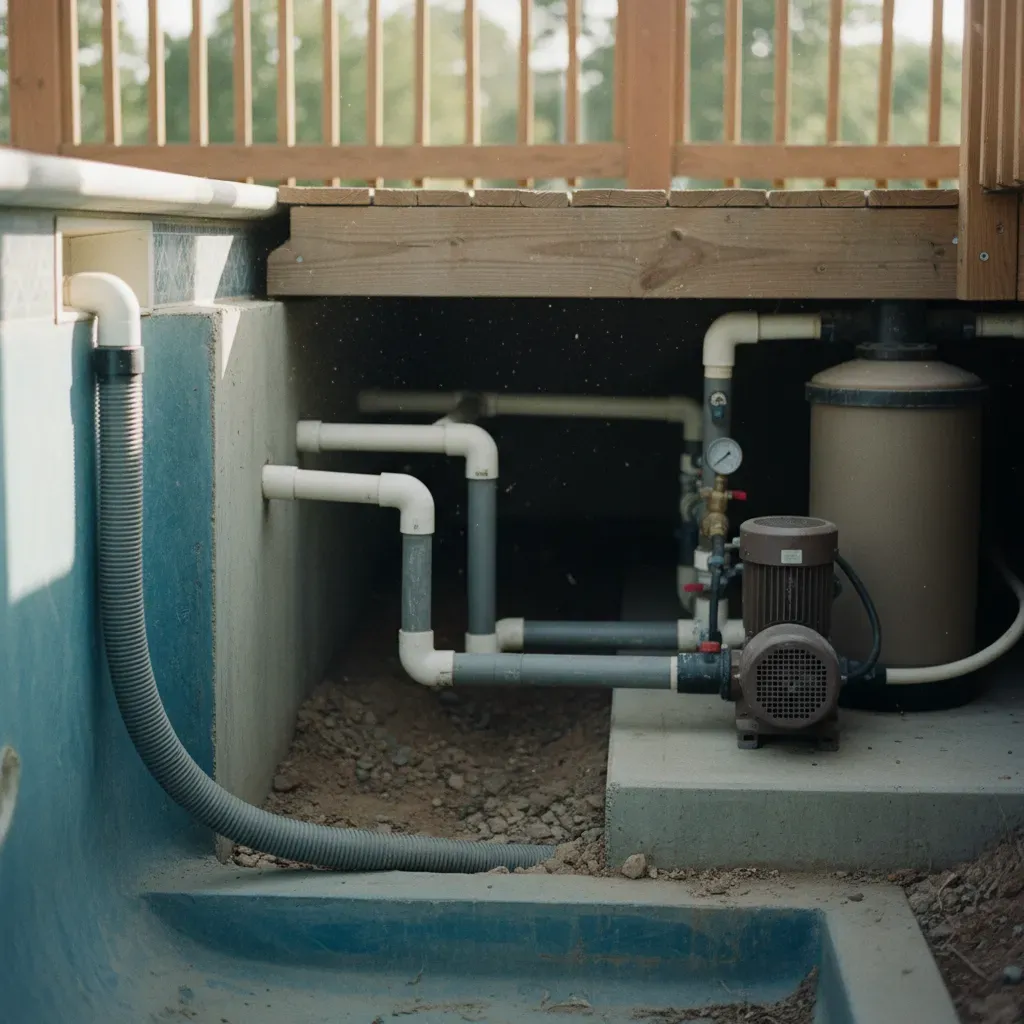
Your pool's circulation functions like the cardiovascular system of your backyard oasis. Main drains positioned at pool depths pull water continuously, acting as vacuum cleaners that prevent sediment buildup by directing it through filtration systems. Skimmers positioned at the water's surface capture leaves, bugs, and sunscreen residue before debris sinks and overwhelms main drains. Return lines push filtered clean water back into pools through jets, creating circulation that distributes chemicals evenly and prevents algae growth.
How Water Actually Circulates
The pool pump serves as the system's heart, creating suction that pulls water from both main drains and skimmers. This water travels through the filter, where impurities are removed. Clean water then returns to the pool, completing a cycle that ideally occurs multiple times daily. This continuous movement maintains water clarity, chemical balance, and overall pool appeal.
Why Regular Pool Drain Cleaning Isn't Optional
The Problem with Debris Accumulation
Leaves, dirt, hair, sand, and particles inevitably accumulate in drain systems over time. When this occurs, water flow becomes restricted, forcing pumps to work harder. Energy consumption increases, raising utility bills. Your pump experiences unnecessary wear and tear, potentially shortening its lifespan.
The Hidden Danger: Bacteria and Algae Growth
When drains become clogged, water movement slows, creating pockets of stagnant water that become perfect breeding grounds for bacteria and algae. In San Diego's warm climate, algae spreads rapidly when given opportunity, turning crystal-clear pools green in days.
Protecting Your Investment
Pools represent significant property investments. Pump and filtration systems alone cost thousands to replace. When drains become clogged, these components work overtime, significantly increasing wear. Regular drain cleaning functions as preventative maintenance—similar to changing car oil.
How Often Should You Clean Your Pool Drains?
For typical residential pools, thorough drain cleaning every 1-2 months usually suffices. High-traffic pools benefit from monthly cleaning. Pools near trees or gardens may need more frequent cleaning during certain seasons. Year-round San Diego pools require consistent maintenance due to extended use. The best approach involves observing your pool's specific patterns. If debris builds up quickly or circulation seems sluggish, schedule cleaning regardless of when your last service occurred.
DIY vs. Professional Pool Drain Cleaning
The Limitations of DIY Approaches
While skimming surface debris and basic maintenance remains manageable for most pool owners, drain cleaning presents unique challenges. Consumer-grade tools often cannot reach deep into drain systems. Without proper training, it becomes difficult knowing if you've addressed all potential blockages. DIY methods risk damaging delicate components if performed incorrectly.
The Professional Advantage
Professional pool technicians bring specialized equipment and expertise making significant differences. High-powered vacuum systems remove debris from deep within drain lines. Trained eyes spot potential issues before they become major problems. Professional-grade cleaning ensures complete removal of buildup, not just surface debris. Experts inspect entire circulation systems while cleaning drains, identifying other maintenance needs. Professional drain cleaning represents an investment in your pool's longevity rather than an expense.
Warning Signs Your Pool Drains Need Attention
Your pool provides clear signals when drains need cleaning. Watch for reduced water movement where water seems unusually still or jets seem less powerful. Listen for strange noises like gurgling, sucking, or whistling sounds coming from drains or pumps. Note unpleasant odors like musty or chemical smells persisting despite balanced water chemistry. Observe debris settling on your pool floor instead of being filtered out. Notice pumps struggling or working harder than usual with unusual noises. Catching these signs early prevents more serious issues and keeps maintenance costs manageable.
The Benefits of Maintaining Clean Pool Drains
Crystal Clear Water Quality
Clean drains allow your filtration system to work as designed, removing particles and contaminants efficiently. This results in water that sparkles with clarity, more effective distribution of pool chemicals, reduced need for shock treatments and algaecides, and a more comfortable and safe swimming environment.
Lower Energy Costs
Clogged drain systems can increase energy consumption by 30% or more. When water flows freely, pumps don't work as hard maintaining circulation, translating directly to lower electricity bills. Many pool owners find that regular professional drain cleaning actually pays for itself through reduced utility costs alone.
Extended Equipment Life
Pool equipment replacement costs significantly. Your pump, filter, heater, and other components last considerably longer operating under optimal conditions. Clean drains reduce strain on all these systems, potentially adding years to their operational life. Professional drain cleaning serves as preventative healthcare for your pool—addressing small issues before they develop into system-wide problems.
Finding Professional Pool Drain Cleaning Near Me
When searching for professional pool maintenance in San Diego, consider experience with extensive pool maintenance backgrounds. Ensure they have proper specialized equipment for thorough drain cleaning. Check online reviews and ask for references. Evaluate response time, as San Diego's year-round swimming climate requires timely service. Select comprehensive service providers who check entire circulation systems, not just drains.
FAQ
Frequently asked questions
How often should I clean my pool drains?
For most residential pools, every 1-2 months is sufficient. However, pools with heavy use or environmental factors like nearby trees may require more frequent cleaning.
What happens if I don't clean my pool drains regularly?
Neglected drains lead to poor circulation, increased bacteria and algae growth, higher energy costs, and potential damage to expensive pool equipment.
Is it safe to clean pool drains myself?
While basic maintenance is manageable, professional cleaning is recommended for thorough results and to avoid potential damage to your system.
Do I need to drain my pool to clean the drains?
No, professional services can typically clean drains thoroughly without draining your pool.
How much does professional drain cleaning cost?
Costs vary based on pool size, drain condition, and how much debris has built up. Our current rates are on our <a href="/pool-service-cost-san-diego/#equipment-pricing">pool service pricing page</a>, and routine drain cleaning is a small price compared to potential repair costs from neglected maintenance.
How can I prevent clogs between professional cleanings?
Regular skimming, using a pool cover when not in use, and prompt removal of visible debris help maintain cleaner drains between professional services.
How long does professional drain cleaning take?
A thorough cleaning typically takes 1-2 hours, depending on your pool's size and drain condition.

Kyle Bowman
Founder of PoolLogic · CPO-Certified
Kyle is the Founder of PoolLogic Pool Service and a Certified Pool Operator (CPO) with deep expertise in pool service, water chemistry, and pool equipment repair. He oversees every aspect of PoolLogic's operations to ensure San Diego pool owners receive expert-level care.
Read morePool service done right
Need professional pool service?
PoolLogic Pool Service provides expert pool cleaning, maintenance, and repair services throughout San Diego County.