
On this page
When to Consider Draining Your Pool
Maintaining a San Diego pool involves understanding when draining becomes necessary. Chemical accumulation—including calcium, phosphates, and algae—reduces treatment effectiveness over time. Professionals recommend refreshing pool water every 3-5 years to maintain clarity and balance.
Seasonal Timing Considerations
Weather, temperature, and local regulations should guide drainage timing to ensure safety and efficiency.
Spring Cleaning
Spring draining prepares pools for summer use with fresh, clear water. Over time, pools accumulate extra chemicals and debris; periodic refilling restores water balance and clarity.
Avoiding Summer
Summer draining poses significant risks. Extreme heat causes cracking and warping of empty pools, leading to expensive repairs. If necessary, drain only partially or work during cooler mornings.
Fall Reset
Fall provides ideal conditions for draining before winter arrives. Removing built-up contaminants simplifies off-season maintenance and ensures readiness for warmer weather.
Winter Work
Winter offers lower service demand, potentially providing quicker appointments and better pricing. However, freezing temperatures create risks including cracks and structural damage.
Water Chemistry Gone Wrong – When Draining Your Pool Becomes a Must
Total Dissolved Solids (TDS) Overload
Total Dissolved Solids encompasses minerals, chemicals, dirt, and organic matter dissolved in pool water. As water evaporates, dissolved solids concentrate. High TDS levels cause cloudiness, scaling, and reduced chlorine effectiveness. Experts recommend draining and refilling every 3-5 years in San Diego to maintain appropriate TDS levels.
Cyanuric Acid (CYA) Buildup
Cyanuric acid stabilizes chlorine against sun degradation—essential in sunny San Diego. However, excessive amounts accumulate since it doesn't evaporate naturally. High CYA levels paradoxically reduce chlorine effectiveness despite seemingly normal chlorine readings, enabling cloudy water and algae outbreaks.
Calcium Hardness Extremes
San Diego's hard water naturally contains calcium. While pools require some calcium to prevent corrosion, excess amounts create problems including tile and equipment scaling. Draining and refilling with fresh water balances calcium levels. Reverse osmosis treatments offer alternatives without complete draining.
Persistent Algae Problems
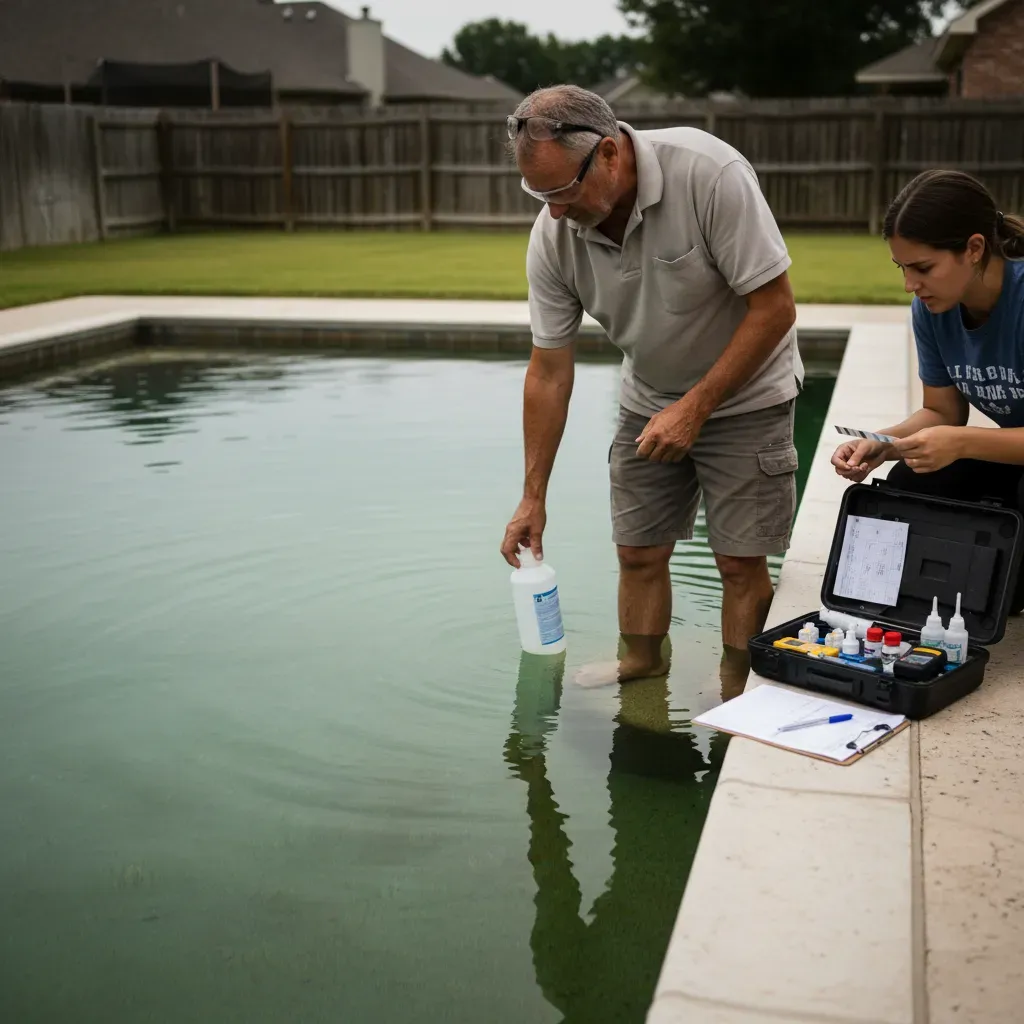
Algae thrives in warm climates when chlorine fails due to chemical imbalance. Black algae particularly roots into pool surfaces, resisting scrubbing. Draining combined with a thorough surface cleaning eliminates stubborn algae.
Chemical Accidents
Incorrect chemical additions, accidental spills, or incompatible product mixing disrupts water balance dangerously. Draining and refilling safely resets pool chemistry when normal adjustments prove insufficient.
Major Repairs and Renovations – When Draining Your Pool is Necessary
Surface Resurfacing
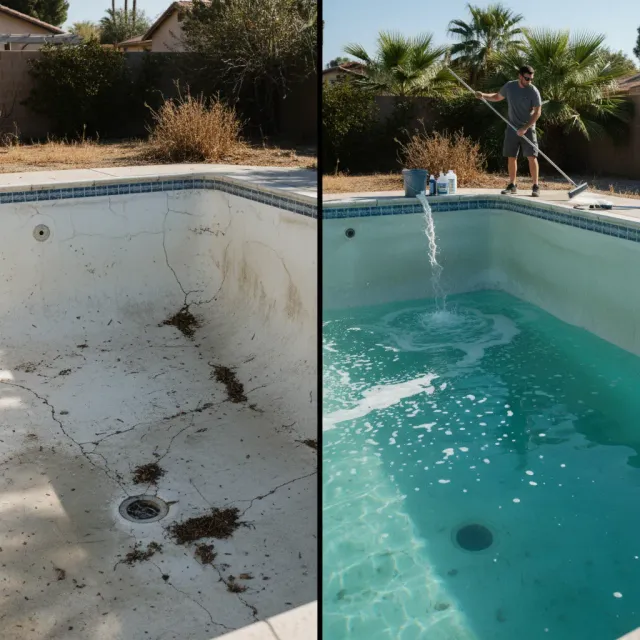
Pool surfaces deteriorate through chemical exposure, weather, and regular use. Resurfacing requires completely dry surfaces for proper adhesion. Draining allows professionals to apply new plaster, smooth rough areas, and address underlying issues.
Major Structural Repairs
Structural damage includes cracks, leaks, or shifting caused by ground movement. Accessing damaged areas for crack repair, leak fixing, epoxy injection, or rebar reinforcement typically requires complete draining.
Tile Replacement or Repair
Pool tiles deteriorate through becoming loose, cracked, or discolored. Full tile replacement or deep cleaning typically requires draining for complete tile-line access and proper installation.
Equipment Pad Overhaul
The equipment pad houses pumps, filters, heaters, and essential circulation components. Major upgrades or plumbing replacements often require water-level reduction or complete pool emptying.
Deck Replacements
Cracked, sinking, or uneven surfaces create safety hazards. While most deck work doesn't require draining, major replacements involving pool coping might.
The Proper Way to Drain Your Pool in San Diego
Pre-Draining Preparations
Check Local Regulations: The city mandates that pool water be chlorine-free, debris-free, and maintain pH between 7-8. Saltwater pools face additional regulations.
Consult Professionals: Speaking with local pool professionals provides customized advice while ensuring regulatory compliance.
Plan for Refilling: Consider refilling water sources and remaining San Diego water-use restrictions.
Turn off Automatic Systems: Disable automatic timers for pumps and cleaners before draining to prevent equipment damage.
The Draining Process
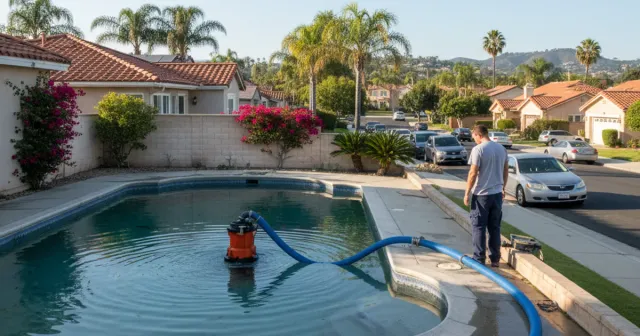
Hydrostatic Pressure Relief: Rapid draining causes pool lifting or cracking due to underground pressure. Hydrostatic relief valves or professional consultation manage this critical safety concern.
Controlled Flow Rate: Slow water draining prevents yard flooding or plumbing damage.
Monitoring Throughout: Continuous observation catches issues early.
Surface Protection: Empty pool surfaces risk drying, cracking, or deterioration. Minimizing empty-pool duration prevents damage.
Refilling and Balancing
Initial Water Treatment: Following refilling, treat water establishing correct chemical balance including pH, alkalinity, and sanitizer adjustments.
Sequential Filling: Refill in stages with periodic inspections for structural issues or leaks.
Equipment Restart: Before restarting pumps and heaters, verify operating condition and prime pumps as necessary.
DIY vs Professional Pool Draining
Structural Damage: Improper pool emptying causes serious damage. Removing water exposes pools to hydrostatic pressure, potentially causing cracking, shifting, or complete structural failure ("pool pop"). Professionals safely manage this pressure using hydrostatic valves.
Equipment Damage: Forgetting to disable or properly manage pumps, filters, and automatic systems causes motor burnout or seal damage resulting in expensive repairs.
Code Violations: San Diego enforces specific drainage rules. Discharging untreated water into streets, storm drains, or sewers incurs fines. Water requires dechlorination, debris removal, and pH balancing before release.
Insurance Issues: DIY errors potentially void coverage. Insurers frequently view DIY pool draining as high-risk, potentially classifying mistakes as homeowner negligence.
How Often Should You Drain Your Pool?
San Diego's year-round sunny conditions mean continuous pool operation. Draining every 3-5 years prevents problematic mineral, chemical, and debris accumulation. Earlier draining becomes necessary for elevated calcium or TDS, recurring algae or cloudy water, severe chemical imbalances, and planned repairs or resurfacing. Careful draining during mild weather (Spring or Fall) while following local regulations protects environmental conditions.
FAQ
Frequently asked questions
How often should pool drains be cleaned?
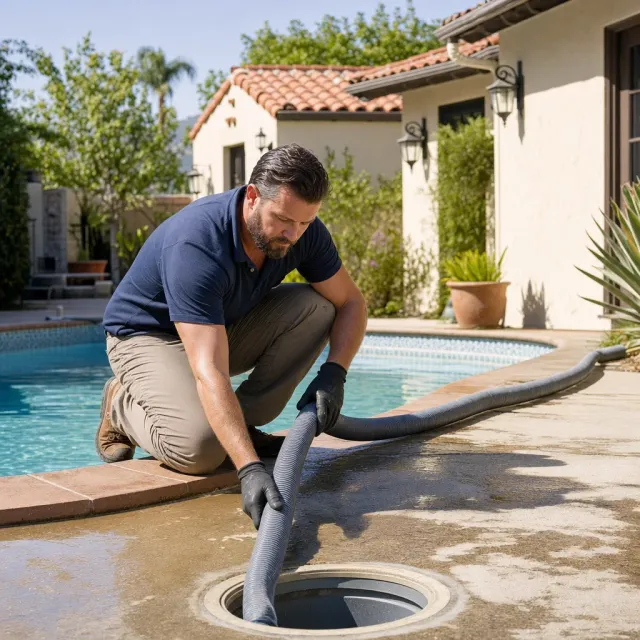
Annual drain cleaning works well for most pools. Increased frequency benefits pools receiving heavy use or surrounded by trees.
What are the signs of a clogged pool drain?
Watch for sluggish water movement, debris accumulating near drains, or unusual filtration system sounds.
Can I clean my pool drain myself?
Basic tools may address minor clogs, but serious blockages require professional equipment and expertise.
How much does professional pool drain cleaning cost in San Diego?
The cost of drain cleaning depends on pool size and how severe the clog is. See our <a href="/pool-service-cost-san-diego/#equipment-pricing">current repair and service pricing</a> for details.
What causes pool drain clogs?
Leaves, dirt, body oils, algae, and calcium buildup from hard water gradually collect and obstruct drains.

Kyle Bowman
Founder of PoolLogic · CPO-Certified
Kyle is the Founder of PoolLogic Pool Service and a Certified Pool Operator (CPO) with deep expertise in pool service, water chemistry, and pool equipment repair. He oversees every aspect of PoolLogic's operations to ensure San Diego pool owners receive expert-level care.
Read morePool service done right
Need professional pool service?
PoolLogic Pool Service provides expert pool cleaning, maintenance, and repair services throughout San Diego County.