
On this page
Step 1: Assessing Your Pool's Needs
Pool Size
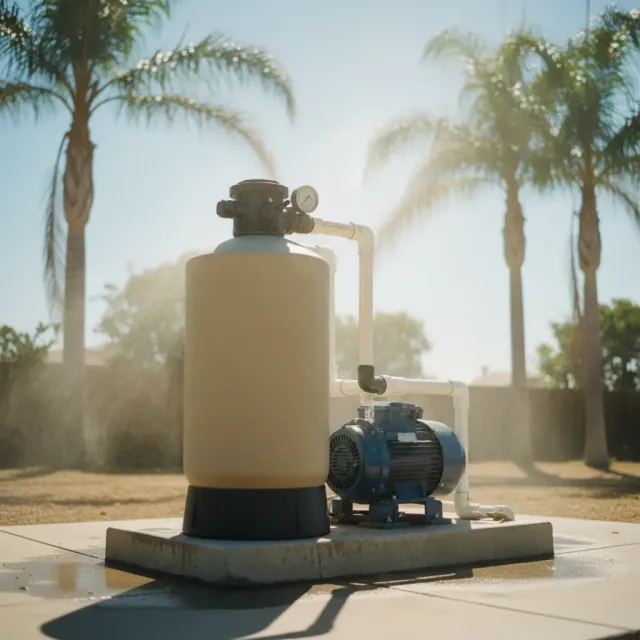
Pool filters are rated by gallons-per-minute (GPM) capacity, indicating water handling volume within a given timeframe. The filter must accommodate the pump's flow rate while handling the pool's total volume. Larger pools require higher GPM ratings for consistent water circulation and cleanliness, while smaller pools function efficiently with lower flow rate filters.
Pool Usage Frequency
Pools used frequently—especially in year-round swimming climates like San Diego—face higher exposure to debris, dirt, and contaminants including sunscreen oils and leaves. High-usage pools benefit from robust filters with larger media areas. Cartridge or DE filters suit frequent use, while occasional-use pools may favor cost-effective sand filters.
Choosing the Right Filter Type
1. Sand Filters
- Advantages: Cost-effective, easy to maintain, suitable for most pool sizes
- Considerations: Less effective at capturing fine particles; may require additional chemical treatments
2. Cartridge Filters
- Advantages: Energy-efficient, minimal maintenance, captures finer debris than sand, eliminates backwashing need
- Considerations: Cartridges require periodic replacement, adding long-term costs
3. DE Filters (Diatomaceous Earth)
- Advantages: Superior filtration capturing microscopic particles, ensures crystal-clear water
- Considerations: Requires regular backwashing and DE powder reapplication; higher upfront cost and more maintenance
Matching the Filter to Your Pool's Needs
Residential pools with moderate usage benefit from cartridge filters' efficiency-to-ease balance. High-traffic or debris-prone pools require DE filter's advanced filtration. San Diego's sunny, warm climate presents higher evaporation rates and landscaping debris, making efficient, low-maintenance filters (cartridge or DE) more practical.
Step 2: Choosing the Right Location
Accessibility
Select a location allowing easy maintenance access for cleaning or replacing filter media. Ensure adequate space around the filter for airflow and safe operation.
Consider Surrounding Equipment
Place the filter downstream from the pump for proper water flow. Install on a stable surface preventing vibrations or shifting during operation. Avoid locations prone to flooding or excessive sun exposure, as these impact equipment longevity.
Step 3: Setting Up the Plumbing
Connecting the Filter to the Pump
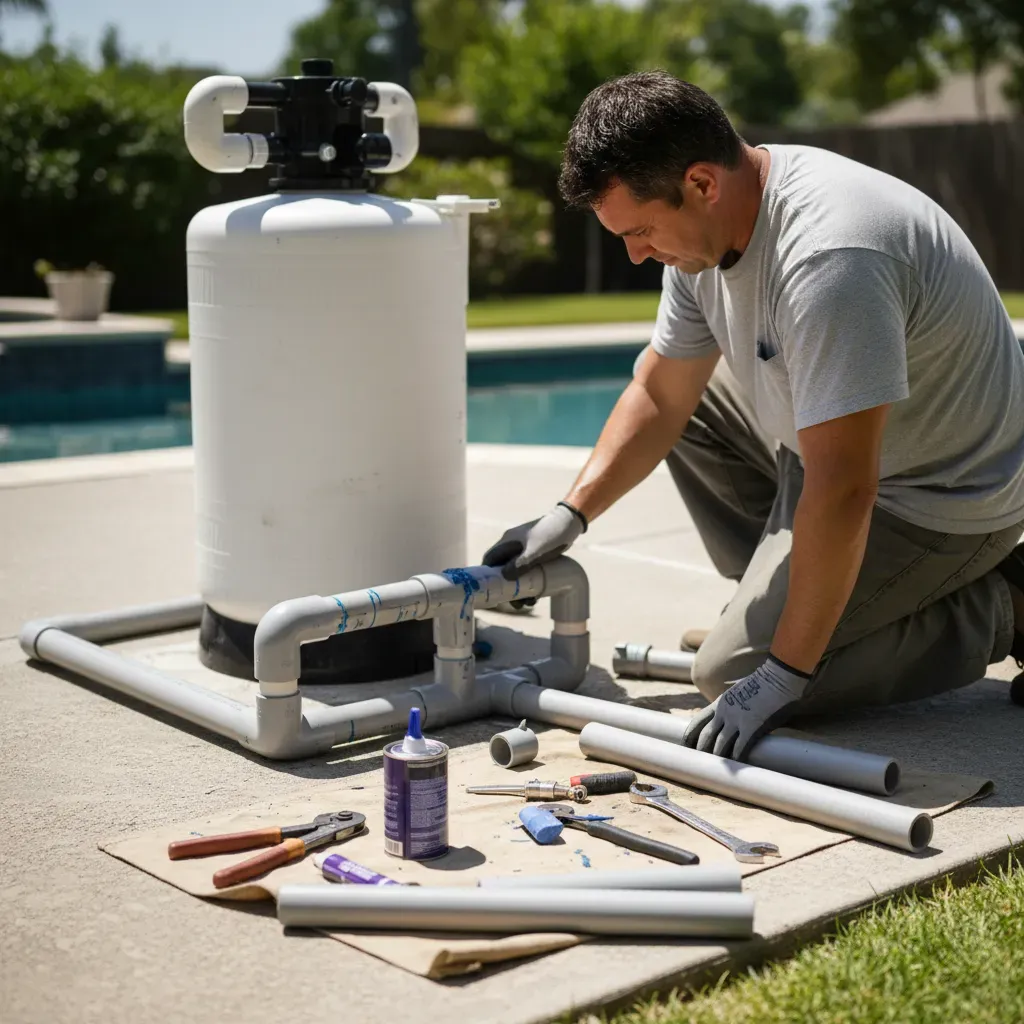
Attach the pump's discharge line to the filter's inlet using fittings and pipe sealants ensuring tight, leak-free connections. For multiport valves, connect the "return" line to the pool and "waste" line for backwashing if applicable.
Securing Fittings
Ensure all connections are secure without overtightening, which damages threads or fittings. Verify O-rings and seals are correctly seated preventing leaks.
Avoiding Plumbing Errors
Improper pipe or valve alignment restricts water flow, reducing filter efficiency. Ensure correct alignment and avoid sharp bends or unnecessary joints disrupting water circulation.
Step 4: Testing and Adjusting
Running the System
Turn on the pump and observe the filter as water circulates. Check for leaks around fittings, connections, or housing. If leaks appear, turn off the system and tighten or adjust connections.
Calibrating the Filter
For multiport filters, set the valve to the correct position (filter, rinse, or backwash). Monitor the pressure gauge ensuring it falls within the manufacturer's recommended range. High pressure indicates potential clogs or flow restrictions; low pressure suggests possible air leaks.
Final Adjustments
Observe water flow back into the pool ensuring it's steady and clean. The installation is complete if the system runs smoothly and efficiently.
FAQ
Frequently asked questions
How much does pool filter installation cost near me?
Our pool filter installations run $2,285 to $2,800, including the filter and labor, depending on filter type and pool size.
How do I choose the right pool filter for my pool?
Consider pool size, usage frequency, and maintenance willingness. Sand filters are budget-friendly; cartridge filters offer better filtration with minimal maintenance; DE filters provide highest filtration but require more upkeep. Professional consultation provides tailored recommendations.
When should I replace my pool filter?
Sand filters last 5-7 years; cartridge filters need replacement every 3-5 years; DE filters last up to a decade with proper maintenance. Replace if water clarity declines, flow reduces, or frequent repairs are needed.
What are the benefits of upgrading my pool filter?
Upgrades improve water quality, enhance energy efficiency, reduce maintenance time and effort, handle larger water volumes effectively, provide better equipment protection, and save on energy and repair costs long-term.
How long does it take to install a new pool filter?
Installation typically takes two to four hours, depending on plumbing system complexity and filter type. Additional adjustments and testing may be needed.
How much does a pool pump installation cost near me?
Our pool pump installations run $2,450 to $3,500, including the pump and labor, depending on pool type and size.
How do I choose the right pool pump for my pool?
Match the pump's flow rate to the filter's capacity for efficient water circulation. Single-speed pumps cost less initially but lack energy efficiency; variable-speed pumps offer better control and lower operating costs.
Should I upgrade to a variable-speed pool pump?
Upgrades offer significant energy savings, reduced noise, and precise flow control. Although initial costs exceed single-speed pumps, long-term energy efficiency benefits justify the investment.
How long should a pool pump last?
With proper maintenance, pumps typically last 8-12 years. Regular filter cleaning, seal inspection, and prompt minor repairs extend lifespan. Replace if the pump becomes noisy, operates inefficiently, or requires frequent repairs.
What are the benefits of professional pool pump installation?
Professional installation ensures correct setup and efficiency. Technicians properly size pumps to match pool and filtration systems, secure connections preventing leaks, ensure compliance with energy efficiency standards, and validate manufacturer warranties.

Kyle Bowman
Founder of PoolLogic · CPO-Certified
Kyle is the Founder of PoolLogic Pool Service and a Certified Pool Operator (CPO) with deep expertise in pool service, water chemistry, and pool equipment repair. He oversees every aspect of PoolLogic's operations to ensure San Diego pool owners receive expert-level care.
Read morePool service done right
Need professional pool service?
PoolLogic Pool Service provides expert pool cleaning, maintenance, and repair services throughout San Diego County.