
On this page
Pre-Installation Planning: Setting the Foundation for Success
Evaluating Your Current Equipment
The first step in any professional pool automation installation is a thorough evaluation of your existing pool systems. An experienced installer will examine your current equipment to assess compatibility with new automation technology. Older, compatible models can become significantly more energy-efficient when paired with smart controls, so not everything necessarily needs to be replaced.
This evaluation covers your pump, heater, filter, lighting, and any water features or spa equipment. The installer checks the age, condition, and compatibility of each component to determine what can be integrated into the new automation system and what might need upgrading.
Customizing Your System
Professional installation starts with understanding your specific needs and priorities. During pre-installation consultations, expect your installer to ask about:
- Your typical pool usage patterns and frequency
- Which pool features you use most frequently
- Current pain points with your pool maintenance routine
- Special requirements like spa integration or water feature control
This information allows the installer to tailor the automation system to your specific lifestyle, ensuring you get the features that matter most to you rather than a generic, one-size-fits-all setup.
The Installation Process: Bringing Your Smart Pool to Life
Installing the Central Control Unit
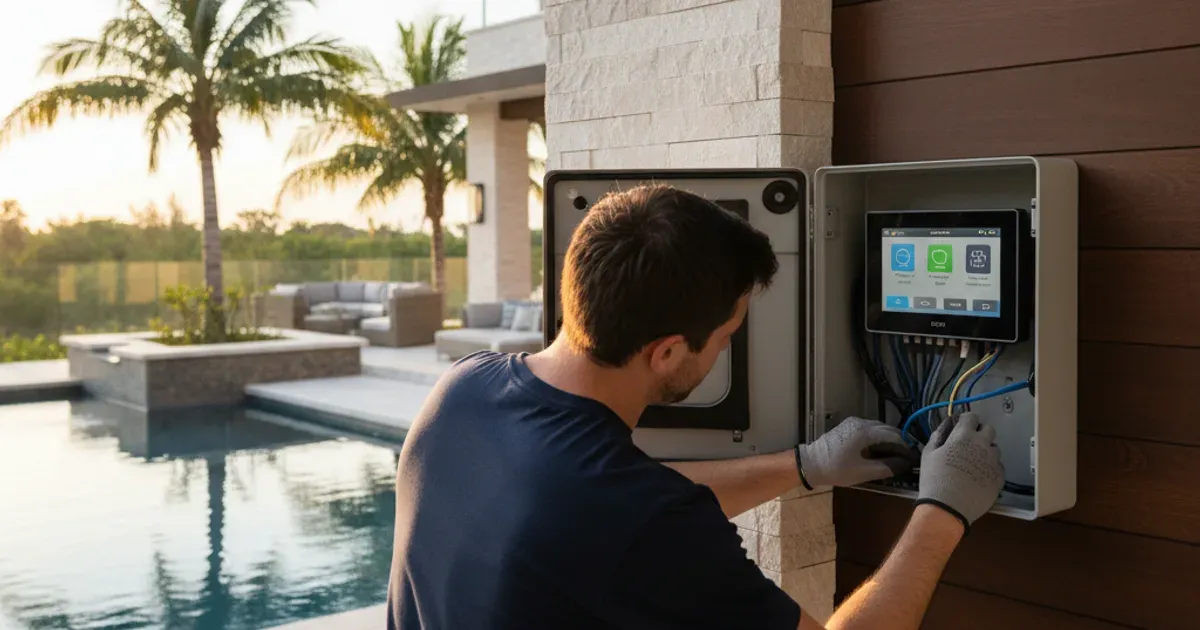
The central control unit is the command center of your pool automation system. Professional installation involves selecting the optimal location that:
- Protects the unit from direct weather exposure
- Provides easy access for maintenance and troubleshooting
- Allows proper ventilation to prevent overheating
- Minimizes distance to pool equipment for clean wiring runs
Professional installers ensure all electrical connections are properly sealed against moisture and heat, which is critical for equipment that operates near a pool environment year-round.
Connecting and Configuring Each Component
Once the control unit is in place, installers methodically connect each piece of pool equipment:
- Variable-speed pumps are programmed for optimal flow rates at different times of day
- Heaters are linked with temperature sensors for precise climate control
- Lighting systems are configured with different scenes and color options
- Chemical controllers are calibrated to your pool's specific volume and chemistry requirements
This step requires expertise because each component must be programmed to work in harmony with the others. Interdependent systems need careful configuration to avoid conflicts and ensure reliable operation.
Setting Up Communication and Remote Access
Modern pool automation systems offer app-based control from anywhere. Setting up communications involves:
- Configuring WiFi or cellular connection for the control unit
- Setting up user accounts with appropriate access levels
- Establishing secure remote connections for off-site management
- Testing multi-device connectivity to ensure all family members can access the system
This step integrates your pool into your broader smart home ecosystem, including compatibility with voice assistants and smart home platforms.
Post-Installation: Ensuring Long-Term Performance
System Testing and Troubleshooting
After installation, comprehensive testing ensures everything works perfectly. This includes:
- Testing each component individually to verify proper operation
- Running automated sequences to confirm programming accuracy
- Checking sensor readings for accuracy against manual measurements
- Verifying fail-safe and alert system functionality
- Monitoring power draw and operating sounds for any anomalies
Professional installers are trained to identify potential issues immediately and resolve them before they become problems, ensuring your system is rock-solid from day one.
User Training and Support
A quality installation service includes thorough training so you're confident using your new system. Training typically covers:
- Daily operation through the app or control panel
- Setting and modifying automated schedules
- Interpreting system alerts and notifications
- Basic troubleshooting steps for common situations
Good installers also schedule follow-up visits after you've had time to use the system in your daily routine. These visits allow for fine-tuning based on your actual experience and address any questions that come up during real-world use.
Frequently asked questions
What exactly is a pool automation system?
A pool automation system is a smart controller that connects all your pool equipment, including pumps, heaters, lights, cleaners, and chemical systems, allowing you to manage everything from a centralized interface. Most systems offer smartphone app control, enabling automatic adjustments based on conditions or schedules you set.
How much should I budget for professional installation?
Our professional pool automation installation runs $2,500 to $6,000, depending on the complexity of your pool setup and the system you choose. This investment ensures proper equipment integration, maximizes efficiency benefits, and protects manufacturer warranties.
Can any pool be automated, or are there limitations?
Most pools can be automated, though older equipment may need upgrades to work with modern automation systems. A professional evaluation will identify any necessary updates and recommend the most cost-effective path to automation for your specific pool configuration.
How long does the installation process take?
Standard pool automation installations take 4-8 hours to complete. More complex systems or those requiring equipment upgrades may need a full day or more. Your installer will provide a detailed time estimate during the initial consultation based on your specific situation.
Will automation really save me money in the long run?
Yes, properly installed automation systems typically reduce chemical usage by 30-50% and cut energy costs by 40-70% through optimized scheduling and variable-speed pump control. Most systems pay for themselves within 2-3 years through these cumulative savings.
Can I install a pool automation system myself?
While DIY kits exist, professional installation is strongly recommended. Manufacturers often honor warranties only for professionally installed systems, and the electrical work involved around water creates safety hazards that require professional expertise. The cost of professional installation is well worth the peace of mind.
How do I maintain my automation system after installation?
Modern pool automation systems require minimal maintenance beyond occasional software updates, which are usually automatic. Your installer will provide guidance on recommended periodic checks and teach you how to interpret system alerts so you can address any issues promptly.
Can pool automation be integrated with my existing smart home system?
Yes, many modern pool automation systems integrate seamlessly with popular smart home platforms including Apple HomeKit, Google Home, and Amazon Alexa. Your installer will confirm compatibility with your existing devices and set up the necessary integrations during installation.

Kyle Bowman
Founder of PoolLogic · CPO-Certified
Kyle is the Founder of PoolLogic Pool Service and a Certified Pool Operator (CPO) with deep expertise in pool service, water chemistry, and pool equipment repair. He oversees every aspect of PoolLogic's operations to ensure San Diego pool owners receive expert-level care.
Read moreNeed professional pool service?
PoolLogic Pool Service provides expert pool cleaning, maintenance, and repair services throughout San Diego County.