
On this page
Understanding Pool Lighting: LED vs. Halogen
When illuminating your pool, the type of lighting you choose can significantly affect aesthetics, energy efficiency, and maintenance costs. Two of the most popular options are LED and halogen pool lights. Both have unique advantages and drawbacks, but which is best for your pool?
What Are Halogen Pool Lights?
Halogen pool lights have been a popular choice for decades. They use halogen gas to produce bright, warm light, making them a reliable option for pool illumination. Halogen lights are known for their affordability and ease of installation, but they come with some drawbacks, such as higher energy consumption and shorter lifespans than LEDs.
What Are LED Pool Lights?
LED (Light Emitting Diode) pool lights are a more modern and energy-efficient alternative to halogen lights. They use semiconductor technology to produce light, offering a wide range of colors and lighting effects. LED lights are highly durable, consume less energy, and have a significantly longer lifespan, making them a popular choice for pool owners looking to upgrade their lighting systems.
Key Differences Between LED and Halogen Pool Lights
1. Energy Efficiency
One of the most significant advantages of LED pool lights is their energy efficiency. LEDs use up to 80% less energy than halogen lights, which can lead to substantial savings on your electricity bill over time. Halogen lights consume more power and generate more heat, making them less efficient.
2. Lifespan
LED lights have a much longer lifespan compared to halogen lights. While halogen bulbs typically last between 1,000 and 2,000 hours, LED lights can last anywhere from 25,000 to 50,000 hours. This means you'll spend less time and money on replacements with LED lights.
3. Brightness and Color Options
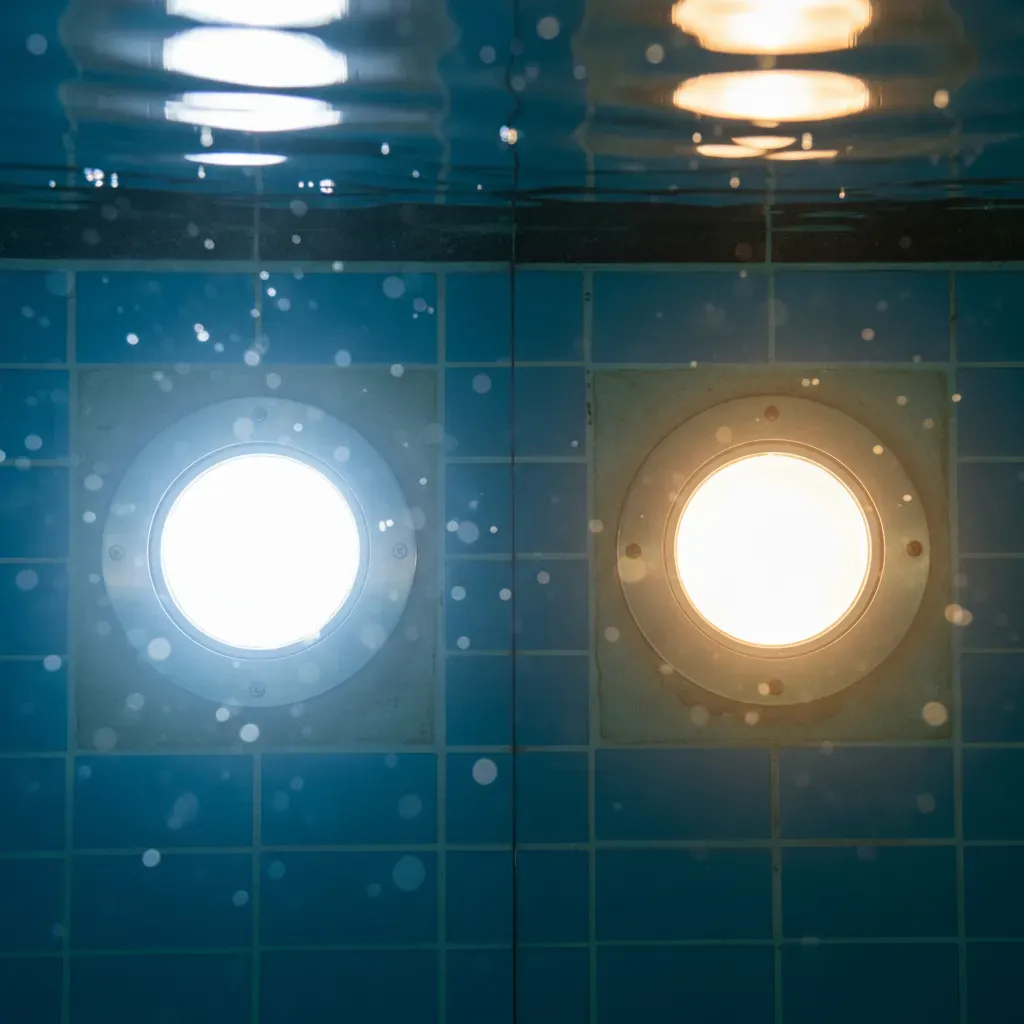
Halogen lights produce a bright, warm white light ideal for traditional pool lighting. However, they offer limited color options. LED lights provide a wide range of colors and lighting effects, allowing you to create a customized ambiance for your pool. Many LED lights also have remote controls or smartphone apps for easy customization.
4. Heat Output
Halogen lights generate a significant amount of heat, which can make them less comfortable to touch and may contribute to higher pool water temperatures. LED lights produce very little heat, making them safer and more comfortable.
5. Cost
Halogen lights are generally more affordable upfront, but their higher energy consumption and shorter lifespan can lead to higher long-term costs. LED lights have a higher initial cost but offer significant savings over time due to their energy efficiency and durability.
6. Maintenance
LED lights require less maintenance than halogen lights. Since they last longer and are more durable, you'll spend less time and money on repairs and replacements. Halogen lights may require more frequent maintenance due to their shorter lifespan and higher heat output.
Pros and Cons of Halogen Pool Lights
Pros:
- Affordable upfront cost: Halogen lights are generally less expensive to purchase and install.
- Bright, warm light: They produce a classic, inviting glow that many pool owners love.
- Easy to replace: Halogen bulbs are widely available and easy to replace.
Cons:
- Higher energy consumption: Halogen lights use more electricity, increasing utility bills.
- Shorter lifespan: They must be replaced more frequently than LED lights.
- Limited color options: Halogen lights typically offer only white light, with no color-changing capabilities.
Pros and Cons of LED Pool Lights
Pros:
- Energy efficiency: LEDs use significantly less energy, reducing electricity costs.
- Long lifespan: They last much longer than halogen lights, reducing the need for frequent replacements.
- Customizable colors: LED lights offer a wide range of colors and lighting effects for a personalized pool experience.
- Low heat output: LEDs produce little heat, making them safer and more comfortable.
Cons:
- Higher upfront cost: LED lights are more expensive to purchase and install initially.
- Complex installation: Some LED systems may require professional installation, especially if you're upgrading from halogen lights.
Which Is Best for Your Pool: LED or Halogen?
The choice between LED and halogen pool lights ultimately depends on your priorities and budget. Here are some factors to consider when making your decision:
Choose Halogen If:
- You're on a tight budget and prefer a lower upfront cost.
- You prefer the classic look of warm white light.
- You don't mind higher energy bills and more frequent replacements.
Choose LED If:
- You want energy-efficient lighting that saves money in the long run.
- You're looking for customizable colors and lighting effects.
- You prefer a low-maintenance option with a longer lifespan.
Maintaining Your Pool Lights
Whether you choose LED or halogen lights, proper maintenance is essential to keep them functioning optimally. Here are some tips to extend the life of your pool lights:
- Regular Inspections: Check your pool lights periodically for signs of wear, corrosion, or water intrusion.
- Balanced Water Chemistry: Maintain proper water chemistry to prevent damage to the light fixtures.
- Professional Repairs: If you notice issues like flickering, dimming, or complete failure, contact a professional for pool light repair to address the problem promptly.
- Upgrade When Necessary: If your halogen lights frequently fail or cost too much to maintain, consider upgrading to LED lights for better performance and savings.
Finding Reliable Pool Light Repair Near Me
Finding a reliable repair professional is essential if you're experiencing issues with your pool lights. Here's how to locate the best pool light repair services:
- Ask for Recommendations: Check with friends, family, or neighbors who have had pool light repairs done.
- Read Online Reviews: Look for highly rated pool repair companies in your area.
- Verify Credentials: Ensure the technician is licensed and experienced in pool light repairs.
- Get Multiple Quotes: Compare prices and services to find the best value.
FAQ
Frequently asked questions
What are the signs my pool lights need repair?
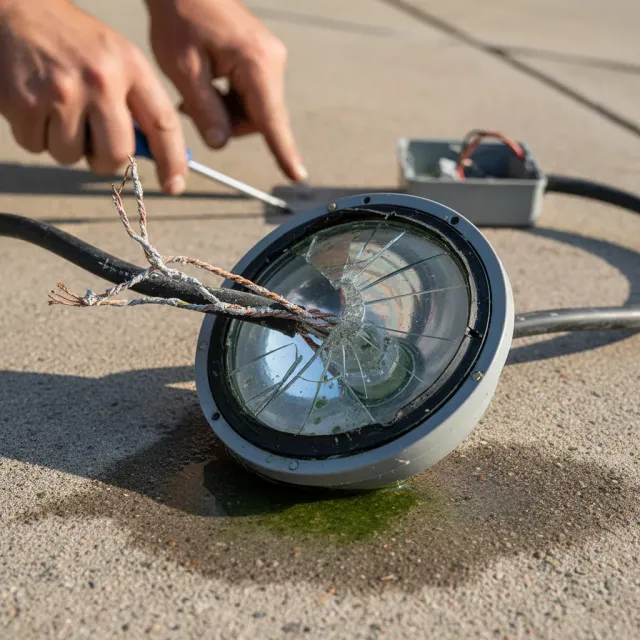
Common signs include lights that won't turn on or stay on, flickering or dimming lights, visible damage to the light fixture or lens, water inside the light housing (indicating a seal failure), and tripped circuit breakers or blown fuses when the lights are turned on.
How much does pool light repair cost?
The cost depends on the issue and the type of light. Our minor light repairs (e.g., replacing a bulb or gasket) run $100 to $450. Replacing a pool light fixture with us, including labor, is $1,550 for a standard light or $1,250 for Microbrites. Upgrading to LED lights may cost more upfront but can save money in the long run due to energy efficiency.
Can I repair my pool lights myself?
While some minor repairs, like replacing a bulb, can be done by homeowners, most pool light repairs require professional expertise. Working with electricity and water can be dangerous, and improper maintenance can lead to further damage or safety hazards.
What causes pool lights to stop working?
Pool lights can stop working due to burned-out bulbs, water intrusion into the light housing, damaged or corroded wiring, faulty transformers or circuit breakers, and aging or worn-out fixtures.
How long do pool lights typically last?
Incandescent lights last 1,000-2,000 hours (about 1-2 years with regular use). LED lights last 30,000-50,000 hours (up to 10 years or more). Regular maintenance and timely repairs can extend the life of your pool lights.
Should I upgrade to LED pool lights?
Upgrading to LED pool lights is a wise investment because they are more energy-efficient, saving you money on electricity. They last significantly longer than traditional incandescent lights, offer a wider range of colors and lighting effects, and produce less heat, reducing the risk of overheating.
Why are my pool lights flickering?
Flickering pool lights can be caused by loose or damaged wiring, a failing bulb or light fixture, issues with the transformer or power supply, or water intrusion into the light housing. Flickering lights should be addressed promptly to prevent further damage or safety hazards.
Do I need to drain the pool to repair the lights?
In most cases, you don't need to drain the pool to repair or replace lights. Pool lights are designed to be serviced underwater, and professionals have the tools and expertise to handle repairs without draining the pool. However, partial draining may be necessary if the light fixture is in a hard-to-reach area or requires extensive repairs.
How can I extend the life of my pool lights?
Use a pool cover to protect the lights from debris and UV exposure. Regularly inspect the lights for signs of damage or wear. Address minor issues, like flickering or dimming, before they worsen. Upgrade to LED lights for a longer lifespan and energy efficiency. Schedule annual maintenance with a professional.
How long does pool light repair take?
The time required depends on the issue. Replacing a bulb or gasket typically takes 1-2 hours. Replacing a light fixture or repairing wiring may take 2-4 hours. The process may take longer if additional issues are discovered during the repair.

Kyle Bowman
Founder of PoolLogic · CPO-Certified
Kyle is the Founder of PoolLogic Pool Service and a Certified Pool Operator (CPO) with deep expertise in pool service, water chemistry, and pool equipment repair. He oversees every aspect of PoolLogic's operations to ensure San Diego pool owners receive expert-level care.
Read morePool service done right
Need professional pool service?
PoolLogic Pool Service provides expert pool cleaning, maintenance, and repair services throughout San Diego County.