
On this page
Why Pool Lighting Matters
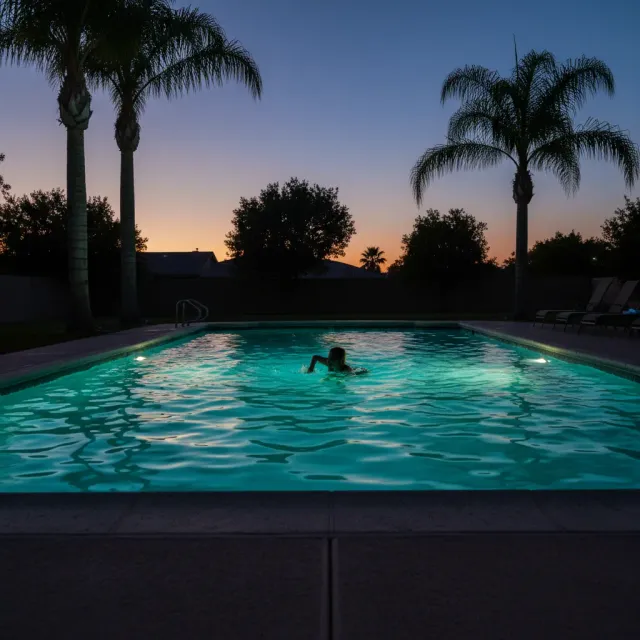
Proper pool lighting serves safety, functionality, and ambiance purposes. Investing in quality pool lighting transforms your swimming pool into a stunning nighttime feature while ensuring a safe environment for everyone.
Safety First: Preventing Accidents After Dark
Proper lighting illuminates potential hazards including steps, depth changes, and pool edges, reducing accident risk during evening swimming. This protection is particularly valuable for families with children.
Extended Enjoyment: Swimming Beyond Sunset
Quality lighting extends usable pool hours into the evening, doubling your recreational time. Warm summer nights become available for spontaneous swims or extended gatherings.
Atmosphere Creator: Setting the Perfect Mood
Appropriate lighting creates customizable atmospheres ranging from tranquil spa-like settings with soft blue illumination to energetic party spaces with color-changing effects. Modern systems allow smartphone control for adapting to different occasions.
Design Enhancement: Showcasing Your Pool's Best Features
Strategic lighting accentuates architectural elements and design features. It highlights water features, emphasizes unique shapes, and creates dramatic shadows, potentially making simple pools resemble high-end resort installations.
Types of Pool Lights: Understanding Your Options
1. LED Lights: The Modern Standard
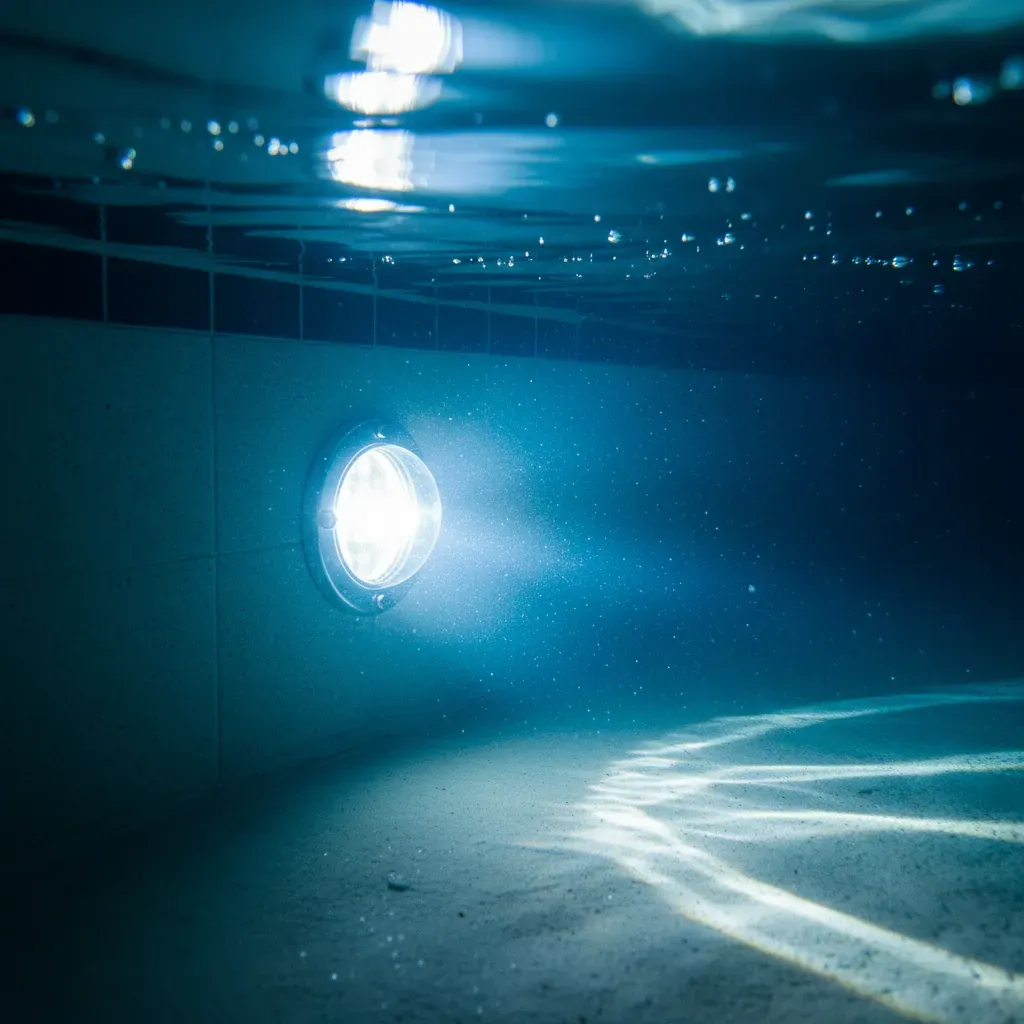
LED technology has revolutionized pool lighting and become the standard choice.
Pros:
- 80% less electricity consumption than traditional options
- 30,000 to 50,000 hours operational lifespan
- Vibrant customizable color options with effects and programming
- Cooler operating temperature for safety around children
- Brighter illumination per watt
Cons:
- Higher initial investment than incandescent alternatives
- May require professional installation
2. Incandescent Lights: The Traditional Choice
Incandescent lighting predates LED dominance and remains available.
Pros:
- Lower upfront costs
- Simple technology with easy installation and replacement
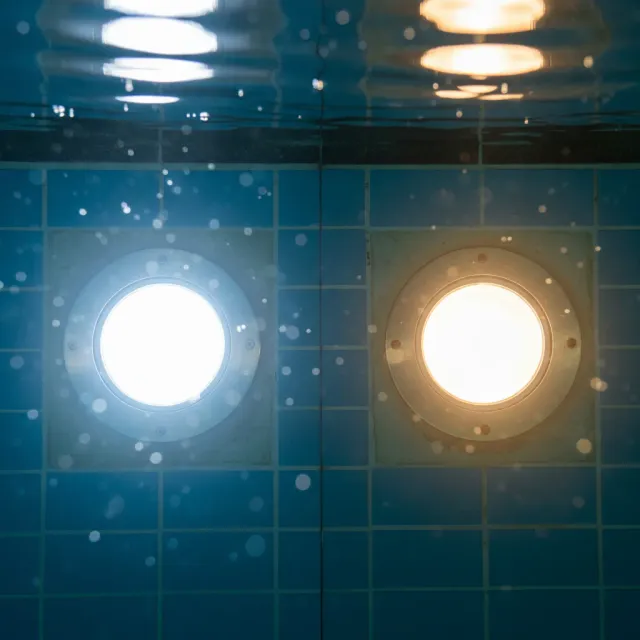
- Produces warm, familiar glow
Cons:
- Shorter lifespan (approximately 5,000 hours)
- Significantly higher energy consumption
- Limited to white light without additional filters
- Generates more heat requiring careful placement
3. Fiber Optic Systems: The Safety-First Option
Fiber optic lighting uses remote light sources transmitting illumination through fiber optic cables.
Pros:
- Enhanced safety with no water-based electricity
- Creates unique effects like starry night patterns
- Allows precise placement in hard-to-reach areas
Cons:
- Complex and costly installation
- Less brightness than direct lighting
- Higher maintenance requirements
- Remote illuminators require occasional bulb replacement
4. Solar-Powered Lights: The Eco-Friendly Alternative
Solar technology harnesses sun energy for after-dark illumination.
Pros:
- Zero electricity costs and reduced carbon footprint
- No complex wiring needed
- Functions during power outages
Cons:
- Performance depends on daily sun exposure
- Generally less bright than wired alternatives
- Inconsistent illumination on cloudy days
- Limited placement options based on solar panel positioning
Key Factors to Consider When Choosing Pool Lights
Pool Size and Configuration: Matching Light to Space
Larger pools typically need multiple strategically-placed fixtures to avoid dark zones, while smaller pools may require one or two. Special features like beach entries, tanning ledges, or deep diving areas benefit from targeted illumination.
Primary Purpose: Function vs. Atmosphere
Determining main lighting objectives matters. Safety-focused lighting requires bright, consistent illumination showing boundaries and depth changes. Ambiance-focused approaches favor color-changing LEDs with programmable effects. Many homeowners ultimately select systems providing both functional and atmospheric options.
Energy Efficiency: Long-Term Operating Costs
While upfront costs matter, long-term operating expenses warrant consideration. LED systems may cost more initially but deliver substantial electricity bill savings. A single 40-watt LED pool light uses approximately 70% less electricity than a comparable 300-watt incandescent light, potentially saving hundreds of dollars annually.
Installation Complexity: DIY vs. Professional Setup
Installation difficulty varies between systems. Some are relatively simple while others require specialized knowledge and tools. Comfort levels with electrical work around water should guide decisions. Professional installation merits the investment for safety and optimal placement performance.
Control Options: Convenience and Customization
Modern pool lighting frequently integrates with smart home systems or dedicated applications allowing remote control and programming. Options range from simple on/off functionality to advanced features including color cycling, dimming, or synchronization with other backyard elements like fountains or landscape lighting.
Durability and Warranty: Protection for Your Investment
Pool lights operate in harsh environments with chemicals, water pressure, and temperature fluctuations. Quality fixtures feature high waterproof ratings (IP68 ideally) and corrosion-resistant materials. Warranty terms deserve careful examination, as quality manufacturers typically offer 1-5 year coverage depending on lighting type.
Professional Installation Tips: Doing It Right the First Time
Strategic Placement: Maximize Coverage and Effect
Lights should be positioned to eliminate shadows and dark areas while highlighting pool features. For rectangular pools, placing lights on longer sides typically works best. For freeform pools, focus illumination on curves and special features. A suggested rule indicates one light for every 200-300 square feet of pool surface.
Niche Selection: The Foundation of Good Lighting
Light niches housing fixtures are crucial for proper installation. Selection should match chosen light types with proper sealing and bonding per local electrical codes. Universal niches allow easier future upgrades without major reconstruction.
Wiring Considerations: Safety and Functionality
All pool lighting must use low-voltage transformers protected by ground fault circuit interrupters (GFCIs). Cable runs require careful planning to minimize voltage drop reducing distant fixture brightness. Professional installers correctly calculate these requirements.
Complementary Lighting: Beyond the Pool Itself
Integration with other outdoor illumination matters. Pathway lights, landscape lighting, and deck illumination contribute to overall effects. Creating light layers at different heights produces more sophisticated and usable outdoor spaces.
Maintaining Your Pool Lighting System
Routine Cleaning: Preserving Brightness
Light lenses require quarterly cleaning (more frequently with nearby trees) to remove mineral deposits, algae, and debris diminishing brightness. Most fixtures simply require turning off power, removing from niches, and gentle cleaning with non-abrasive pool-use cleaners.
Preventative Inspections: Catching Issues Early
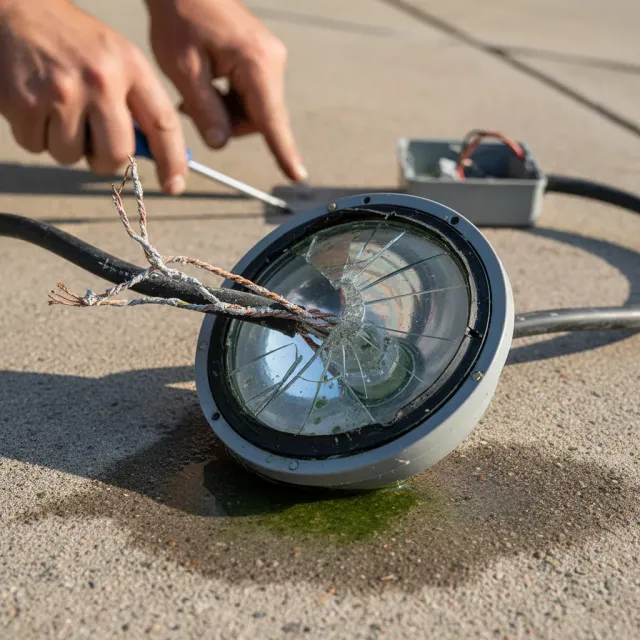
Periodic checking for water infiltration inside fixtures, cracked lenses, or connection corrosion enables early detection preventing costly later repairs. Special attention follows severe weather potentially stressing electrical systems.
Seasonal Adjustments: Optimizing for Time of Year
Seasonal lighting schedule and intensity adjustments prove beneficial. Summer heavy-use periods might warrant extended evening hours. Winter operations reduce energy consumption while maintaining security illumination. Smart controllers automate these adjustments.
Professional Check-ups: Expert Maintenance
Annual professional inspections before heavy-use seasons allow technicians to test connections, verify grounding, and identify potential problems before emergency repairs become necessary.
When to Call in the Professionals
Electrical Issues: Safety First
Tripped breakers, flickering lights, or electrical problem signs require immediate professional attention. Water and electricity create serious safety hazards demanding proper training and equipment.
Water Infiltration: Preventing Damage
Moisture inside fixtures or foggy lenses necessitate professional service. Water inside electrical components causes short circuits and potential safety hazards.
Complex Upgrades: Ensuring Compatibility
Upgrading from older systems to newer technology requires professional guidance ensuring infrastructure compatibility and proper control system integration.
Underwater Repairs: Specialized Skills Required
Work below waterlines should be handled by professionals understanding both electrical and plumbing aspects of pool systems.
FAQ
Frequently asked questions
How long do pool lights typically last?
LED pool lights last 30,000-50,000 hours, while incandescent lights typically last around 5,000 hours. Proper maintenance and high-quality fixtures extend this lifespan considerably.
Can I install pool lights in an existing pool?
Yes, many retrofit options exist for adding or upgrading lighting in existing pools. Professionals can assess current setups and recommend approaches without major reconstruction.
Are color-changing lights worth the extra cost?
For many homeowners, yes. Versatility switching between bright white light for safety and colored options for ambiance provides excellent value, especially for pools hosting various gathering types.
How much does professional pool light installation cost?
In the San Diego area, our professional pool light replacement is $1,250 for a Microbrites fixture and $1,550 for a standard fixture, with complexity, fixture type, and whether it's new construction or retrofit shaping the scope of work. While representing an investment, professional installation ensures safety and optimal performance.
Can pool lights be repaired, or do they need complete replacement?
Many issues can be repaired without full replacement. Common repairs include bulb replacement, gasket sealing, and wiring fixes. Qualified technicians evaluate whether repair or replacement proves more cost-effective in specific situations.

Kyle Bowman
Founder of PoolLogic · CPO-Certified
Kyle is the Founder of PoolLogic Pool Service and a Certified Pool Operator (CPO) with deep expertise in pool service, water chemistry, and pool equipment repair. He oversees every aspect of PoolLogic's operations to ensure San Diego pool owners receive expert-level care.
Read morePool service done right
Need professional pool service?
PoolLogic Pool Service provides expert pool cleaning, maintenance, and repair services throughout San Diego County.