
On this page
Why Would You Need to Drain Your Pool in San Diego?
Total Dissolved Solids (TDS) Buildup
Over time, as swimmers use the pool and cleaning chemicals accumulate, tiny particles remain in the water even after evaporation. When TDS becomes too concentrated, water becomes cloudy, chemicals lose effectiveness, skin irritation occurs, and pool equipment sustains damage.
Stubborn Algae Infestations
Algae thrive when chlorine levels drop below recommended ranges (1-3 milligrams per liter), during sunny weather, in dirty water containing debris, or where water circulation is insufficient.
Staining and Surface Issues
Metal introduction (from iron-containing liquid chlorine or metal fixtures) and mineral accumulation from unbalanced water chemistry create yellow-brown stains and chalky calcium deposits on pool surfaces.
The Pool Draining Process: What to Expect
Pre-Drain Inspection
Technicians conduct water testing for chemical imbalances, inspect surfaces and equipment for cracks and leaks, and verify safety by checking water table and ground moisture conditions before draining proceeds.
Pool Draining Procedure
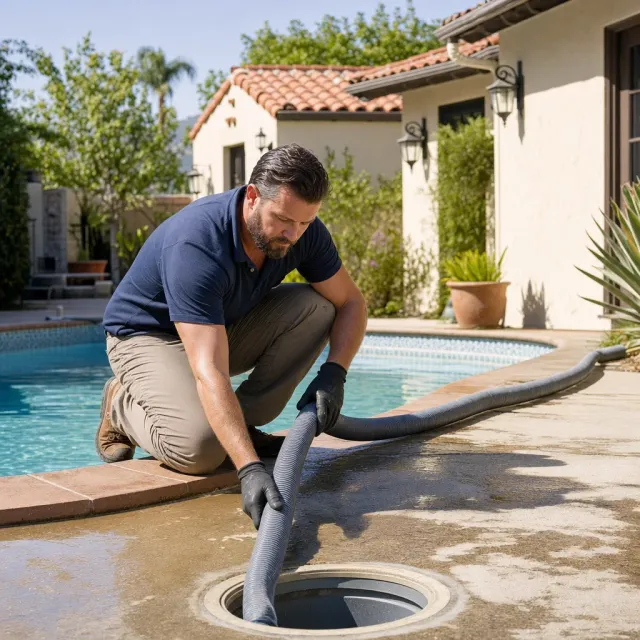
The process follows local San Diego regulations, involves shutting down equipment, uses submersible pumps or waste lines, monitors water levels carefully, and includes thorough cleaning of the emptied pool.
Surface Treatments
Post-drainage treatments include a thorough surface cleaning to remove debris and tile cleaning to address calcium buildup, leaving surfaces fresh and swim-ready.
Refilling Your Pool: The Restart Process
Strategic Refilling
Gradual refilling prevents structural pressure imbalance, ensures water source quality, and maintains even distribution while protecting pool integrity.
Initial Water Balancing
Technicians test and adjust pH, chlorine, and alkalinity levels, introduce stabilizers to protect chlorine from UV degradation, and apply shock treatments when necessary to eliminate contaminants.
System Restart
Professional restart involves reactivating pumps, filters, heaters, and salt cells; purging trapped air from plumbing; monitoring for leaks; and cleaning filters for optimal efficiency.
Finding the Right Pool Drain and Restart Service in San Diego
Questions to Ask Potential Service Providers
Licensing and Insurance: Verify coverage for potential damage during service.
Safety Assessment: Confirm they evaluate water table and soil moisture conditions.
Process Clarity: Ensure comprehensive procedures covering inspections, disposal, and cleaning.
Surface Treatments: Ask about surface cleaning and tile cleaning options.
Water Balance Verification: Confirm chemical testing and balancing protocols.
References: Request customer reviews and references for quality assurance.
Timing Considerations
Avoid draining during peak summer heat (July-August). Check weather forecasts to avoid rainy season complications. Schedule draining in spring for summer readiness. Plan based on frequency of use and debris levels. Combine draining with scheduled maintenance to optimize time and resources.
DIY vs. Professional Service
Professional technicians prevent costly problems through expertise, provide more free time for pool enjoyment, maintain proper chemical balance for cleaner water, prevent expensive DIY mistakes, and offer stress-free consistent maintenance.
The Risks of DIY Pool Cleaning
DIY pool care consumes significant weekly hours, risks improper chemical dosing causing water problems, lacks professional-grade equipment and expertise, and creates potential for costly equipment damage or surface staining through maintenance neglect.
FAQ
Frequently asked questions
How often should I clean my pool drains?
Yearly, or every six months with heavy use or significant debris accumulation.
What signs indicate a clogged pool drain?
Slow water drainage, unusual plumbing noises, and visible debris around drain areas.
Can I clean my pool drain myself?
Yes, but careful DIY work risks plumbing damage or missing hidden clogs and cracks.
How much does a professional pool drain and restart cost in San Diego?
Our professional pool drain and restart is $750 as a one-time service.
What causes pool drains to clog?
Leaves, dirt, oils, hair, and mineral buildup from hard water accumulation.
Is drain cleaning necessary if my pool looks clear?
Yes, clear water can hide blockages affecting circulation.
Do I need to drain my pool to clean the drain?
No, most drain cleaning doesn't require complete pool draining.
How can I prevent pool drain clogs?
Regular skimming, drain covers, routine maintenance, and debris basket installation.
What's the best way to clear a clogged pool drain?
Use wet/dry vacuums for surface debris and plumbing snakes for deeper clogs; professionals have advanced tools.
What are the dangers of a clogged pool drain?
Reduced water flow leads to algae growth and pump strain, causing equipment damage.

Kyle Bowman
Founder of PoolLogic · CPO-Certified
Kyle is the Founder of PoolLogic Pool Service and a Certified Pool Operator (CPO) with deep expertise in pool service, water chemistry, and pool equipment repair. He oversees every aspect of PoolLogic's operations to ensure San Diego pool owners receive expert-level care.
Read morePool service done right
Need professional pool service?
PoolLogic Pool Service provides expert pool cleaning, maintenance, and repair services throughout San Diego County.