
On this page
A heat pump moves warmth from the air into pool water
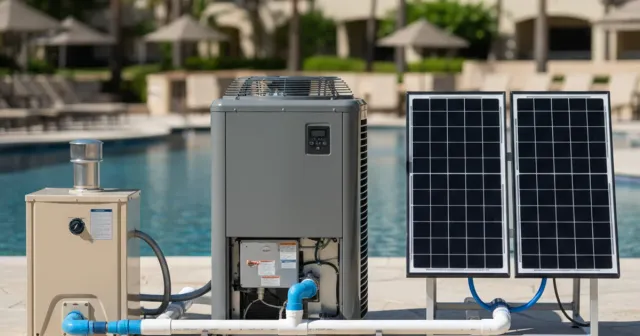
A swimming pool heat pump uses electricity to capture heat from outdoor air and transfer it into circulating pool water. It needs both airflow and water flow, so a running fan alone does not prove the pool is heating.
The air does not have to feel hot. A cold fluid inside the unit can absorb warmth from air that feels cool to you. The equipment then raises that fluid's temperature enough to warm your pool.
Before calling about slow heating, spend ten minutes checking those two flows and the heating controls. Our technicians use these observations to help distinguish normal operation from a problem that needs service. Ten minutes can reveal a stopped heating cycle, but it cannot establish how quickly an entire pool will warm.
Four steps carry heat from outdoor air to your pool
Inside the heat pump, refrigerant, a fluid that carries heat, travels through a sealed circuit. Pool water follows a separate path. The two fluids do not mix.
- Outdoor air supplies heat. A fan pulls air across the evaporator, the coil that absorbs heat. Cold refrigerant inside the coil absorbs that energy and changes into gas.
- The compressor raises the temperature. This electrically powered component squeezes the refrigerant gas, increasing its pressure and temperature.
- The hot refrigerant warms pool water. Inside the heat exchanger, heat passes through a metal barrier into water moving through the unit. The refrigerant cools and turns back into liquid.
- The refrigerant gets ready to absorb heat again. An expansion device lowers its pressure and temperature. The cold refrigerant returns to the outdoor coil, and the cycle repeats.
The separate pool circulation pump pushes water through the filter and heat pump, then back to the pool. The heater's controls must detect adequate water flow before allowing heating. A circulation pump running at a low speed may move water without meeting the heat pump's required flow.
If you see COP on a specification sheet, it means coefficient of performance, the ratio of heat delivered to electricity used. A COP of 5 means five units of heat delivered for each unit of electricity consumed under the stated test conditions. The extra heat comes from outdoor air. That rating is not a promise of the same performance on a cold evening.
The main downside is electricity use: the heat pump needs electricity to heat, and its COP generally drops as the air cools. SDG&E residential rates are among the highest in the United States, so comparable heat-pump run time costs more here than in most markets. Use a pool cover between swims and favor warmer heating hours, while checking your electricity plan's peak-rate periods. For equipment service costs, see our San Diego pool service pricing.
Run this ten-minute check before calling
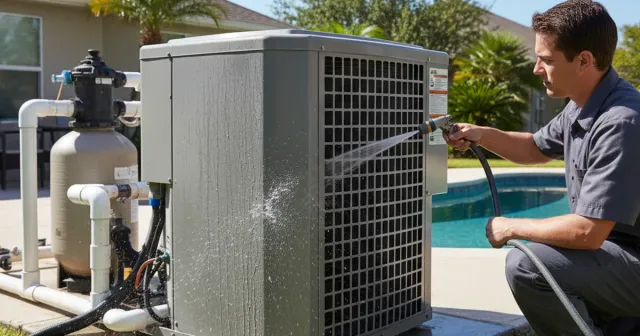
Use the outside controls and visible equipment only. Leave covers, wiring, fan guards, and refrigerant connections alone. Do not bypass the flow switch, the sensor that lets the heat pump run only when enough water is moving. Do not repeatedly reset a tripping breaker.
| Time | What to check | What the result tells you |
|---|---|---|
| Minutes 1 and 2 | Read the water temperature, target temperature, operating mode, and any display message. | The target must be above the measured water temperature, with heating enabled. If the pool has already reached the temperature you set, the unit will sit idle; that is normal. Photograph an unfamiliar fault message. |
| Minutes 3 and 4 | Confirm the circulation pump is running and water is returning to the pool. | No circulation means the heater cannot transfer heat safely. Visible return flow does not establish sufficient flow. A persistent low-flow message needs attention. |
| Minutes 5 and 6 | Look for leaves, stored items, or vegetation blocking the air intake or discharge. | The fan needs an open air path. Compare clearances with the model's manual. A visibly clogged coil or an obstruction you cannot safely clear warrants service. |
| Minutes 7 and 8 | Check outdoor temperature and the display for a delay or defrost message. | The model may be waiting to protect the compressor or operating near its temperature limit. Use its manual to identify the normal operating range and waiting period. |
| Minutes 9 and 10 | Record the model, messages, fan activity, and when heating started. | If heating stays inactive after the specified delay despite a heating demand and adequate conditions, send those details to a technician. |
In coastal neighborhoods from La Jolla to Oceanside, salt air is hard on metal equipment. Check the visible outdoor coil and fins, the thin metal strips around the coil, for corrosion. Photograph flaking metal or deteriorating fins for our technicians without removing guards or touching the fins.
Stop the check if you notice smoke, a burning smell, or repeated breaker trips. Stop using the equipment and arrange service. For an ordinary delay message, allow the full manufacturer-specified wait even if it extends beyond this checklist.
Cool exhaust air and some dripping can be normal
Air leaving a heat pump is usually cooler than the air entering it during heating. That is consistent with the unit removing heat from the air. It is a useful observation, but it does not measure how much heat reaches the water.
Water can also collect beneath the unit because moisture condenses on its cold outdoor coil. This condensation can resemble a plumbing leak. Note whether it appears during heating and fades after heating stops and residual water drains.
Water continuing to escape while heating is off deserves a closer check, especially if it comes from a pipe connection. Send our technicians a photo showing where it starts. Persistent ice or repeated defrost interruptions also need assessment against the model's operating instructions.
The return water may feel only slightly warmer than the pool. A heat pump warms a moving stream gradually over repeated passes. Judging output by hand at one return is unreliable.
Judge heating over hours, with weather in mind
Raising 10,000 gallons of water by 1°F takes approximately 83,400 BTU, a unit of heat. A 10°F rise therefore takes about 834,000 BTU before accounting for heat loss.
If a heat pump actually delivers 100,000 BTU per hour throughout that period, the theoretical heating time is about 8.3 hours. Real heating takes longer when evaporation and cool air remove heat. Output also changes with conditions, so the rating on the label is not enough to predict your finish time.
On the San Diego coast, cool marine-layer mornings can reduce output compared with warmer afternoons. Inland winter nights increase the heating load as the pool loses warmth. Compare temperature changes during similar weather and operating hours before deciding performance has declined.
A pool cover reduces evaporation, especially during dry Santa Ana winds, even if the air feels warm. Follow the cover's instructions and remove it completely before swimming. A running heat pump can be adding heat while wind removes enough warmth to keep the thermometer nearly steady.
Record the starting temperature, ending temperature, actual heating hours, and cover use. There is no single correct daily runtime: the unit must replace heat losses as well as reach your target.
Use your observations to choose the next step
If the display shows the target has been reached, the heat pump has completed its immediate job. If it shows a normal delay or outdoor-temperature limit, follow the model's instructions before reassessing.
If it runs continuously without the expected temperature rise, keep your temperature and runtime notes. Our technicians can check water flow, controls, and heat transfer against the equipment's specifications. We confirm the right fix after seeing the equipment.
For a persistent fault, unexplained shutdown, or water escaping from a connection, arrange pool heater repair in San Diego County. Include the model number, exact display message, outdoor temperature, and your ten-minute observations. Those details give us a clearer starting point than fan noise alone.

Kyle Bowman
Founder of PoolLogic · CPO-Certified
Kyle is the Founder of PoolLogic Pool Service and a Certified Pool Operator (CPO) with deep expertise in pool service, water chemistry, and pool equipment repair. He oversees every aspect of PoolLogic's operations to ensure San Diego pool owners receive expert-level care.
Read moreNeed professional pool service?
PoolLogic Pool Service provides expert pool cleaning, maintenance, and repair services throughout San Diego County.