
On this page
Understanding Different Filter Types
Sand Filters
How They Work: Sand filters push water through specially graded sand that traps particles as small as 20 microns. Over time, accumulated debris requires periodic backwashing to flush out contaminants.
Pros and Cons: Sand filters offer durability, affordability, and easy maintenance, making them popular for residential pools. However, they capture coarser particles than alternative filters, potentially resulting in slightly cloudy water. Backwashing also wastes water, which concerns drought-prone areas.
Best Applications: Sand filters suit pools with moderate usage and owners seeking economical, low-maintenance solutions.
Cartridge Filters
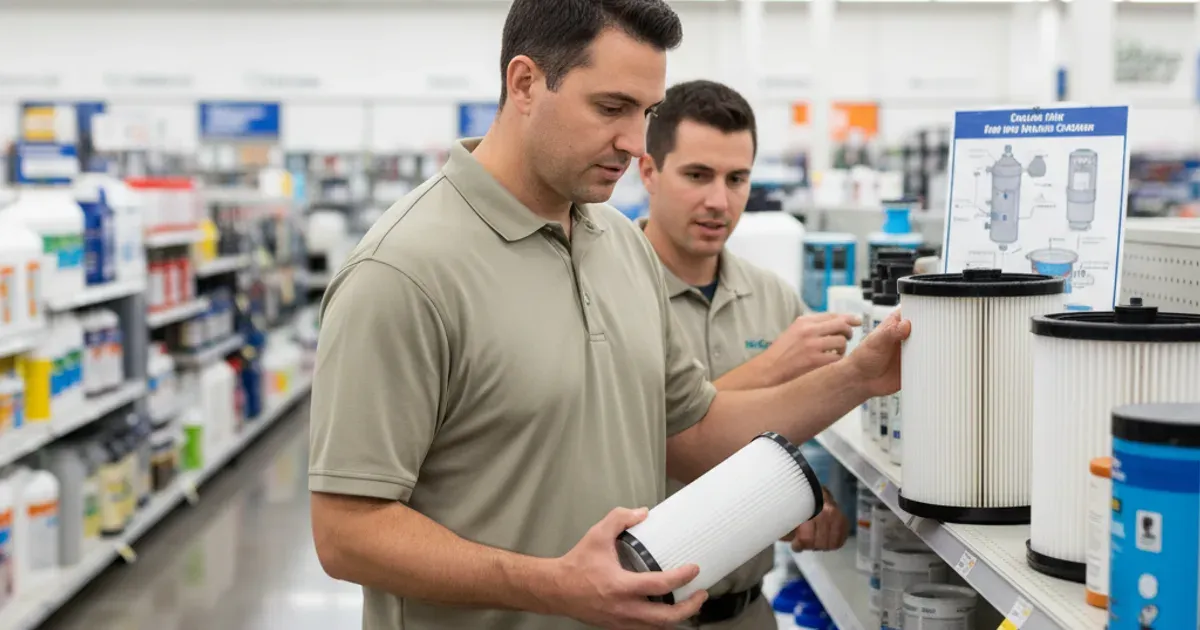
How They Work: Cartridge filters use pleated fabric to trap particles as small as 10 microns. Water passes through the fabric while debris remains behind. Cleaning involves removing and rinsing the cartridge with a hose, requiring less water than backwashing.
Advantages and Maintenance: These filters provide superior water clarity compared to sand filters and operate with high energy efficiency due to lower pressure requirements. Maintenance includes periodic cleaning and cartridge replacement every 2–3 years depending on usage.
Best Applications: Cartridge filters work well for frequently used residential pools seeking performance and maintenance balance.
DE Filters
How They Work: Diatomaceous Earth filters coat internal grids with powder made from crushed fossilized diatoms. Water passing through this powder traps particles as small as 2 microns.
High-Performance Filtration: DE filters deliver the clearest water available, making them ideal for commercial or high-traffic residential pools requiring top-tier cleanliness.
Special Considerations: DE filters demand more maintenance, including regular backwashing and DE powder reapplication. They represent the most expensive option for both initial purchase and ongoing upkeep.
Best Applications: DE filters suit owners prioritizing water clarity who accept additional maintenance requirements.
Factors to Consider When Choosing a Filter
Pool Size and Volume
Pool dimensions determine filter flow rate and capacity requirements. Larger pools need filters handling greater water volumes for proper circulation and cleanliness. Undersized filters overwork the system, causing premature wear and reduced efficiency.
Usage Frequency and Type
High-use pools, common in San Diego's sunny climate, accumulate more debris, oils, and contaminants. Moderately-used residential pools often suit cartridge filters adequately, while commercial or high-traffic facilities benefit from DE filter advanced capabilities.
Budget Considerations
Cost significantly influences filter selection. Sand filters cost least initially with minimal maintenance expenses, providing budget-friendly operation. Cartridge filters cost slightly more upfront but deliver water and energy savings over time. DE filters carry higher prices yet provide unmatched clarity justifying investment for performance-focused owners.
Comparing Efficiency and Longevity
Energy Efficiency
Cartridge filters demonstrate the most energy efficiency, requiring lower operating pressure. This reduces pump strain, lowering energy bills. Sand filters prove less efficient due to higher operating pressure, while DE filters occupy the middle ground with excellent performance and slightly elevated energy usage.
Lifespan and Durability
Filter lifespan depends on type and maintenance quality. Sand filters last approximately 7 years with regular backwashing and sand replacement. Cartridge filters typically last 3–5 years based on maintenance quality. DE filters, while high-performing, usually need grid replacement every 5–10 years. Proper care and professional maintenance extend any filter type's operational life.
Professional Recommendations
Why Expert Advice Matters
Professionals assess pool size, plumbing, and usage patterns to recommend suitable filters. They identify potential challenges like high debris levels or hard water and suggest appropriate solutions.
Avoiding Common Mistakes
Many homeowners incorrectly undersize filters or select mismatched equipment for their pools. This causes inefficiency, frequent repairs, and compromised water quality. Professional installation ensures correct sizing and proper system integration.
FAQ
Frequently asked questions
How much does pool filter installation cost near me?
Installation costs depend on filter type, pool size, and required plumbing work. Our filter installations run $2,285 to $2,800. Sand filters cost least, while cartridge and DE filters may cost more due to advanced capabilities. Local professional consultation provides specific pricing.
How do I choose the right pool filter for my pool?
Selection involves considering pool size, usage frequency, and maintenance preferences. Sand filters offer cost-effectiveness with minimal upkeep but less effective fine debris capture. Cartridge filters provide better filtration with less water waste. DE filters maximize water clarity requiring more maintenance. Professional evaluation matches pools with ideal filter types.
When should I replace my pool filter?
Replacement timing depends on filter type. Sand filters typically last 5–7 years, cartridge filters 3–5 years, and DE filters up to 10 years. Signs indicating replacement needs include cloudy water, reduced circulation, or frequent breakdowns. Proper maintenance extends lifespan, though eventual wear necessitates upgrades.
What are the benefits of upgrading my pool filter?
Upgrades improve water clarity, reduce maintenance time, and increase energy efficiency. Modern filters integrate effectively with energy-efficient pumps, reducing system strain and lowering operational costs. Upgraded filters protect equipment like pumps by ensuring proper water flow and preventing debris accumulation.
How long does it take to install a new pool filter?
Installation typically requires two to four hours, depending on plumbing complexity and filter type. Professionals connect the filter to the system, test for proper operation, and verify absence of leaks or flow issues.
How much does a pool pump installation cost near me?
Installation costs vary by pump type and pool size. Our pump installations run $2,450 to $3,500. Variable-speed pumps cost more initially but provide significant long-term savings. Plumbing modifications influence total expenses.
How do I choose the right pool pump for my pool?
Pump selection depends on size, water volume, and energy efficiency goals. Pumps must match filter flow rates ensuring proper circulation. Single-speed pumps cost less initially but prove less energy-efficient. Variable-speed pumps, though expensive upfront, deliver better performance and reduced utility costs.
Should I upgrade to a variable-speed pool pump?
Variable-speed pump upgrades represent wise investments for most owners. These pumps offer superior energy efficiency, quieter operation, and customizable flow rates. They reduce electricity consumption compared to single-speed models, generating long-term utility savings. Many areas mandate variable-speed pumps for regulatory compliance.
How long should a pool pump last?
Proper maintenance yields pump lifespans of eight to twelve years. Regular care including filter cleaning and water level monitoring extends operational life. Noisy, inefficient, or frequently-failing pumps warrant replacement avoiding system disruptions.
What are the benefits of professional pool pump installation?
Professional installation ensures correct sizing, secure connections, and optimal calibration. This minimizes leak risks, inefficiencies, and premature wear. Professional installations typically include warranties providing added protection. Expert installation prevents costly mistakes ensuring smooth pump operation.

Kyle Bowman
Founder of PoolLogic · CPO-Certified
Kyle is the Founder of PoolLogic Pool Service and a Certified Pool Operator (CPO) with deep expertise in pool service, water chemistry, and pool equipment repair. He oversees every aspect of PoolLogic's operations to ensure San Diego pool owners receive expert-level care.
Read morePool service done right
Need professional pool service?
PoolLogic Pool Service provides expert pool cleaning, maintenance, and repair services throughout San Diego County.