
On this page
Why Functional Pool Lighting Is Critical for Safety and Aesthetics
Pool lights do more than illuminate the water; they enhance safety by ensuring swimmers can see clearly at night and spot changes in depth or potential hazards. A well-lit pool also boosts the atmosphere of your outdoor space, making it more inviting for evening gatherings or quiet relaxation.
Despite their importance, pool lights can fail for various reasons. The most frequent problems include flickering or dimming lights, cracked or water-damaged fixtures, and issues related to faulty wiring or GFCI outlets. Left unaddressed, these issues can escalate into serious hazards or costly repairs, underscoring the need for timely and professional attention.
Common Pool Light Problems
Flickering, Dimming, or Non-Working Lights
One of the most apparent signs of a pool lighting issue is when the light flickers or dims unexpectedly. This may indicate a loose connection, voltage inconsistency, or a failing bulb. If the light doesn't turn on, the cause could range from a burned-out bulb to a malfunctioning driver in LED systems or a more complex wiring problem.
Ignoring these symptoms can escalate the situation, potentially leading to unsafe swimming conditions or further electrical damage.
Water Intrusion and Damaged Covers
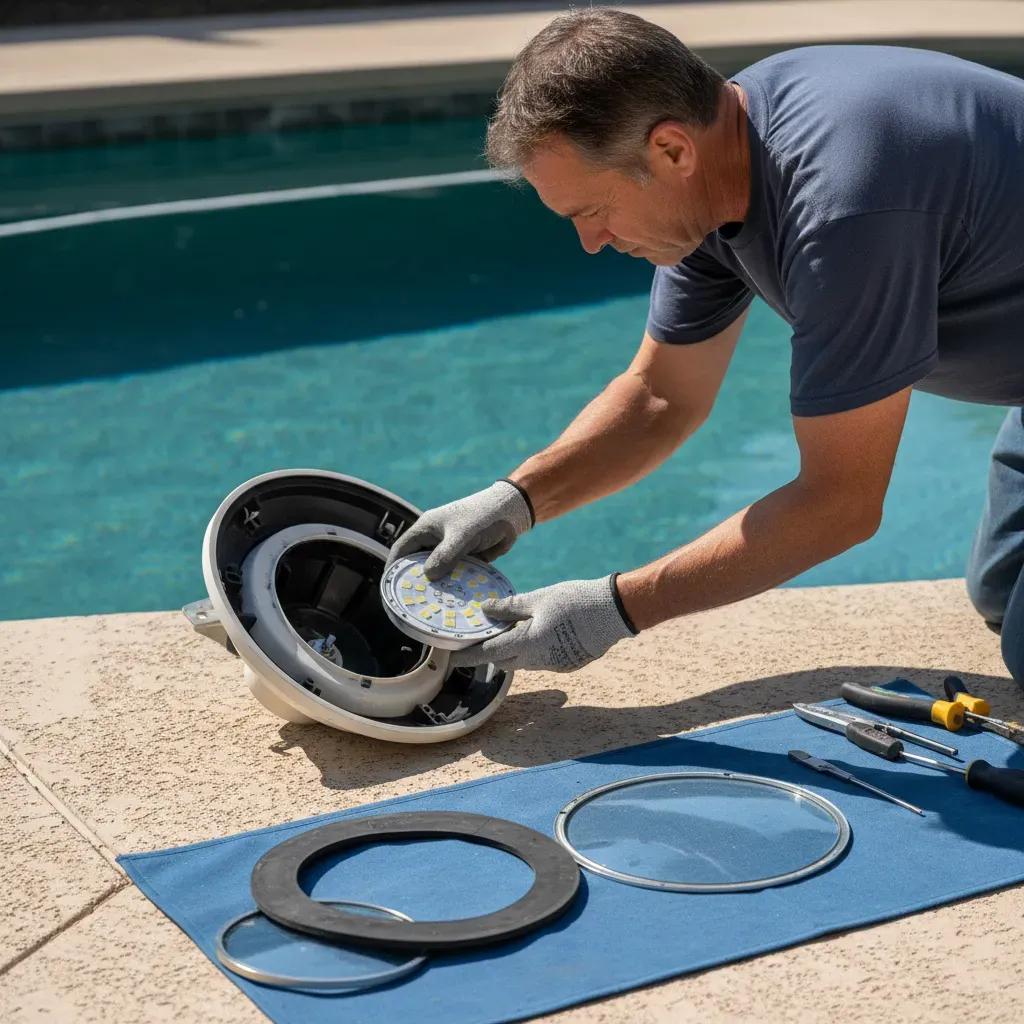
Over time, seals and gaskets that protect pool lights from moisture can degrade. When these seals fail, water can enter the fixture and corrode internal components. Damaged covers or lenses can also allow water to penetrate the system or distort the lighting, reducing effectiveness.
Water intrusion can sometimes trigger electrical short circuits or cause the bulb to burn out prematurely, necessitating a complete fixture replacement if not addressed promptly.
Electrical Issues Related to Wiring or GFCI Outlets
Pool lighting systems typically connect to a GFCI outlet to safeguard against electric shock. If the wiring between your home's electrical system and the pool light is faulty or the GFCI repeatedly trips, it's a clear indication something is amiss. Loose, corroded, or damaged wiring can lead to intermittent operation, flickering, or complete failure. Moreover, ignoring persistent GFCI trips can put swimmers at serious risk of electrical shock.
Benefits of Professional Pool Light Repair
Expertise in Diagnosing and Fixing Issues
Pool light repair professionals have the training and experience to identify underlying problems quickly. Rather than just treating symptoms (e.g., replacing a bulb when the real problem is faulty wiring), experts look for root causes. This approach saves time and money by ensuring the solution is effective and long-lasting.
Ensuring Compliance With Electrical Safety Standards
Water and electricity can be a high-risk combination if not handled correctly. A professional pool light repair service complies with local and national electrical codes, making sure every wire, connection, and seal meets rigorous safety requirements. This not only prevents potential accidents but also keeps you in compliance with insurance and liability regulations.
Saving Time and Avoiding DIY Risks
Tackling pool light repairs alone can be time-consuming and potentially hazardous if you're unfamiliar with the electrical work involved. Professionals already have the tools and expertise to diagnose and repair problems efficiently. This not only speeds up the process but also minimizes the chances of further damage, which could lead to even higher repair costs down the line.
Factors That Affect Repair Costs
Type of Light
LED pool lights generally cost more initially but offer greater energy efficiency and longevity. If your system is older and relies on halogen or incandescent bulbs, replacing them might be cheaper in the short term but can increase ongoing energy and bulb-replacement costs. Conversely, an LED setup can prove more economical over time, although replacing specialized LED components can be pricey.
Extent of Damage
A minor fix like swapping a burned-out bulb is straightforward and inexpensive. On the other hand, discovering corroded wiring or significant water intrusion can quickly escalate the cost due to extra labor, part replacements, or the need to drain part of the pool. Always ask for a thorough inspection to understand the full scope of repairs.
Labor Costs and Additional Parts Needed
San Diego's labor market can be competitive, leading to higher service rates than in areas with a lower cost of living. Additionally, unique or outdated systems may require specialty parts that are harder to find, further raising costs. A reputable repair service will provide a detailed estimate that itemizes labor fees and material expenses, clearly separating your final bill.
How to Choose the Right Repair Service
Importance of Experience and Certifications
Pool lighting repair involves electrical work around water, a high-stakes environment requiring specialized knowledge. Look for companies with certified electricians or technicians experienced in pool systems. They should be well-versed in GFCI outlets, halogen and LED technologies, and local safety codes. A proven track record of completed projects is often an excellent reliability indicator.
Checking Online Reviews and Testimonials
User reviews on Google, Yelp, or industry-specific forums provide firsthand accounts of how a company handles customer service, time management, and unforeseen challenges. Pay attention to patterns rather than one-off complaints. Consistently positive feedback about communication, pricing transparency, and project outcomes is promising.
Asking About Warranties and Guarantees on Repairs
A confident repair service will stand behind its work with warranties or guarantees, typically from a month to a full year. Ask what's covered and whether parts and labor both fall under warranty. This ensures accountability for the service's quality and can save you from additional costs if something goes wrong shortly after the repair.
FAQ
Frequently asked questions
What are the signs my pool lights need repair?
Flickering, dimming, and frequent burnouts are common indicators of trouble. Other warning signs include visible cracks in the fixture, water intrusion, or lights that fail to turn on.
How much does pool light repair cost?
The cost varies widely based on the type of repair needed and your lighting system. Our pool light repairs run $100 to $450, with simple tasks like bulb replacement at the lower end and wiring issues or water damage at the higher end. Consult a professional for an accurate estimate.
Can I repair my pool lights myself?
Homeowners can handle minor fixes, such as replacing a burned-out bulb or tightening a loose screw. However, more complex issues involving wiring, water intrusion, or electrical components are better left to a certified technician to ensure safety and proper repairs.
What causes pool lights to stop working?
Common causes include burned-out bulbs, corroded or loose wiring, faulty GFCI outlets, and water leaks that damage internal components. Identifying the root cause is crucial for effective and long-lasting repairs.
How long do pool lights typically last?
Halogen or incandescent bulbs often have shorter lifespans, sometimes just a few hundred hours, while LED lights can last thousands of hours under normal conditions. Routine water chemistry maintenance and monitoring help extend any pool light's life.
Should I upgrade to LED pool lights?
LED lights offer energy efficiency, a longer lifespan, and brighter illumination than older technologies. Although the upfront cost may be higher, many homeowners find the long-term savings and reduced maintenance worthwhile.
Why are my pool lights flickering?
Flickering in LED systems usually indicates voltage inconsistencies, loose wiring, or a failing driver. Addressing flickering quickly is essential to prevent more extensive damage or potential safety risks.
Do I need to drain the pool to repair the lights?
In most cases, draining the pool isn't necessary. Pool light fixtures are typically designed to be removed from the water without significant draining. However, if extensive repairs or fixture replacements are needed, lowering the water level may be required.
How can I extend the life of my pool lights?
Regularly inspect the fixture for cracks or seal deterioration, balance water chemistry to minimize corrosion, and clean debris or mineral deposits from the lens. Replacing worn-out gaskets promptly also helps maintain a watertight seal.
How long does pool light repair take?
Repair time varies based on the complexity of the issue. Simple fixes like changing a bulb can take under an hour, whereas rewiring or transformer replacements may require several hours of professional work. Scheduling a professional assessment ensures you receive an accurate timeline.

Kyle Bowman
Founder of PoolLogic · CPO-Certified
Kyle is the Founder of PoolLogic Pool Service and a Certified Pool Operator (CPO) with deep expertise in pool service, water chemistry, and pool equipment repair. He oversees every aspect of PoolLogic's operations to ensure San Diego pool owners receive expert-level care.
Read morePool service done right
Need professional pool service?
PoolLogic Pool Service provides expert pool cleaning, maintenance, and repair services throughout San Diego County.