
On this page
- Start with 8 hours, then check what your pool needs
- Use actual flow to check your runtime
- Give the salt system and heater enough operating time
- Adjust for inland heat, coastal weather, and wind
- Choose operating hours around electricity rates and equipment needs
- Change the timer by 1 hour and check the result
Start with 8 hours, then check what your pool needs
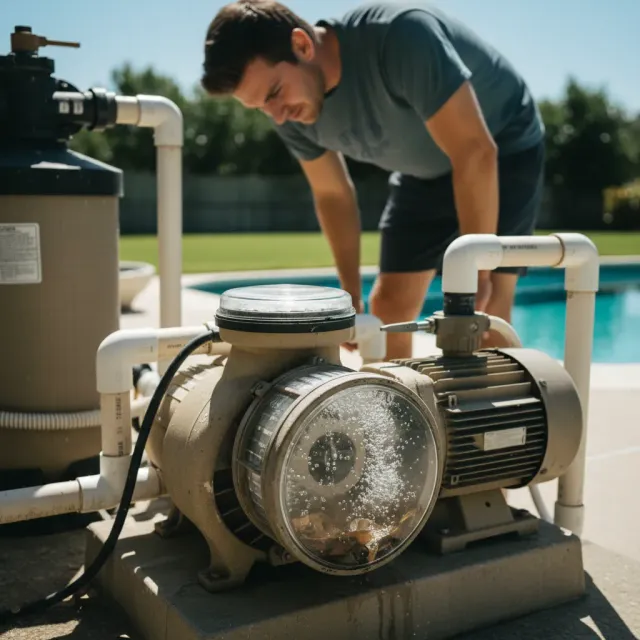
A single-speed swimming pool pump should run about 8 hours daily as a starting point; a variable-speed pump may need 12 to 24 hours at lower speeds. Adjust the schedule for actual flow, surface skimming, and enough operating time for your salt system, heater, or cleaner.
Eight hours at a strong flow moves more water than eight hours at a low setting. Keep an established schedule that works until you know which periods serve each piece of equipment.
| Pump setup | Starting approach | What determines the final schedule |
|---|---|---|
| Single-speed pump | Begin around 8 hours daily | Water clarity, surface debris, measured flow, and connected equipment |
| Variable-speed pump | Consider 12 to 24 hours at lower speeds | Enough flow for filtration, plus faster periods when equipment needs them |
| Pump serving a salt system | Allow enough operating hours to maintain chlorine | Cell output, output setting, water temperature, and chlorine demand |
At PoolLogic, we match the schedule to the equipment and the pool's condition. Clear-looking water alone does not confirm adequate sanitation, so keep testing chlorine while changing runtime.
Use actual flow to check your runtime
For a 20,000-gallon pool, a measured flow of 40 gallons per minute moves the pool's volume through the filter in about 8.3 hours.
Pool volume in gallons ÷ flow in gallons per minute ÷ 60 = hours for one turnover. A turnover means filtering a volume equal to the pool's capacity. Water mixes continuously, so one turnover does not mean every gallon has passed through the filter.
At 20 gallons per minute, that same example takes about 16.7 hours.
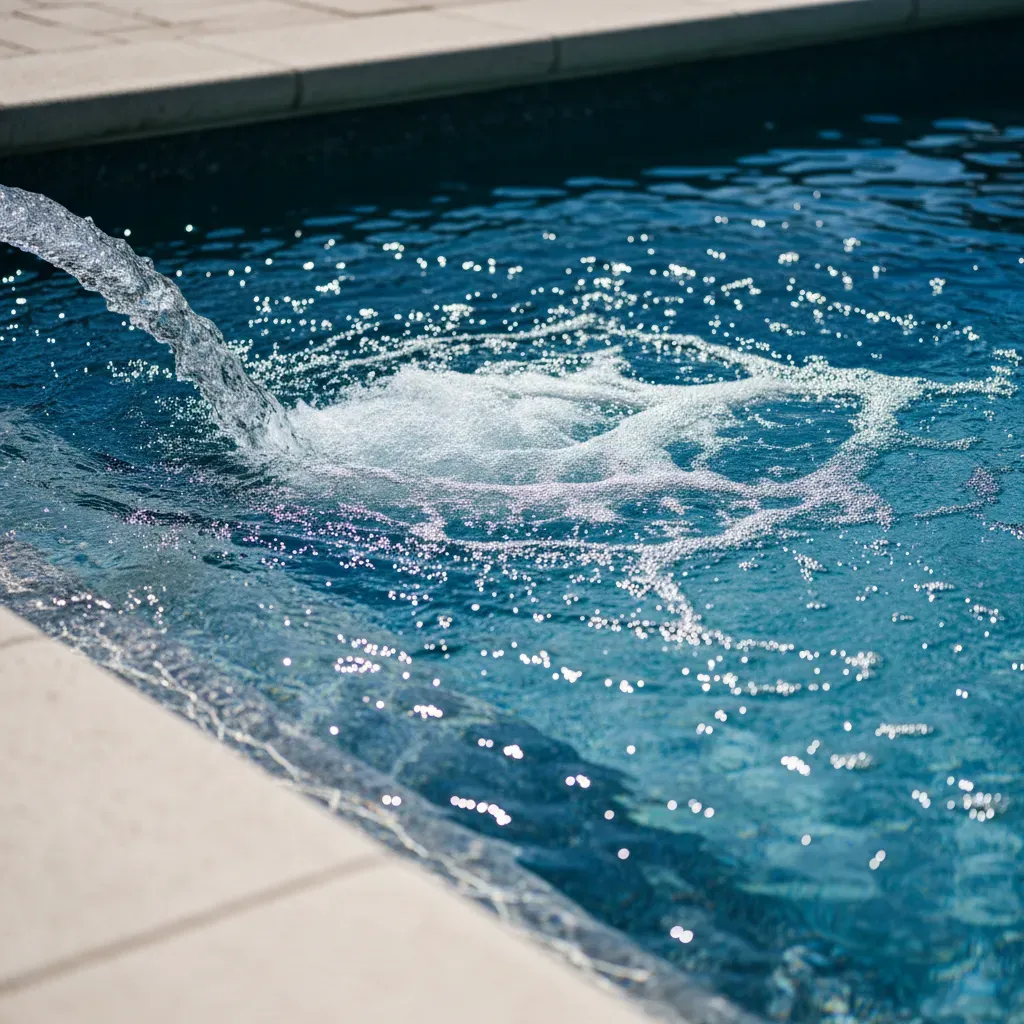
Use a flow meter or a supported flow reading from your equipment. Horsepower and revolutions per minute, shown as RPM, do not tell you the actual flow through your pool. Plumbing resistance, meaning how hard the pipes make the pump work, affects flow. Valve positions and filter condition also affect it. Avoid using the pump's advertised maximum flow in your calculation.
If your schedule uses several speeds, calculate each period separately. Multiply gallons per minute by 60 and the hours at that setting, then add the volumes. Our technicians can check the operating settings when the equipment does not provide a reliable flow reading.
Give the salt system and heater enough operating time
Shortening the pump schedule can leave a salt pool looking clean while producing too little chlorine. For example, 8 hours at a 50% salt-cell setting provides roughly 4 hours of chlorine production at full output. That assumes adequate flow, suitable water temperature, and no shutdowns or faults.
Cutting pump runtime in half can also cut chlorine production in half when the output setting stays unchanged. Before shortening the schedule, record the cell setting and test free chlorine, the chlorine available to sanitize the water.
If chlorine drops, check production and water chemistry before simply adding filtration hours. Chlorine demand also depends on sunlight, swimming, and stabilizer, which helps protect chlorine from sunlight. Use the chlorine target appropriate to your stabilizer level and sanitizer instructions. A longer pump schedule cannot compensate for every chemistry problem.
Heaters and some cleaners need stronger flow than a low filtration setting supplies. Set a faster speed long enough for the heater or cleaner to do its job. Follow the equipment's minimum flow requirements and any heater cooldown instructions.
A flow warning means you need to check the setting or equipment. Never bypass a flow switch, a safety sensor that shuts the heater or salt cell off when water isn't moving.
Adjust for inland heat, coastal weather, and wind
San Diego pools run all year, so you need a winter schedule as well as a summer one. Shorter winter days can reduce demand, but they do not eliminate filtration or chlorine needs.
Inland summer heat raises evaporation and chlorine demand. During hot periods or heavier swimming, test more often before deciding whether to extend the salt system's operating window. For a pool without automatic chlorine production, adding pump hours does not add sanitizer.
Along the coast, cool marine-layer weather may allow a shorter schedule than an inland pool needs. Keep the adjustment tied to water tests and debris removal. A gray morning is not enough reason to cut several hours at once.
After Santa Ana winds, remove leaves and empty skimmer baskets before adding runtime. Turn the pump off before removing baskets. A blocked basket restricts flow, so more timer hours may accomplish little. If leaves keep blowing in, run the pump longer for a few days so the skimmers can catch them. Reassess after the wind stops.
The first winter storm after a dry spell can wash accumulated dirt into the water. Check filter pressure against its clean reading at the same pump speed. Follow the manufacturer's cleaning threshold. If the filter needs cleaning, arrange pool filter cleaning before extending the schedule.
Choose operating hours around electricity rates and equipment needs
You can split the day into two runs if together they cover filtering and equipment needs. Once those needs are met, let your electricity plan decide which hours to use.
SDG&E residential electricity rates are among the highest in the United States. At the same power draw, every extra pump hour costs more here than in most markets. That makes a shorter schedule or a lower pump speed especially valuable. Check the lower-cost periods on your actual plan before moving hours. Overnight is not automatically cheapest.
Include a period when the skimmers can catch leaves before they sink. Schedule stronger flow when a pump-powered cleaner or heater needs it. Salt chlorine production can happen during daylight or overnight, provided operating conditions are met and chlorine stays adequate throughout the day. After moving production overnight, check chlorine late in the day as well to catch a daytime shortfall.
A variable-speed pump can use a long, slower filtration period with shorter, faster periods for specific equipment. Watch whether floating debris moves into the skimmer at the low setting. If your pump displays watts, compare electricity use as well as hours: watts multiplied by operating hours, divided by 1,000, gives kilowatt-hours. Calculate each speed period separately. A longer low-speed schedule can use less electricity than a shorter high-speed schedule.
Continuous operation can be appropriate for a variable-speed pump designed for it. Running a single-speed pump around the clock is usually unnecessary for routine maintenance and adds electricity use. If you run the pump longer to clear up a problem, decide in advance when to stop: once the water is clear and chemistry is back in range.
Keep automatic freeze protection active where equipped. Inland winter nights can require circulation outside the normal timer schedule. For maintenance and repair budgeting alongside electricity, see our San Diego pool service pricing.
Change the timer by 1 hour and check the result
When water is clear and chemistry is stable, try shortening an established schedule by 1 hour. Keep the speed unchanged during that trial so you can tell what the shorter runtime changes.
- Record the current hours, speeds, salt-cell setting, and water-test results.
- Confirm baskets are clear and the filter is within its recommended operating range.
- Shorten one operating period by an hour while preserving required heater, cleaner, and salt-system operation.
- Check chlorine at roughly the same time daily during the trial, along with surface debris and water clarity.
- Keep the shorter schedule only if performance remains adequate over several comparable days.
If debris accumulates, restore the previous skimming period. If chlorine falls below its target, correct it promptly and check chemistry and salt production. If water becomes cloudy, investigate sanitation and filtration before extending runtime indefinitely. Pause the trial during unusual heat, storms, or heavy swimming.
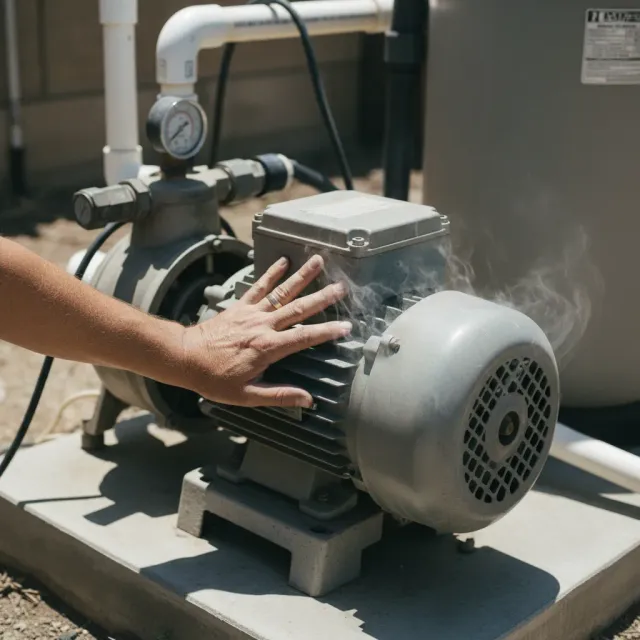
If the pump runs but return flow stays weak, longer hours are not the next step. Our San Diego pool pump repair service can check the equipment and confirm whether the problem needs a setting change or repair. Stop the pump if it runs dry, and have the cause checked before restarting it.

Kyle Bowman
Founder of PoolLogic · CPO-Certified
Kyle is the Founder of PoolLogic Pool Service and a Certified Pool Operator (CPO) with deep expertise in pool service, water chemistry, and pool equipment repair. He oversees every aspect of PoolLogic's operations to ensure San Diego pool owners receive expert-level care.
Read moreNeed professional pool service?
PoolLogic Pool Service provides expert pool cleaning, maintenance, and repair services throughout San Diego County.